

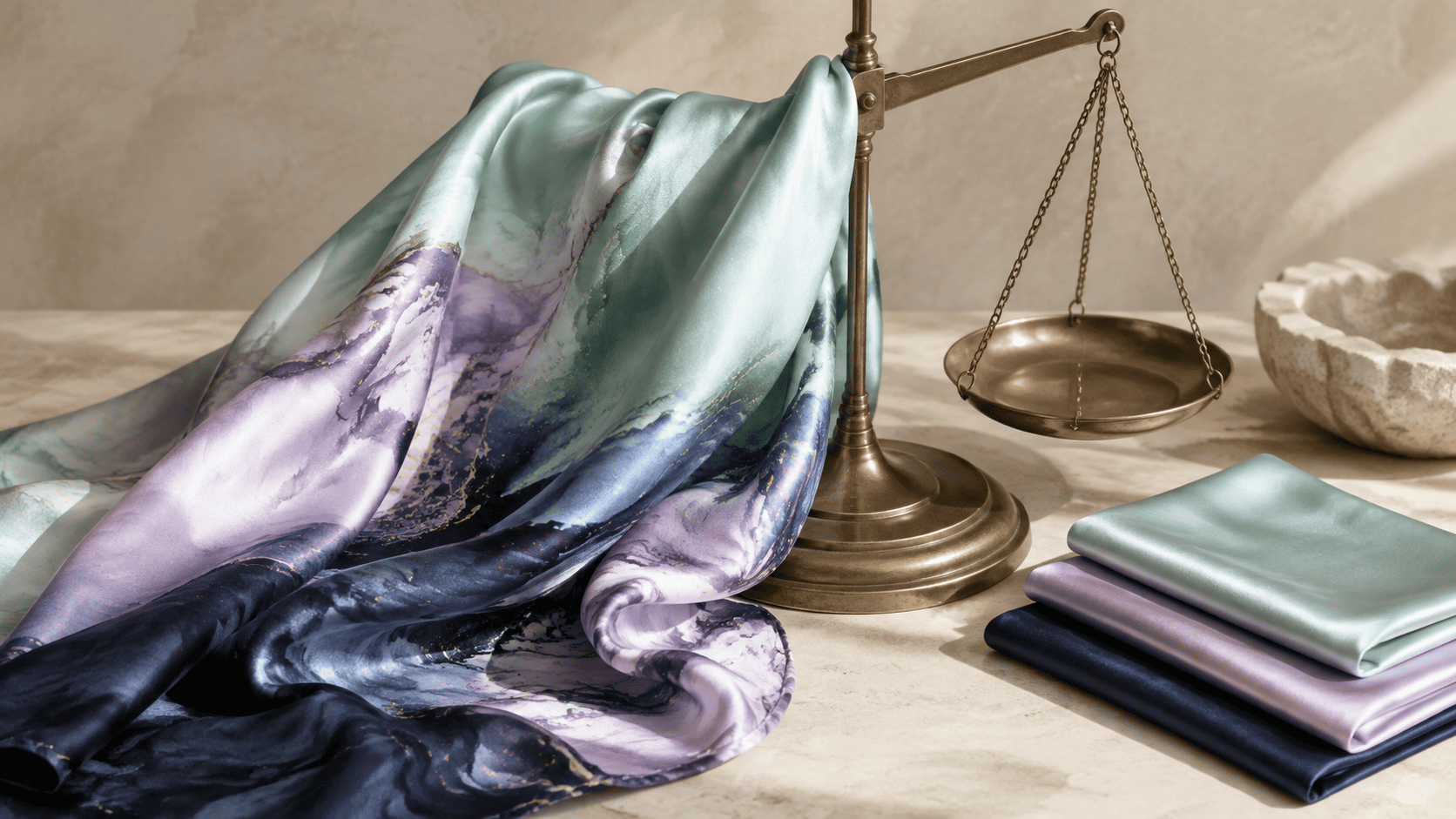
Momme is a traditional unit used to describe the weight of silk fabric. It is usually written as “momme” or abbreviated “mm.” A higher momme number means that a standard area of the fabric weighs more, but it does not automatically mean the silk is purer, thicker, softer or better made.
What exactly does momme measure?
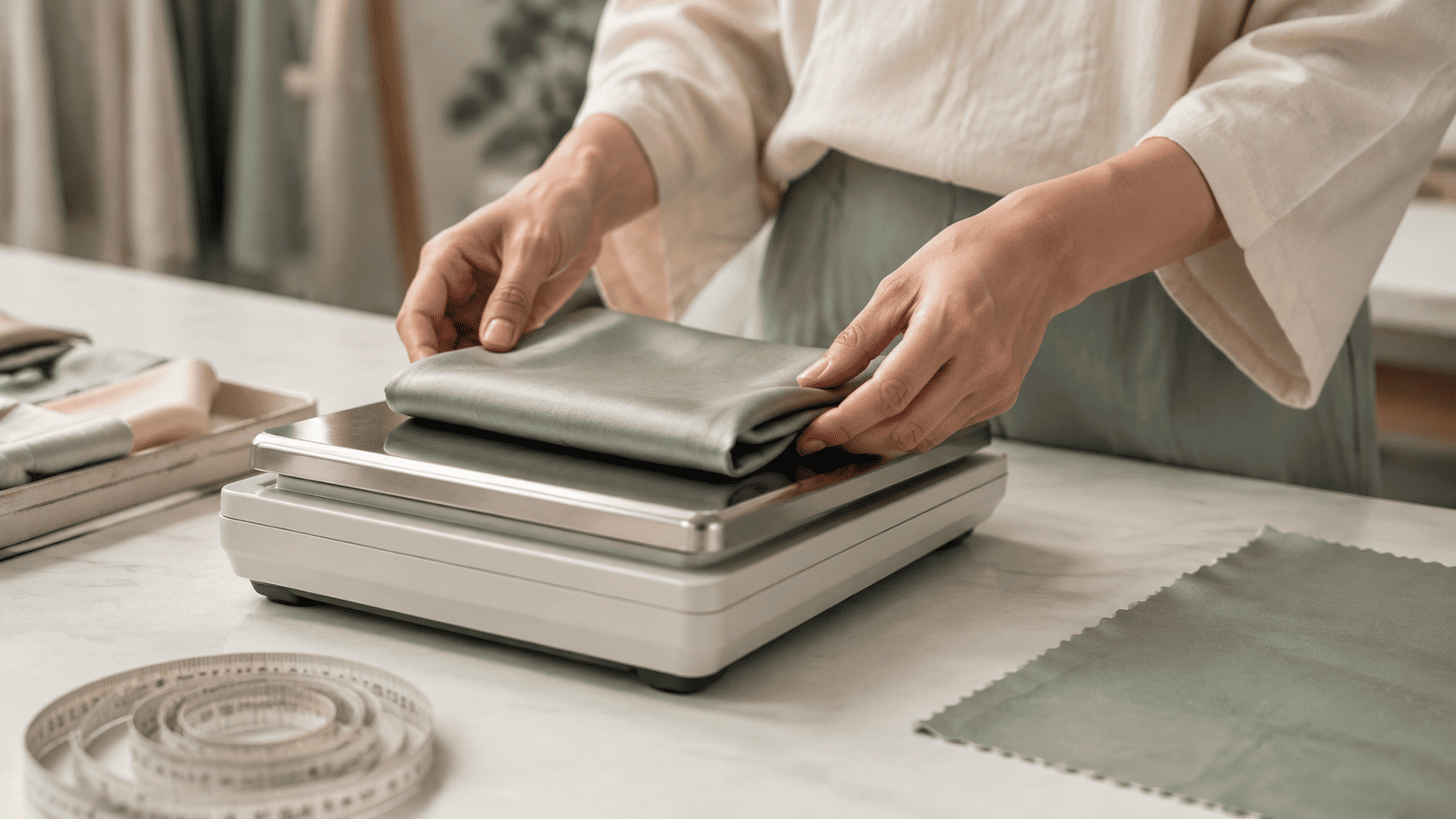
Momme measures mass per area, much as grams per square metre—or GSM—does. The customary silk definition uses a standard piece measuring 45 inches wide by 100 yards long. If that piece would weigh 16 pounds, the fabric is described as 16 momme.
Carnegie Mellon University’s textile materials guide describes silk fabric weight in momme using the same 45-inch-by-100-yard convention and gives one momme as approximately 4.34 g/m². A peer-reviewed materials study likewise defines momme as silk fabric weight and uses the same conversion.
The calculation is straightforward:
For example, 16 momme is approximately 69.4 g/m², while 22 momme is approximately 95.5 g/m². These conversions are useful for comparison, although normal production tolerances and finishing can cause an actual fabric sample to vary slightly.
Where does the word momme come from?
Momme is derived from a traditional Japanese unit of weight. One momme as a mass unit equals 3.75 grams. A scholarly history of Japanese silk trading published through J-STAGE discusses momme in the pricing of habutae silk and confirms that conversion.
In contemporary international silk retail, however, the number usually refers to the fabric-weight convention rather than the weight of one finished item. A “16-momme scarf” is not a scarf that weighs 16 momme—or 60 grams. Its total weight also depends on its dimensions, hem and any embellishment.
What do common momme numbers feel like?
The table below is a guide, not a grading standard. Weave, yarn, finishing and colour all change how a fabric behaves. Two fabrics with the same momme can feel quite different if one is crisp twill and the other is fluid satin.
| Momme | Approx. GSM | Typical character | Often used for |
|---|---|---|---|
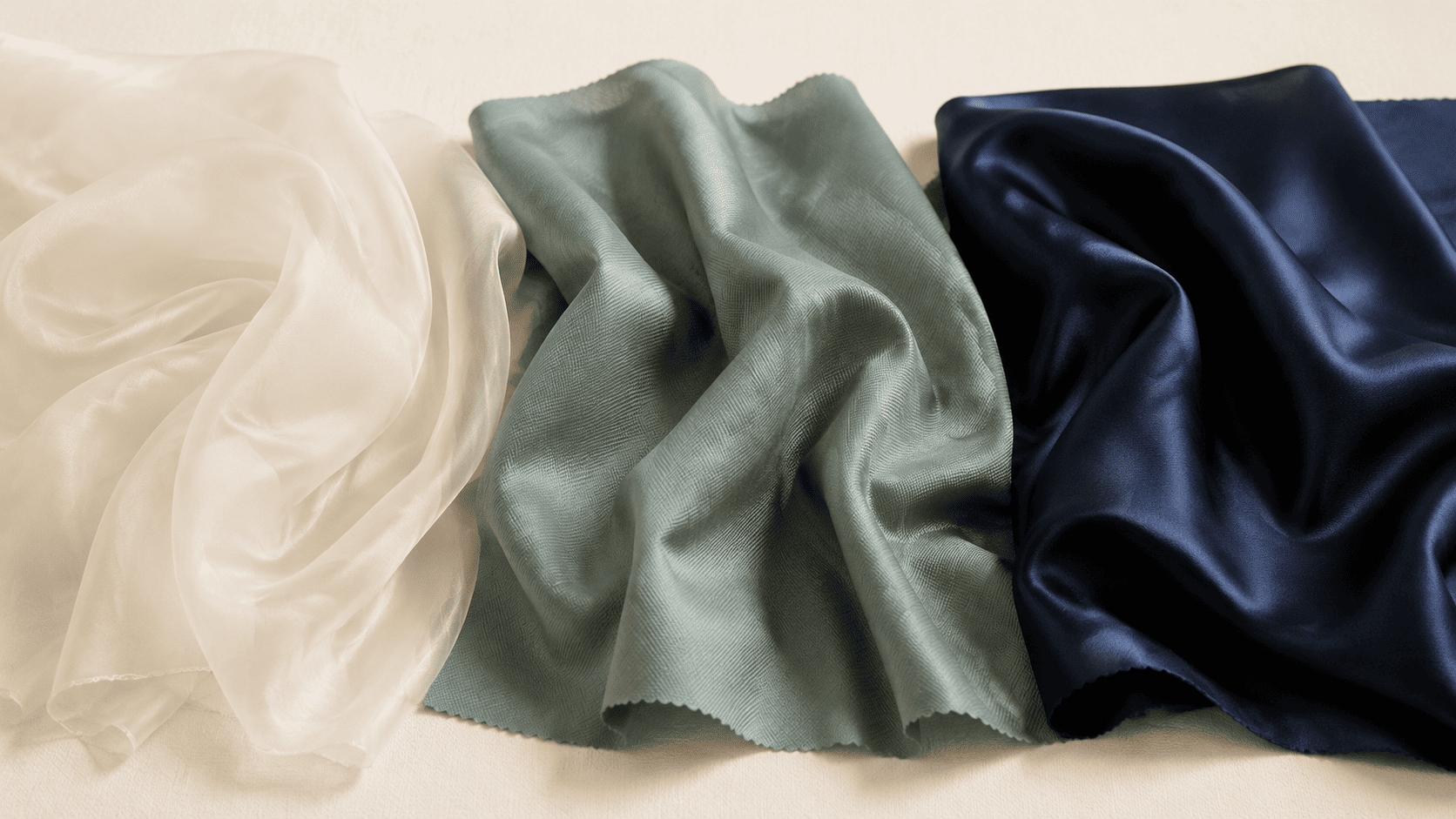
| 5–8 | 22–35 | Very light, airy or translucent | Chiffon, organza and light habotai |
| 9–12 | 39–52 | Light and fluid with more presence | Habotai scarves, linings and delicate accessories |
| 13–16 | 56–69 | Balanced drape, opacity and structure | Many printed squares and silk twill accessories |
| 17–19 | 74–82 | More substantial and often more opaque | Structured scarves, garments and charmeuse |
| 22+ | 95+ | Heavy for silk, dense and substantial | Bedding, tailoring and selected fashion uses |
Does higher momme mean better silk?
No. Within two otherwise comparable fabrics, higher momme generally means more material per area and may bring greater opacity, body and resistance to ordinary wear. But it is not a universal quality score. A finely woven 12-momme habotai can be better suited to an airy scarf than a heavy 22-momme satin. Making it heavier would change the design rather than simply improve it.
Momme does not tell you:
- whether the fibre is silk, a blend or a manufactured imitation;
- whether the silk is mulberry, tasar, eri or another type;
- the weave, yarn quality, print definition or colourfastness;
- whether edges and corners are well finished; or
- whether the weight suits the scarf’s dimensions and intended knot.
Check the fibre label separately. In the United States, the Federal Trade Commission’s Textile Fiber Rule generally requires covered products to identify constituent fibres and their percentages by weight. “16 momme” therefore cannot replace a statement such as “100% silk.” For more material checks, see how to tell whether a scarf is real silk and what mulberry silk means.
Why weave matters as much as weight
Weight tells you how much the cloth weighs per area; weave tells you how the yarns interlace. Silk twill has a diagonal structure that helps a scarf hold folds and knots. Satin uses longer floats for a smoother, more reflective face. Habotai is a plain weave that is often lighter and more supple.
Consequently, a medium-weight twill may feel controlled and quietly lustrous, while a satin at a similar weight feels smoother and more fluid. Our guide to silk twill, satin and habotai explains these constructions in detail.

What is the best momme for a silk scarf?
There is no single best number. Choose the weight that supports the scarf’s purpose:
- For an airy summer layer: a lighter habotai, chiffon or organza may feel elegant and unobtrusive.
- For versatile neck styling: a medium-weight silk twill often balances softness with enough structure to hold a knot.
- For a large shoulder drape: consider both weight and overall size; a very heavy large square can become bulky.
- For a narrow twilly: a structured weave may be more important than chasing a high momme number.
- For a gift: prioritize wearable dimensions, colour, design story and care requirements alongside fabric weight.
Use the silk scarf size guide to consider dimensions and styling together. You can also compare Lanting Loom’s silk twillies and square silk scarves, or begin with the complete guide to silk scarves.
How to read a silk product description
A useful listing should combine, rather than substitute, the following information:
- Fibre: for example, 100% silk.
- Silk source: mulberry silk if the seller makes that claim.
- Construction: twill, satin, habotai, chiffon or another fabric.
- Weight: momme or GSM, preferably with reasonable tolerance.
- Dimensions: because the finished item’s scale changes wearability.
- Finishing and care: hem method, printing and cleaning instructions.
Do not treat an isolated number as proof of luxury. Transparent specifications, accomplished design and considered finishing are more persuasive than “high momme” used without context.
Does heavier silk need less care?
No. A higher-weight silk may tolerate ordinary handling better than an extremely light fabric of similar construction, but it can still be damaged by abrasion, perfume, prolonged sunlight, water spotting or excessive heat. Follow the individual label and consult Lanting Loom’s silk scarf care guide before cleaning, drying or pressing it.
Frequently asked questions
Is momme the same as millimetres?
No. Although both may be abbreviated “mm,” momme is a fabric-weight measurement. It does not state the fabric’s thickness in millimetres.
Is 22 momme always better than 16 momme?
No. Twenty-two momme is heavier per area, but 16 momme may be more appropriate for a printed scarf that needs balanced structure and movement. Quality depends on fibre, yarn, weave, printing and finishing as well as weight.
Can polyester have a momme weight?
Any fabric has mass per area, but momme is conventionally used for silk. A momme number alone does not prove silk content; check the fibre label.
Does higher momme mean warmer silk?
A heavier fabric can provide more coverage and may feel warmer, but warmth also depends on weave, air movement, size, folds and how the scarf is worn.
How do I convert momme to GSM?
Multiply the momme number by approximately 4.34. For example, 14 momme is about 60.8 g/m² and 18 momme is about 78.1 g/m².