

In Chinese culture, bamboo commonly symbolizes integrity, resilience, modesty, friendship and the ability to remain principled while adapting to change. Its straight, jointed stem suggests upright character; its hollow interior has been associated with humility and receptiveness; and its capacity to bend without easily breaking offers a natural image of strength that is flexible rather than rigid.
Why did bamboo become such an important symbol?
Bamboo’s symbolism begins with qualities people can observe. It grows upright yet moves with the wind. Many varieties keep their foliage through winter. The culm is hollow but strong, and its segmented structure combines order with continued growth. Chinese artists and writers turned these physical characteristics into metaphors for human conduct.
The Denver Art Museum’s educational guide describes bamboo across East Asia as a symbol of virtue and friendship, noting its hollow form, flexibility and upright, resilient character. These associations are best understood as layers of interpretation rather than a single dictionary definition.
| Observed quality | Cultural association | Possible gift message |
|---|---|---|
| Straight, upright growth | Integrity and moral character | “I respect your principles.” |
| Bends in wind | Resilience and adaptability | “May you move through change with strength.” |
| Hollow centre | Modesty and openness to learning | “Your quiet wisdom is valued.” |
| Green through winter | Constancy and endurance | “Our friendship remains steady.” |
Bamboo as a symbol of integrity
For scholar-artists, painting bamboo could become a form of self-portraiture without depicting a face. The plant’s upright form offered an image of a person who maintains ethical direction, while differences in ink, pressure and rhythm revealed the artist’s temperament.
The Metropolitan Museum of Art explains that scholar-artists used monochrome images of bamboo, rocks and old trees as emblems of character and spirit. Bamboo was therefore not merely decorative foliage. It could stand for the cultivated person the artist admired, hoped to become or wished to honour.
Why bending bamboo represents resilience
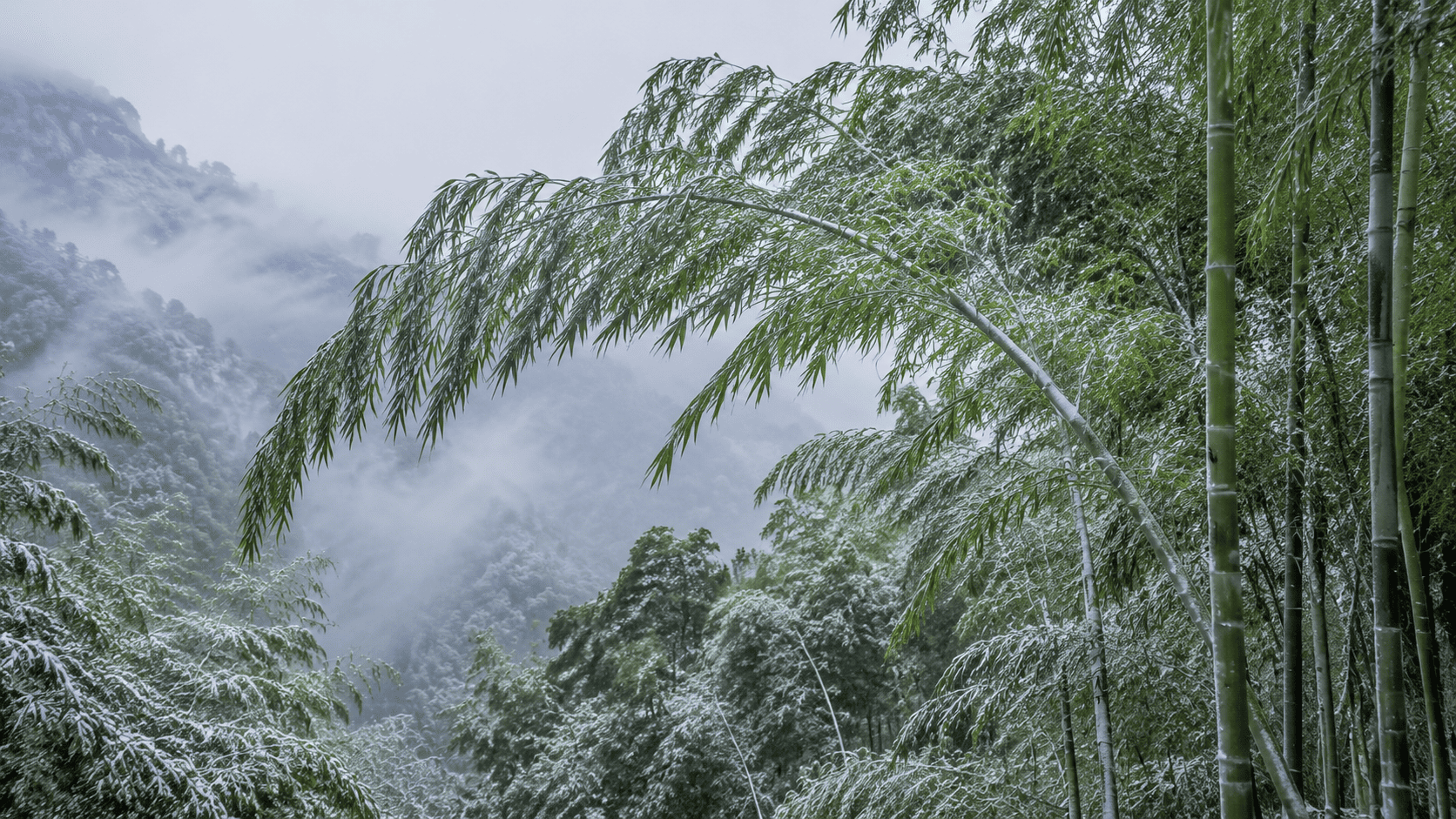
Bamboo does not communicate strength through immobility. It yields to pressure and returns, turning flexibility into its most compelling form of endurance. That makes it an especially relevant symbol for periods of transition, recovery and uncertainty.
This differs subtly from the plum blossom’s symbolism. Plum flowers emerge in late winter and often suggest hope, renewal and courage before spring. Bamboo emphasizes the flexible character that endures while difficulty is still present.
What does the hollow bamboo stem mean?
Bamboo’s hollow interior has often been interpreted as modesty, receptiveness and freedom from arrogance. The ideal person has principles but remains open to learning. In that sense, emptiness is not absence; it is space for thought, knowledge and relationship.
This association makes bamboo particularly appropriate for teachers, mentors and thoughtful leaders. It praises intelligence without equating wisdom with display. As with all symbolic readings, the hollow stem is one interpretive tradition—not a rule attached to every bamboo object.
Bamboo in Chinese ink painting
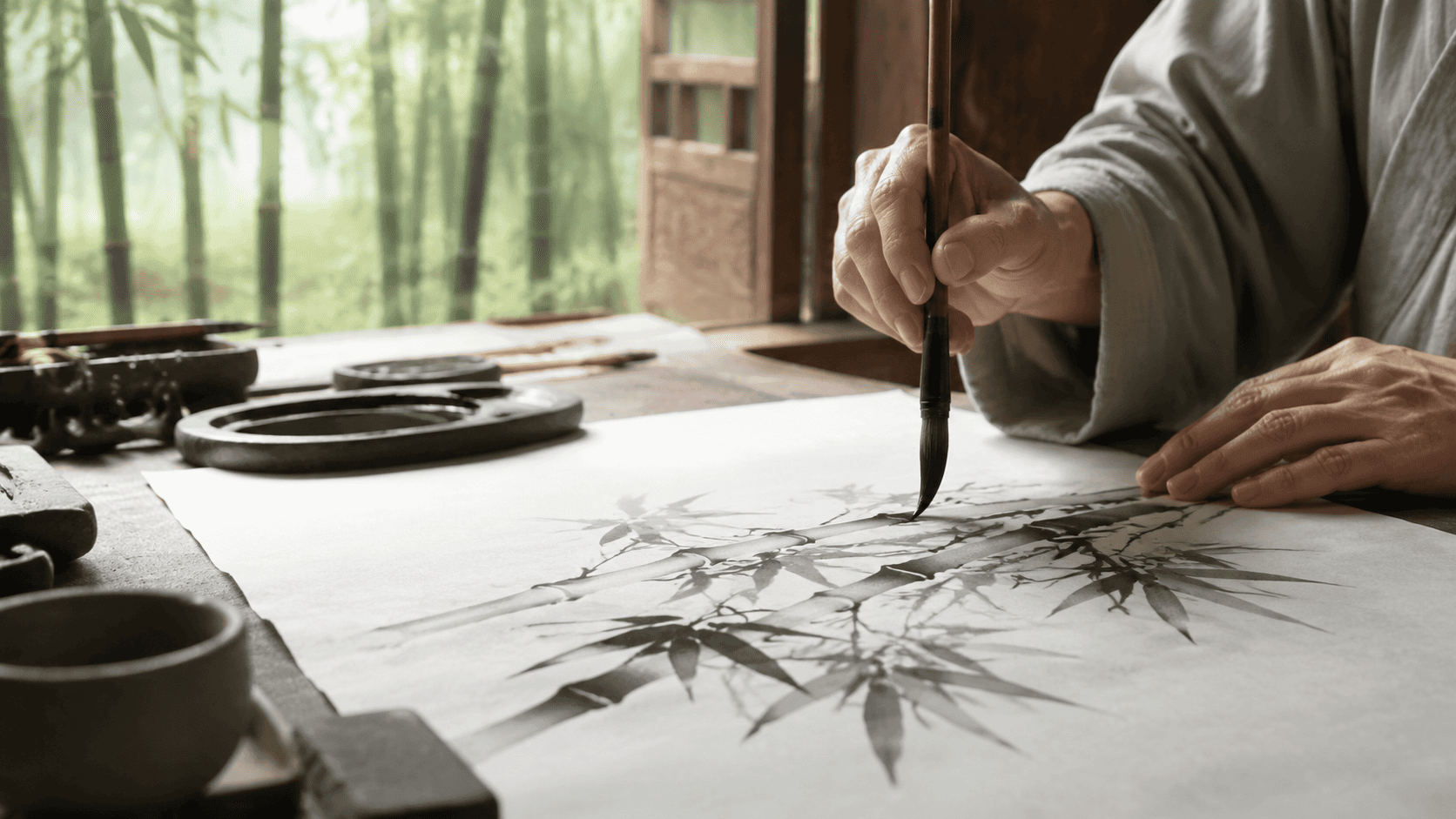
Ink bamboo occupies a special place because its stems, nodes and leaves can be constructed from disciplined brushstrokes closely related to calligraphy. A broad stroke may establish a culm; changes in pressure shape leaves; dark and pale ink create depth and weather. The subject rewards control, observation and repeated practice.
The National Museum of Asian Art describes ink-bamboo as a gentlemanly art practiced within the intertwined worlds of poetry, painting and calligraphy. A successful work does not need botanical detail in every leaf; economy and expressive rhythm can reveal more than literal description.
Bamboo among the Four Gentlemen
Bamboo is one of the Four Gentlemen of Chinese ink painting, together with the plum blossom, orchid and chrysanthemum. These plants became foundational subjects for learning brushwork and reflecting on cultivated character.
| Plant | Common association |
|---|---|
| Plum blossom | Resilience, renewal and hope |
| Orchid | Refinement, integrity and quiet fragrance |
| Bamboo | Uprightness, flexibility and modesty |
| Chrysanthemum | Independence, endurance and life in retirement |
The group is useful for comparison, but its meanings are not interchangeable. Read more about the orchid in Chinese art and gifting, or explore how these and other motifs appear among five Chinese symbols for meaningful gifts.
Bamboo among the Three Friends of Winter
Bamboo also appears with pine and plum as the Three Friends of Winter. Pine and bamboo remain green in cold weather, while plum is among the first plants to flower as spring approaches. Together, they express endurance, moral steadfastness and renewal.
The Met’s Dish with the Three Friends of Winter describes the motif as an image of a lofty individual persevering in a harsh environment. Here bamboo’s meaning becomes relational: the three plants strengthen one another’s message, just as dependable friends do in difficult conditions.
When is bamboo a meaningful gift?
Bamboo is especially suitable when the gift is meant to acknowledge character rather than simply mark an occasion:
- Graduation or a new career: encouragement to grow while remaining principled.
- A difficult transition: recognition of adaptability and resilience.
- For a mentor or teacher: respect for humility, learning and cultivated judgement.
- For a close friend: appreciation of loyalty and constancy.
- A professional thank-you: admiration expressed with restraint rather than romantic symbolism.
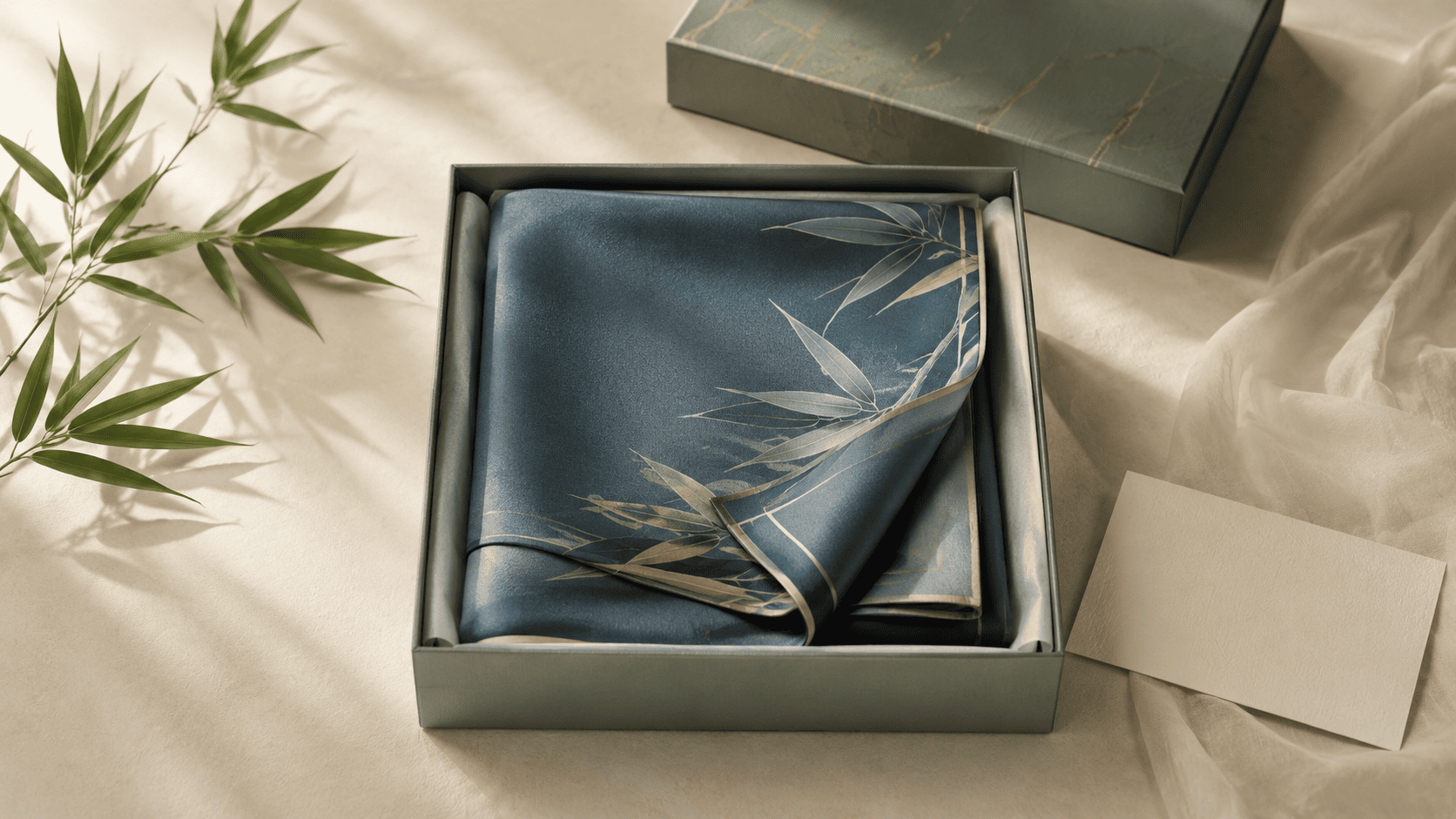
The message becomes stronger when the note names why bamboo was chosen. “Your calm strength carried this team through change” is more personal than a generic wish for luck. Use Lanting Loom’s guide to choosing a meaningful scarf gift, browse the silk gift sets, or discover the Bamboo After Rain Petite Square.
How bamboo can be reinterpreted today
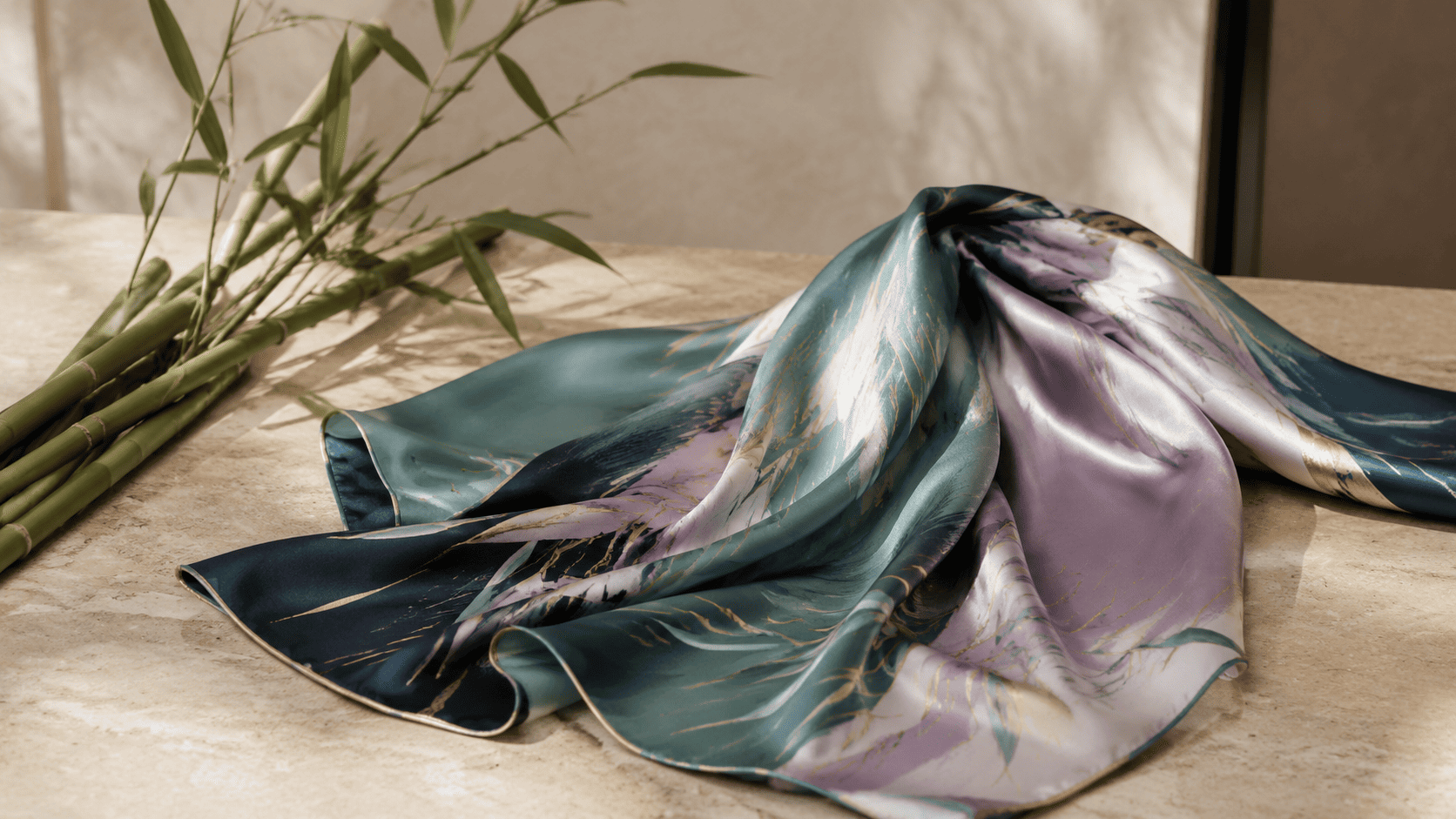
A contemporary design does not need to reproduce a classical ink painting literally. It might translate the angle of leaves into rhythm, the intervals between nodes into structure, or bamboo’s movement into layered colour. The cultural source remains present, but the result must first succeed as something beautiful and wearable.
This approach reflects the broader movement explored in how traditional Chinese motifs are being reinterpreted today. The most convincing designs carry the principle of bamboo—poise with flexibility—rather than using it as surface decoration alone. More design narratives can be found in Lanting Loom’s Stories.
Frequently asked questions
Does bamboo symbolize good luck in Chinese culture?
Bamboo can be auspicious, but “good luck” is too broad to capture its main associations. In art it more specifically evokes integrity, resilience, modesty, constancy and cultivated character.
Why does bamboo symbolize strength?
Its strength is flexible. Bamboo bends under wind or snow rather than resisting every force rigidly, making it a natural metaphor for adapting without abandoning one’s principles.
What do bamboo and plum blossom mean together?
With pine, they form the Three Friends of Winter. The group represents perseverance in harsh conditions, moral steadfastness and the promise of renewal.
Is bamboo one of the Four Gentlemen?
Yes. Bamboo joins plum blossom, orchid and chrysanthemum as one of the Four Gentlemen, major subjects in East Asian ink-painting traditions.
Who should receive a bamboo-themed gift?
It suits mentors, graduates, close friends, thoughtful leaders and anyone moving through change. A personal note should connect bamboo’s qualities to the recipient rather than assuming the symbol speaks identically in every context.
