

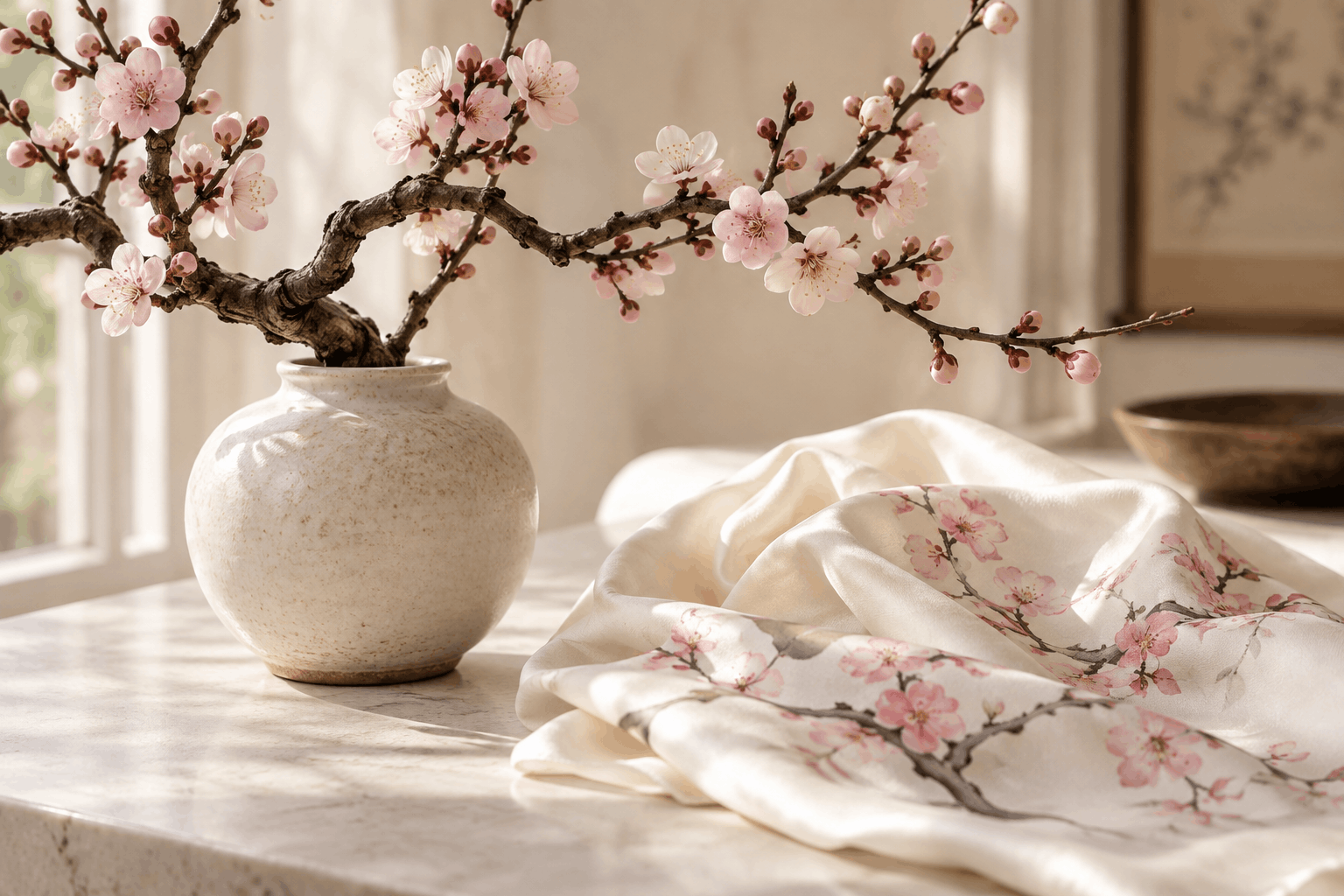
A red ribbon, a golden detail or a branch of plum blossom can give a New Year gift another layer of meaning. These choices can express happiness, hope or a wish for a flourishing year, while still leaving room for the recipient’s personal taste.
Understanding Chinese New Year gift colours and symbols helps you choose with intention. Red commonly conveys good fortune and happiness; gold suggests wealth and prosperity; plum blossom carries associations with perseverance and the arrival of spring. Other motifs offer different ways to express your wishes.
The most thoughtful choice connects a cultural association with the person receiving the gift. A symbol should support that connection, while the object itself remains something they will enjoy.
A quick guide to colours and motifs
| Colour or symbol | Common association | A possible gift expression |
|---|---|---|
| Red | Good fortune, happiness and celebration | A scarf accent, ribbon or gift bag |
| Gold | Wealth and prosperity | A restrained metallic detail or warm accent |
| Plum blossom | Perseverance, hope and approaching spring | A floral textile or botanical artwork |
| Bamboo | Integrity and strength | An ink-inspired design for someone beginning a new chapter |
| Fish | Surplus and abundance through wordplay | A ceramic or artistic motif with a wish for plenty |
| Peaches, cranes and pine | Long life in Chinese art | A design chosen with an elder’s interests in mind |
| Fu (福) | Good fortune or blessings | A correctly written greeting or decorative detail |
These are useful starting points, not fixed translations for every artwork. The same motif can carry several meanings, especially when combined with other objects or characters. The sections below explain the associations and suggest ways to use them.
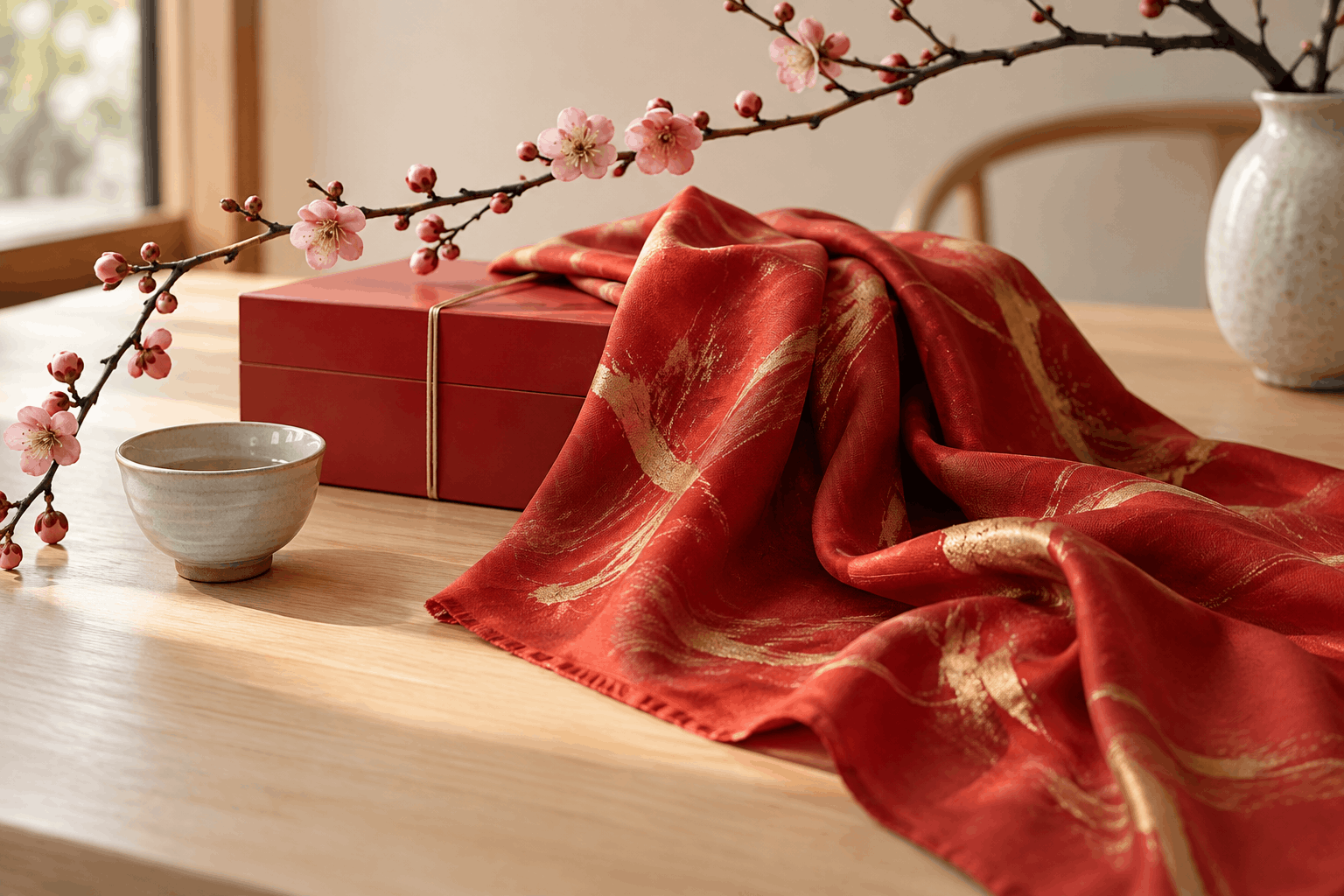
Red: happiness and a festive welcome
Red is closely associated with good fortune and happiness in Chinese colour traditions. Its familiar role in New Year celebrations makes it an easy way to acknowledge the season through a gift or its presentation.
That does not mean every part of a present needs to be bright scarlet. Consider how the recipient wears colour. Someone with a wardrobe of navy, camel and ivory might enjoy a scarf with a small red border more than an entirely red design.
For a person who prefers quiet accessories, let the packaging carry the festive colour. A red gift bag or ribbon can create a seasonal impression while the gift itself remains suited to everyday use.
As a design choice, you can also vary the intensity: a vivid red can feel energetic, while a darker burgundy may sit comfortably with a more restrained wardrobe. These are styling suggestions, not separate traditional promises attached to each shade.
Gold: a wish for prosperity
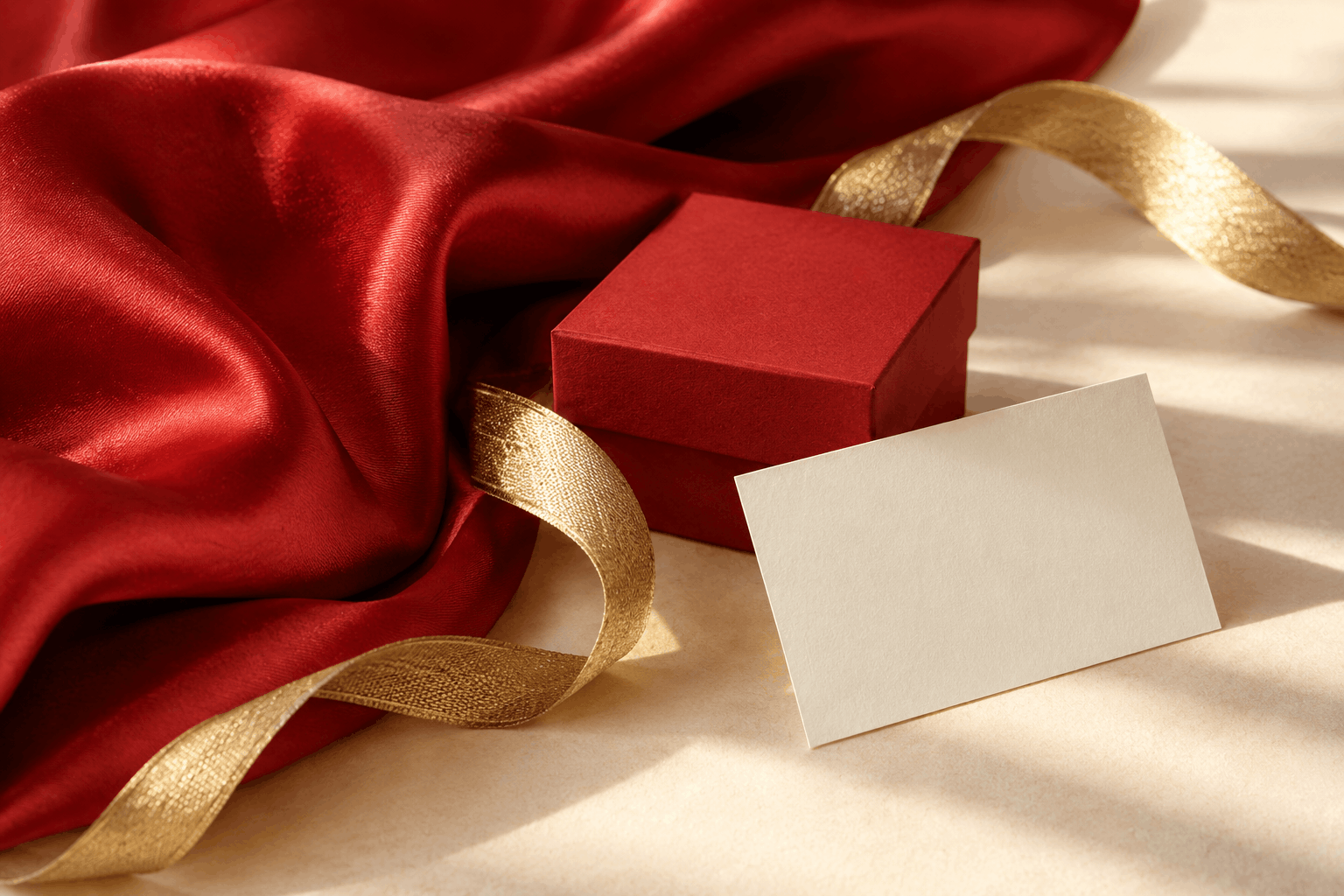
Gold’s connection with wealth makes it a familiar way to suggest prosperity in festive presentation. Red and gold wrapping also has a place in documented Chinese New Year gift customs.
A small gold detail can be enough: a narrow ribbon, an edge on a card or an accent within a design. Match its intensity to the person’s taste. Someone who enjoys understated objects may prefer a warm metallic touch to a fully glittering package.
Be precise when describing what you buy. A gold-coloured print, metallic thread, gold plating and solid gold are different materials. The symbolism of a colour does not establish the composition or value of an item.
Prosperity can be expressed as a generous wish for the year ahead without making the gift expensive. A thoughtful, proportionate present is often easier to accept than a lavish one that creates pressure to reciprocate.
Plum blossom: perseverance and the promise of spring
Plum blossom, or meihua (梅花), has a long presence in Chinese art and poetry. Its flowering in the cold season helps explain its associations with perseverance, hope and approaching spring. These meanings make it particularly relevant to a gift offered at the beginning of a new year. See the cultural background of plum blossom symbolism.
For a friend beginning a new role or emerging from a demanding period, a plum blossom design can accompany an encouraging message. Keep that message sensitive: the recipient may prefer a simple wish for a joyful year to a public reference to personal difficulties.
You might write, “I loved the sense of a fresh beginning in this design. Wishing you a year with plenty to look forward to.” That is a personal interpretation rooted in the motif, without claiming that the gift will bring a particular outcome.
Check which blossom the design actually depicts
Plum, peach and cherry blossoms are not interchangeable labels. A stylised floral print may not depict an identifiable species at all. Read the designer’s description before attaching a detailed cultural explanation to it.
If the listing simply says “floral,” keep your note equally clear: “These flowers reminded me of spring.” You can enjoy a beautiful design without giving it a historical meaning that the maker has not claimed.
Bamboo: strength with flexibility
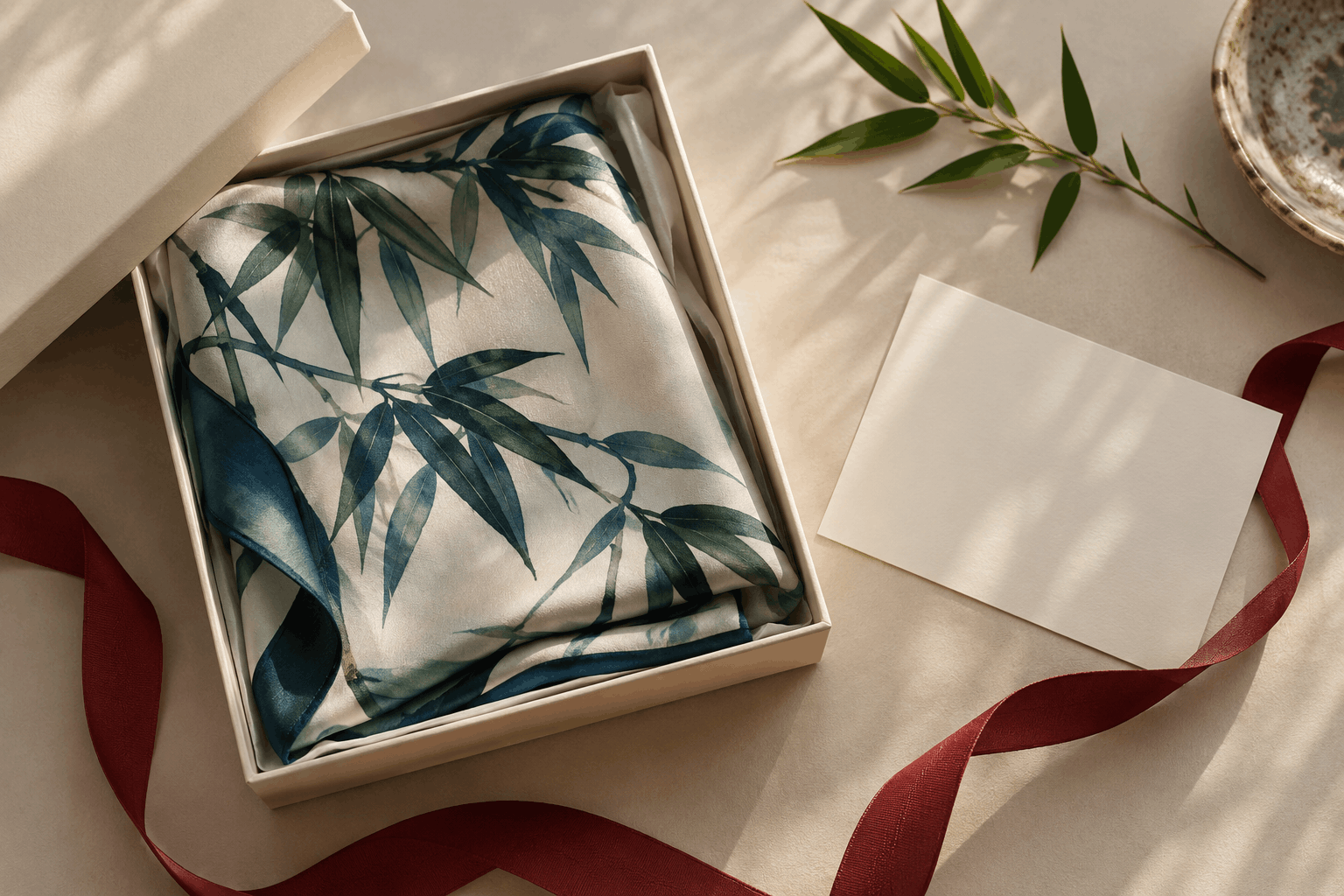
Bamboo offers a quieter visual language than a bold festive palette. The Metropolitan Museum of Art describes it as a longstanding symbol of integrity and strength, connecting that meaning with its ability to bend without breaking. Xia Chang’s Windblown bamboo provides an example of its place in Chinese painting.
For a modern gift, that association can support a message of encouragement or admiration. It may suit someone who enjoys spare botanical forms, ink painting or designs with space around the motif.
Let the personal meaning remain specific. “Your calm support meant so much to me this year” says more than a generic promise of success. The bamboo motif can reinforce the sentiment without needing to explain every detail of the recipient’s life.
Fish: a wish for abundance
Fish symbolism is linked to language: the Mandarin word for fish, yú, sounds like the word for surplus. This connection appears in New Year wishes for abundance year after year, as well as in food and decorative imagery. The association is explained in accounts of Chinese New Year greetings.
A fish motif might appear in ceramics, prints or textiles. Choose the object for its design and usefulness first, then explain the wish briefly. “Wishing you a year of abundance and happy moments” is warm enough without turning a personal greeting into a financial prediction.
If you are considering an ornament, think about where it will live. A meaningful motif still needs to fit the recipient’s home and taste; a compact object can be easier to enjoy than a large decorative piece.
Peaches, cranes and pine: wishes for long life
Peaches, cranes and pine are established longevity motifs in Chinese art. The Met’s essay on longevity symbolism traces their associations through stories, physical qualities and artistic traditions. These motifs are not exclusive to New Year; they also occur in birthday and other auspicious contexts.
They may be appropriate for parents or elders who enjoy that visual language. However, age alone should not determine the gift. A parent who loves contemporary abstraction may prefer it to a traditional crane design.
Use the association as a warm wish, never a health claim. For example: “Wishing you many more happy seasons and time for everything you enjoy.” For help choosing around personal interests, see our Chinese New Year gifts for parents and elders.
Fu: a character with meaning, not just decoration
The character fu (福) expresses good fortune or blessings and is familiar in New Year decoration. It is written language, so accuracy matters when it appears on a card, package or commissioned design.
Do not treat an unfamiliar character as an interchangeable decorative mark. Verify its wording and intended use before printing. If you want an upside-down fu decoration, check the recipient’s practice rather than assuming that orientation is appropriate everywhere.
A clear greeting in a shared language is also a thoughtful choice. You do not need Chinese lettering on a gift to communicate respect for the celebration.
Can other colours work for a Chinese New Year gift?
Yes. A recipient’s favourite blue, green or neutral palette can be a good reason to choose a particular scarf or object. The season can be acknowledged through a note or festive wrapping.
Be careful about assigning fixed meanings to every shade. A jade-green colour does not make a textile a jade object, and a contemporary blue pattern does not automatically carry an ancient symbolic message.
White has a traditional association with mourning, which is relevant when considering an all-white formal presentation. That is different from declaring every white flower or pale detail unsuitable. Ask about household preferences if you are unsure, and consult our Chinese New Year gift etiquette guide for broader guidance.
For someone who rarely wears festive colours, choose a gift they will enjoy throughout the year. Your greeting can make the occasion clear without asking them to adopt a style that feels unfamiliar.
Turn the symbolism into a personal gift
- Start with the person. Think about their wardrobe, home, interests and the kind of objects they use.
- Choose one main wish. Happiness, encouragement or time together gives the gift a clearer message than a collection of unrelated symbols.
- Check the actual design story. Confirm the motif and material rather than relying on a photograph alone.
- Keep the note brief. Explain what made you think of them in one or two sentences.
Lanting Loom’s design stories offer a starting point for exploring the ideas behind its visual approach. When choosing a scarf, check the individual listing rather than assuming every motif discussed here is available in the collection.
You might pair a design-led gift with a message such as, “These colours reminded me of our visit to the gallery. Wishing you a joyful new year.” The shared memory is your own contribution to the gift’s meaning.
Frequently asked questions
Does a Chinese New Year gift need red and gold together?
No. They are familiar festive choices, but you can use either as a small accent or choose another palette the recipient prefers. Check family expectations when giving in a more traditional setting.
Is plum blossom only suitable for New Year?
No. Its presence in art and poetry extends beyond the festival. A plum blossom design can also accompany a personal message of encouragement or be chosen simply because the recipient loves botanical art.
Must I choose the zodiac animal of the year?
No. A botanical or abstract design can remain relevant well beyond one celebration. If you do choose a year-specific motif, verify the intended year and check whether the recipient wants a seasonal keepsake.
What if I cannot identify a symbol in a scarf?
Ask the seller or read the design description. If the meaning is not documented, describe what you can see and your personal reason for choosing it. Avoid inventing a traditional interpretation.
Choose meaning the recipient can enjoy
A meaningful gift combines an appropriate message with a well-chosen object. Red may express celebration, plum blossom may suggest hope and bamboo may convey admiration for someone’s strength. The personal connection makes those associations useful.
Explore Lanting Loom square scarves, long scarves and gift sets with the recipient’s taste in mind. For more ideas across relationships and occasions, return to our modern guide to Chinese gifts.
