

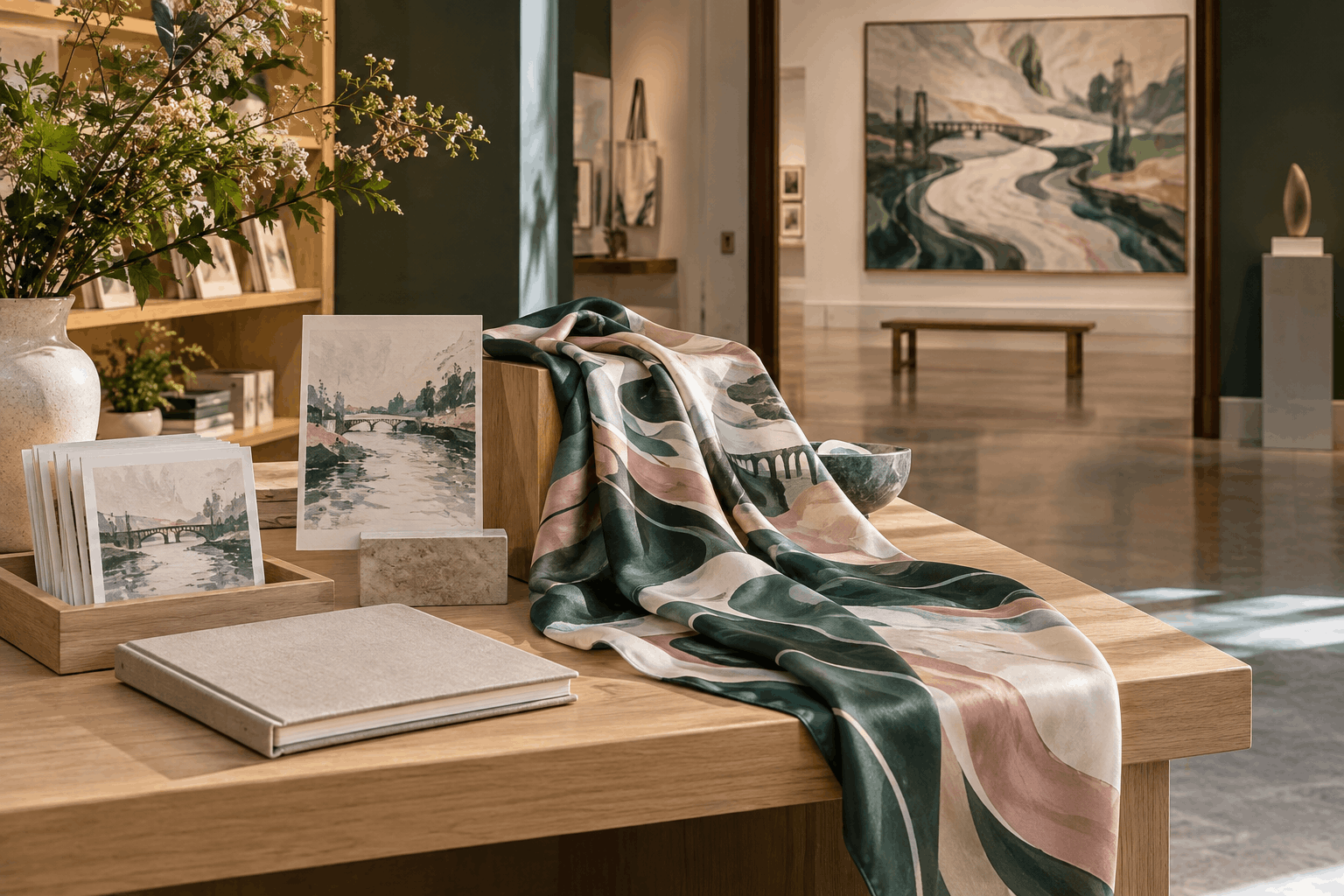
An exhibition can change how visitors see a place, an object or an ordinary part of life. Meaningful merchandise gives them a way to return to that idea after leaving the galleries.
To turn exhibition stories into meaningful merchandise, identify the central idea visitors should remember, choose appropriate source material and develop products that express that idea through their design and use. A clear explanation, careful sample review and a realistic retail plan connect the creative work to the finished range.
The starting point is the exhibition’s meaning. Product formats, colours and packaging follow from what the museum wants people to carry with them.
1. Write the Story in One Clear Sentence
Bring the curatorial, interpretation and retail teams together early. Ask: what is the most useful idea a visitor could remember from this exhibition?
A subject such as “water” is broad. A statement such as “rivers shape how people move through and gather in a city” offers a more specific direction. It suggests movement, meeting places, bridges and the relationship between a landscape and daily life.
This article uses a fictional exhibition, Water and the City, to illustrate the process. Its products and stories are hypothetical examples, not descriptions of a museum commission.
A one-sentence statement gives the team a shared reference when choosing images, evaluating designs and writing product copy. It also helps identify appealing ideas that sit outside the project’s purpose.
2. Connect Each Product to a Visitor Takeaway
Choose a few supporting stories and give each a potential product role. Think about what the visitor will do with the item: read, wear, display, write, give or explore.
| Exhibition idea | Visitor takeaway | Possible product | Connection to explain |
|---|---|---|---|
| The river shapes routes | Notice movement through the city | Silk scarf with flowing lines and bridge forms | How the composition translates river routes into a wearable pattern |
| One place, different viewpoints | Look again at a familiar scene | A small set of art cards | Why the selected views reveal different aspects of the same place |
| Everyday observation | Record details on a future walk | A useful sketchbook with a short observation prompt | How drawing can extend the exhibition’s invitation to look closely |
| Stories behind the objects | Continue learning at home | A concise illustrated publication | The people, sources and questions explored in the exhibition |
This gives the assortment coherence while allowing each product to have its own composition and purpose. A visitor can choose the form that best fits their interests and budget.
3. Choose Sources and Agree on Their Use
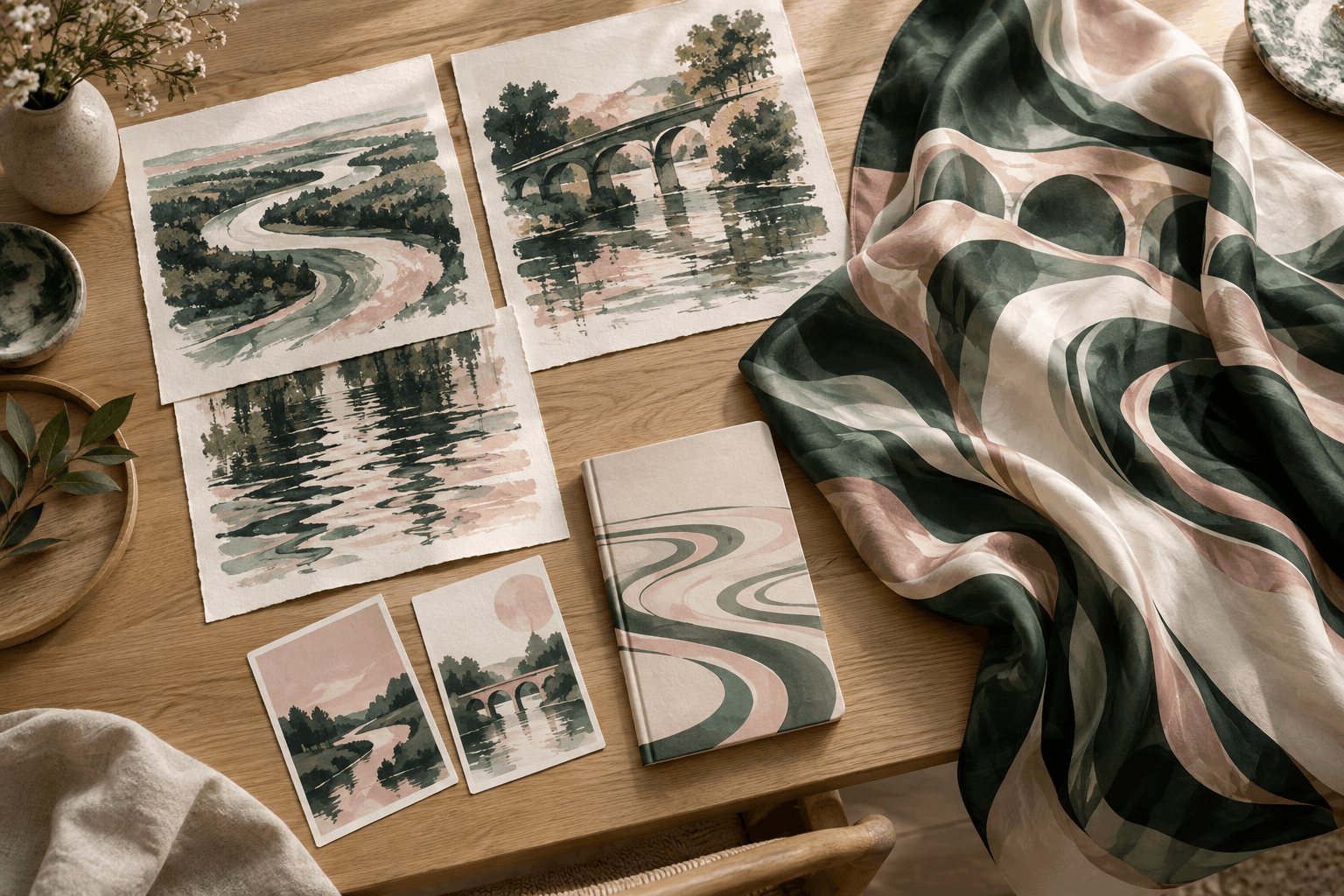
Prepare a focused set of approved references. These might include collection images, architectural details, drawings or contemporary responses commissioned for the exhibition.
For each source, record its identity, relevant background, required credit and the features that should remain recognisable. Agree which changes are appropriate, including cropping, recolouring, repetition or combining details.
Have the relevant museum team confirm permissions and any conditions attached to commercial use. Where material carries cultural or community sensitivities, involve the appropriate voices before deciding how it will appear on a product.
Some exhibition subjects may call for a publication, a thoughtful artist response or a very limited merchandise range. Choose an approach that fits the subject and the institution’s purpose.
4. Let the Product’s Use Shape the Design
A scarf, a postcard and a book cover behave differently. Adapt the visual treatment to the format instead of treating every surface as the same canvas.
For a silk scarf, consider how lines and colour move through folds. In the fictional river example, a broad curve could remain visible when tied, while small architectural details appear at the ends. The scarf should also work with ordinary clothing.
A sketchbook needs paper and binding suited to its intended use. Art cards need clear image reproduction and useful information on the reverse. The story becomes more convincing when the object performs its everyday role well.
Our guide to custom silk scarves for museums explores the move from a collection reference to a wearable composition.

5. Build a Focused Range Across Price Points
Offer several ways to engage with the exhibition. A small printed keepsake can serve a visitor with a modest budget, while a scarf or carefully produced publication can suit a more substantial purchase.
Give every item a distinct reason to exist. Before adding another variation, ask whether it serves a different need or offers a meaningful new perspective.
Set target retail prices and review the full acquisition cost, including design, sampling, packaging, delivery and any agreed royalties. Check minimum quantities for each variant before expanding the range.
For a broader buying framework, see how to choose museum gift shop merchandise visitors will keep.
6. Write a Story People Can Understand Quickly
The product explanation should answer three questions: what inspired this, what changed in the design, and how does it connect to the exhibition?
For the fictional scarf, a short starting point might be: “Flowing lines and repeated bridge forms explore the river as a route through the city. The design invites you to notice the crossings and meeting places along its banks.”
Add the actual source details and required credits when developing a real product. Avoid presenting a new interpretation as a direct historical reproduction.
Use readable type and plain language on cards, labels and online descriptions. A QR code can offer deeper content, but essential meaning should remain available without a phone.
Give shop staff a short explanation they can share naturally. Their understanding of the connection matters as much as the wording on the display.
7. Review the Sample, Packaging and Story Together
Set clear approval responsibilities for interpretation, design, product quality and commercial terms. Consolidate feedback so the supplier receives an agreed direction.
Handle representative samples in the ways visitors will use them. For a silk scarf, assess fibre content, dimensions, print, drape, finishing and care information. Review the design both open and worn.
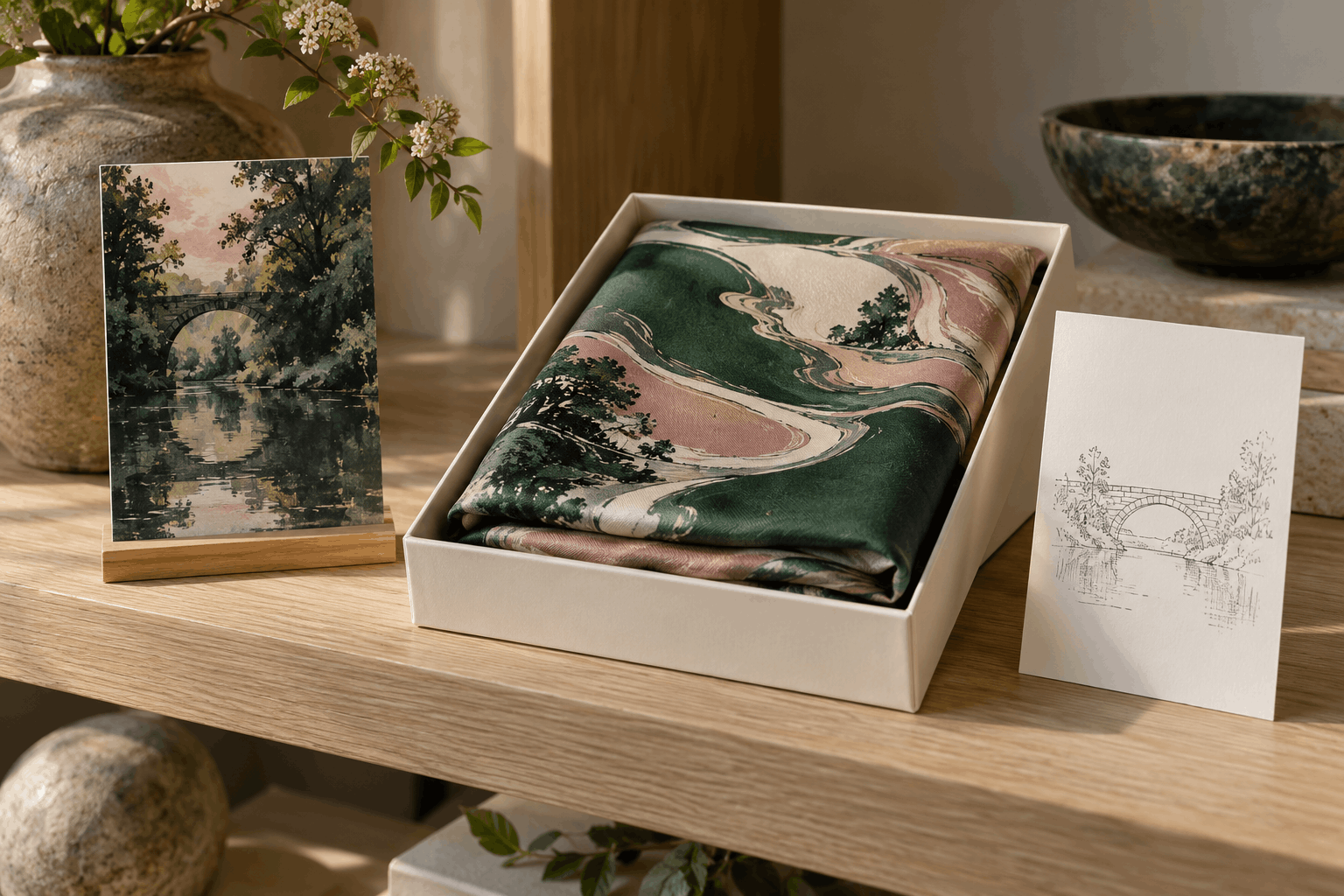
Check the product beside its card and packaging. Confirm that names, credits, images and descriptions refer to the approved source and final design. The box or sleeve should protect the item and fit a visitor’s journey home.
For bespoke scarf development, explore Lanting Loom’s bespoke silk scarves and discuss the proposed sample and approval process.
8. Plan for Opening Day and Life After the Exhibition
Work backwards from when merchandise needs to be received, checked, photographed and displayed. Include internal reviews, physical samples and packaging approvals in the schedule.
Confirm permitted sales channels, the period of sale and any agreed arrangements for remaining stock. A date-specific sleeve and a scarf with continuing collection relevance may have different roles after closing day.
Retain approved artwork, copy, source references and sample records. These help the team assess reorders or a future adaptation without losing the reasoning behind the original design.
Our guide to planning bespoke project timelines explains the stages to include before launch.
9. Evaluate Both Retail Performance and Understanding
Review sales, margin after discounts, returns and remaining stock against the range’s objectives. Consider display placement and availability when comparing products.
Also listen to visitor questions. Can people explain the connection to the exhibition? Are staff repeatedly filling gaps in the story? Do visitors understand the product’s use and care?
Purchase figures alone do not show whether someone learned from or continued using an item. Voluntary feedback can add context, while remaining only one part of the evidence.
Frequently Asked Questions
Does exhibition merchandise need to reproduce an artwork?
No. It can express an approved theme, detail or contemporary interpretation. The relationship to the exhibition should be clear and accurately described.
How can a small museum develop a meaningful range?
Start with one strong story and a few purposeful products. Confirm budget and supplier requirements early, and consider existing items where they already fit the exhibition.
Can merchandise remain relevant after an exhibition closes?
It can when the design has continuing value and the agreed permissions allow further sale. Plan the treatment of dated packaging and remaining stock before launch.
Bring the Exhibition Story Into the Brief
Explore Lanting Loom’s page for museums and cultural institutions to discuss silk scarves and meaningful presentation. Share the exhibition’s central idea, approved references, intended audience, budget and opening date to define a suitable project.
