

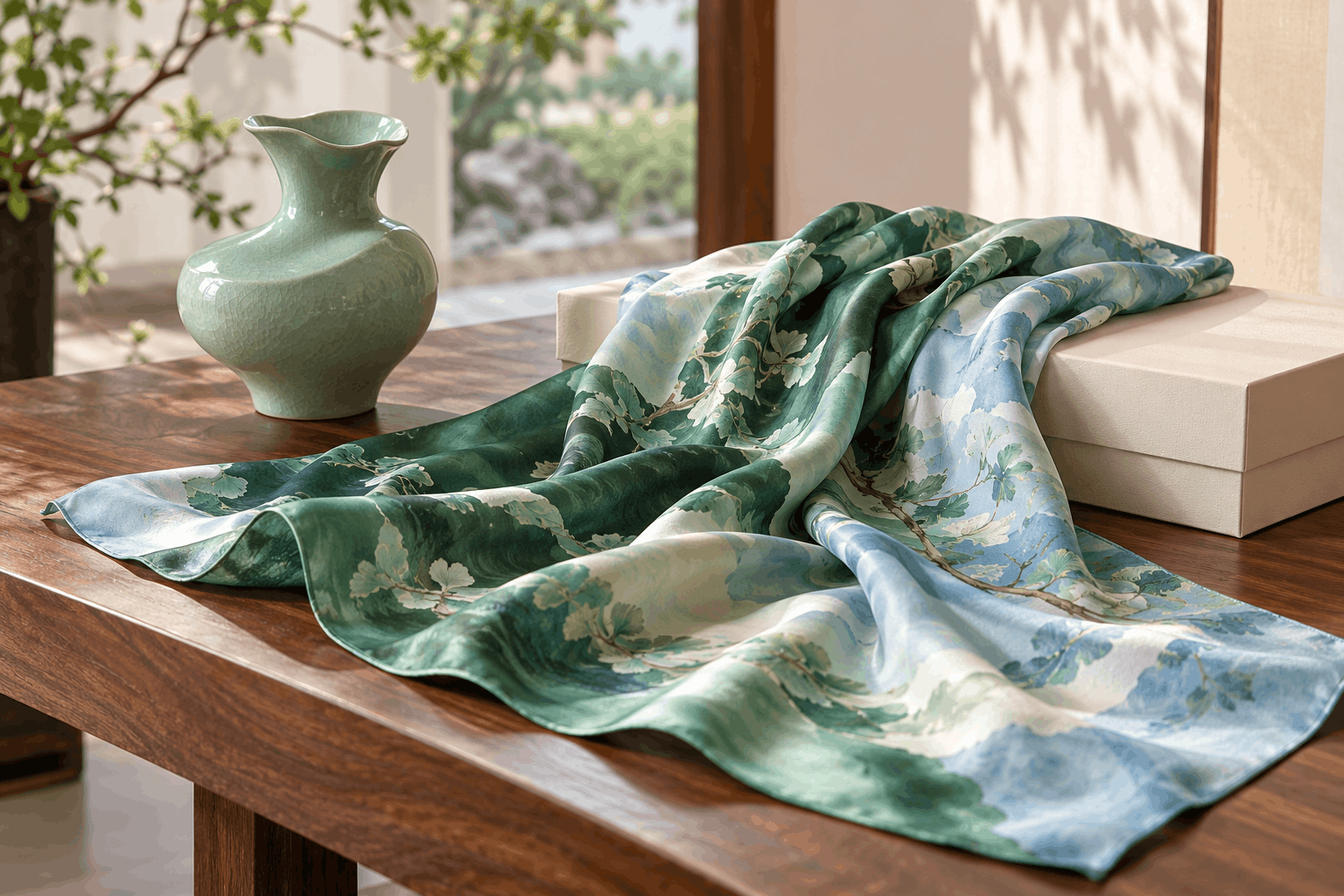
A woman with a strong sense of style may already own beautiful things. Choosing a gift for her calls for attention: to the colours she wears, the art she returns to, the objects she keeps and the stories she enjoys telling.
The most compelling luxury Chinese gifts for women combine beautiful design, clear material and production details, and a meaningful connection to the recipient. A silk scarf, a considered gift set, contemporary art or a carefully chosen ceramic piece can offer that combination. The cultural story adds depth when the object itself is something she wants to wear or live with.
At Lanting Loom, we think of luxury through cultural depth, craftsmanship, time and meaning. This guide applies that approach to choosing well: what to look for, what to ask and how to make a gift feel personal.
What makes a Chinese gift feel luxurious?
Luxury is a judgment, not a technical specification. To make that judgment useful, look for evidence in the object. Is the design distinctive? Are the materials clearly described? Does the finishing suit the intended use? Can the seller explain who designed it and where it was made?
A Chinese connection can come through a designer’s identity, a documented artistic reference, a material tradition or the place of production. These are different things. Being made in China does not establish a particular cultural meaning, while being inspired by Chinese art does not establish where an item was produced.
Look for clarity about both. A thoughtful brand should be able to describe its design inspiration and production accurately. That gives you a story you can share with confidence and helps the recipient understand what she is receiving.
For a wider selection of occasions and gift categories, explore our modern guide to meaningful Chinese gifts.
Choose the kind of luxury she will enjoy
| If she values… | Consider… | Look closely at… |
|---|---|---|
| Personal style and colour | A silk scarf or larger silk shawl | Palette, dimensions, drape, print and edge finish |
| Meaningful presentation | A scarf gift set with a clear design story | The main product, exact contents and personal-message options |
| Living with art | A contemporary artwork or edition | Artist, medium, provenance, size and her preferences |
| Objects used every day | A ceramic piece or carefully selected teaware | Maker, material, intended use and care |
| Independent design | A brooch, pendant or small design object | Materials, construction, comfort and the designer’s practice |
| Discovery and shared time | An art book paired with a cultural experience | Her interests, availability and what the experience includes |
Use this as a starting point. A gift should fit her actual habits: a scarf for someone who enjoys silk, a ceramic piece for someone who will use or display it, an experience for someone who would welcome the time.
1. A silk scarf chosen as part of her wardrobe
A scarf can bring together visual art and everyday dressing. Its composition changes as it folds, and a small area of colour can alter the feeling of a familiar outfit. That makes it a particularly personal gift when chosen with care.
Begin with colour and proportion
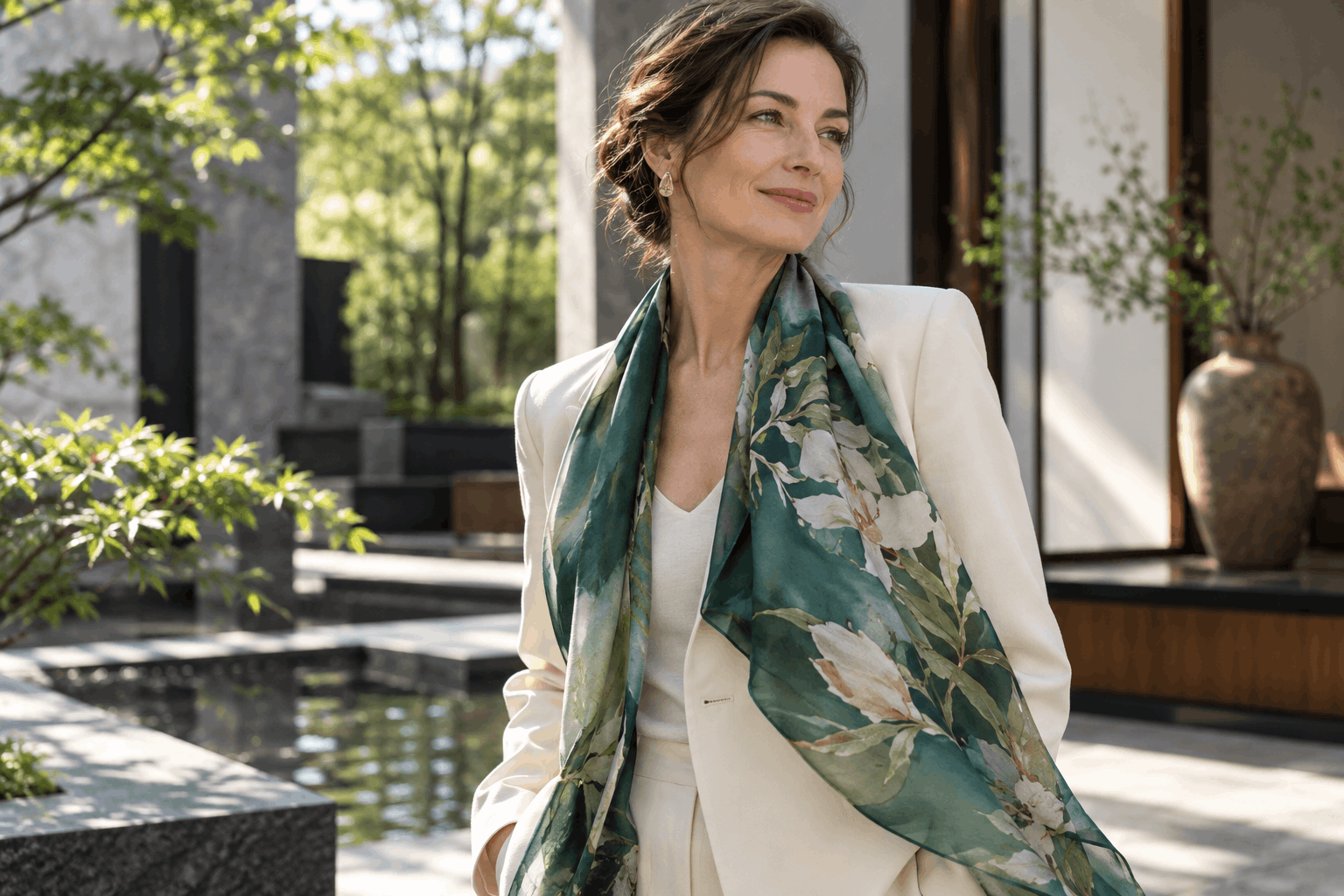
Notice the clothes she wears repeatedly. A woman who favours navy, cream and denim may enjoy a cool blue palette; someone who wears earthy colours may prefer mineral green, warm ivory or muted terracotta. These are possibilities, not rules based on age or appearance.
Next, choose the format. A small square creates a compact accent. A long scarf offers a different way to drape and layer. A large square or shawl gives the design more presence but may feel excessive to someone who likes very little fabric around her neck.
Check the exact measurements and look at photographs of the scarf both flat and worn. A striking centre image may disappear when folded narrowly, while a well-designed border can remain visible. Picture it with at least two outfits she already owns.
Compare the material and finishing
Read fibre composition, weave, dimensions, printing information and care instructions together. Silk describes the fibre; twill and satin describe weaves. A smooth-looking photograph alone cannot tell you the composition or quality.
Ask how the edges are finished if the description is unclear. Hand-rolled edges are a specific finishing detail, not proof that every stage of production was performed by hand. A printed silk design can be beautifully made; it should simply be described as printed.
For a concrete example, Bamboo in Blue Mist is described as a 180 × 65 cm mulberry-silk shawl with bamboo in mist blue, slate blue and pale celadon on pearl ivory. It may suit someone who enjoys cool colours and a broader drape. Its scale is as important to the choice as its botanical story.
2. A scarf gift set with a coherent story
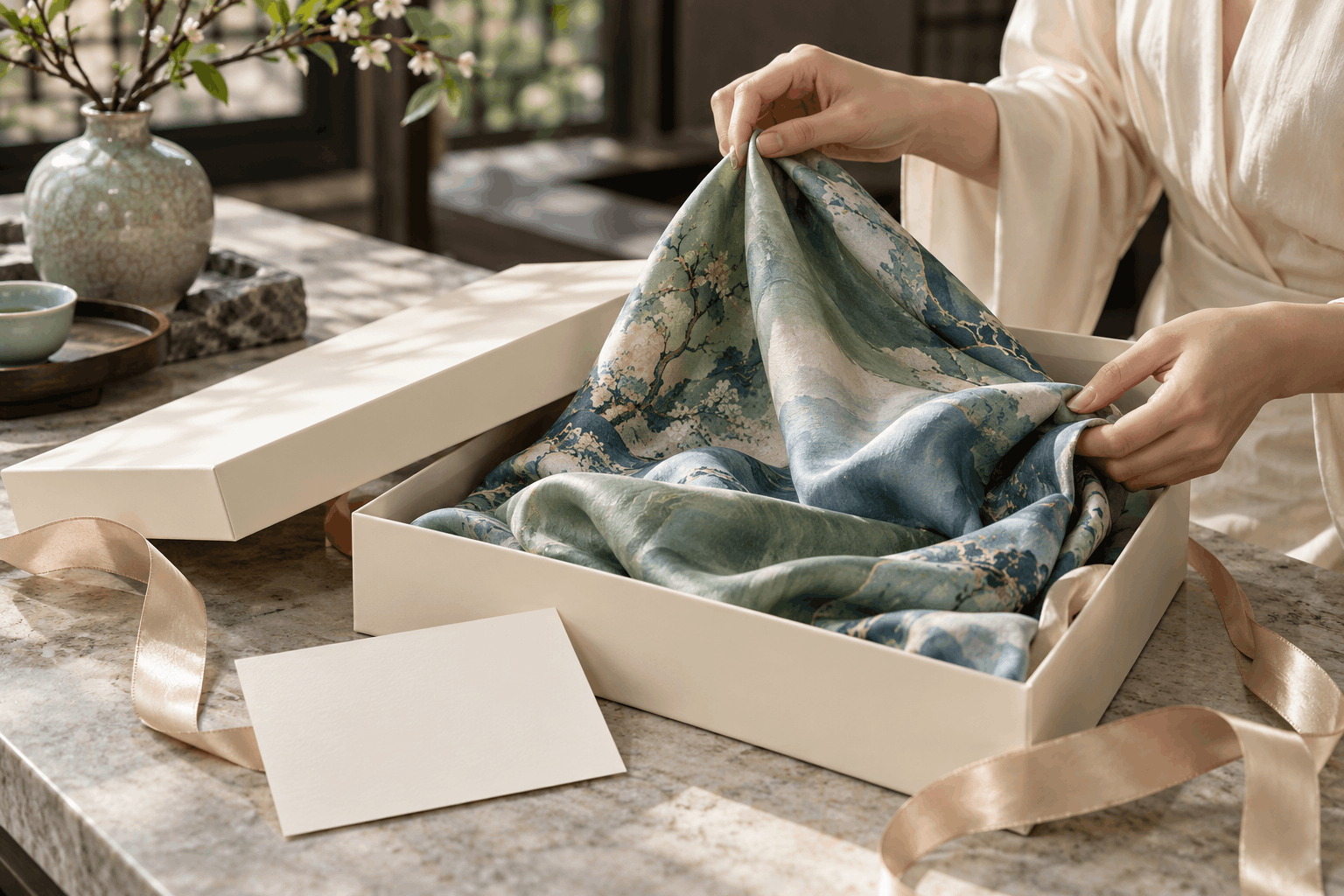
A gift set feels considered when each part supports the central object. A scarf, a design-story card, useful care guidance and a personal note can make a complete gift. Additional objects should have a reason to be there.
Evaluate the scarf first, then the presentation. Would she choose to wear it? Is the size suitable? Do you understand what the price includes? Packaging can improve the experience of receiving a gift, but the object needs to remain appealing after the box is put away.
A Letter from Lanting offers one example: a 63 × 63 cm mulberry-silk twill scarf, described with hand-rolled edges, presented with design and symbolism information, care guidance and a personal message. Its stated inspiration is the Orchid Pavilion gathering, interpreted through a contemporary printed composition.
That makes it a possible choice when friendship, conversation or a shared memory is part of your message. These are the brand’s design intentions; you can add your own connection without presenting every detail of the print as a historic symbol.
When comparing silk scarf gift sets, read the contents list carefully. Photographs may include props. If pairing a scarf with a teacup or jewellery yourself, choose both for her tastes rather than simply matching their colours.
3. Contemporary Chinese art she would choose to live with
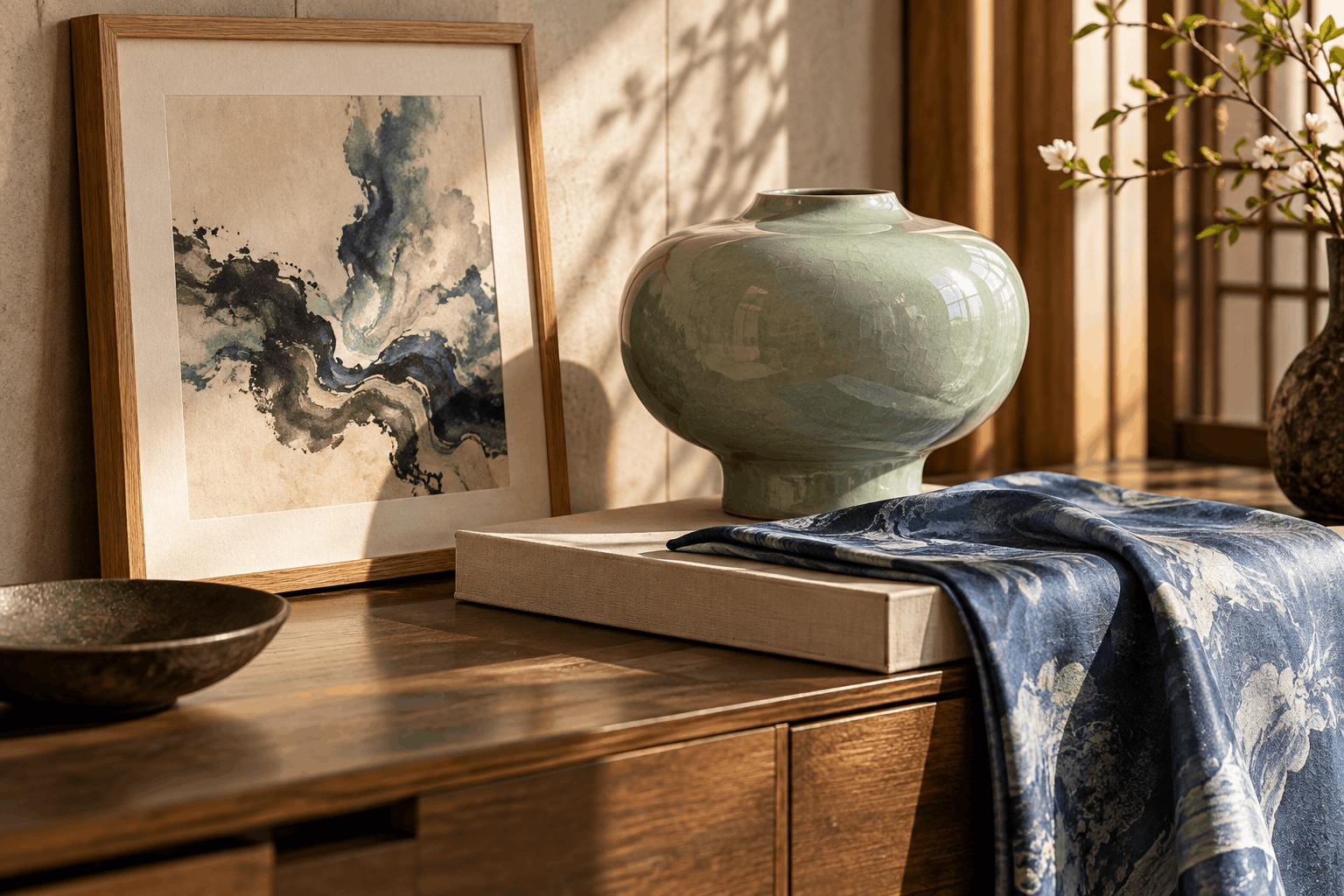
Art can be a deeply personal gift for someone who follows particular artists or enjoys collecting. Start with her interests: perhaps ink painting, photography, contemporary illustration or textile art. A work by a living Chinese artist does not need traditional imagery to have cultural relevance.
Ask what you are buying. An original work, an original print from an edition and a reproduction are distinct categories. Confirm the artist, title, medium, measurements, edition details where applicable and documentation supplied. A signature or number should have an explanation.
For a significant purchase, choose together unless you have strong evidence of her preferences. She may admire a large work in a gallery without wanting it in her home. Framing, light exposure, wall space and care are part of living with art.
A gift of art can be valuable emotionally without being presented as an investment. Focus on the work and the experience of owning it. Our Chinese gifts for art lovers guide offers further ways to connect a gift with a specific artistic interest.
4. Ceramics and teaware with a clear maker’s identity
A ceramic vessel can reward close attention through its shape, surface and balance. For a woman who notices interiors, a small piece by a maker she admires may be more welcome than a large decorative set.
Look for the maker’s name, material, dimensions and process. A celadon-coloured glaze is not jade, and an antique-looking finish does not make an object antique. If the description claims hand-forming or hand-painting, it should be clear which part of the process that refers to.
Decide whether the gift is for use or display. For teaware, check capacity, handling, intended food use and care instructions. A beautiful cup should suit the way she drinks tea. For a vase or sculpture, consider the space it will occupy and whether it needs special handling.
One excellent piece can feel complete. If you add tea, choose something she likes and can prepare with the equipment she owns. Avoid asking her to adopt an elaborate new ritual simply to enjoy your present.
5. A small object from an independent designer
A sculptural brooch, pendant or other carefully made accessory can suit someone who enjoys discovering designers. The strongest connection is often the designer’s individual work: how they approach form, materials or a particular reference.
For jewellery, check the material description, size, weight and fastening. A gold-coloured surface is not the same description as solid gold. If she has material sensitivities, choose only when you have the information needed to respect them.
Think about how she will wear the object. A heavy brooch may not suit delicate clothing. A long pendant may conflict with the necklines she prefers. A scarf ring is useful only if she enjoys that way of styling silk; it need not be added automatically.
Include the designer’s information, but keep the note personal. “I thought the shape would look beautiful with your favourite jacket” explains your attention more clearly than a general claim of exclusivity.
6. Art, knowledge and time together
For someone who prefers fewer possessions, consider a focused art book and a visit to an exhibition, collection or studio that interests her. The luxury may be the time to explore slowly, with the practical arrangements handled thoughtfully.
Check the current programme, availability, access and booking terms before committing. A flexible invitation can be more welcome than a fixed date. Choose a specialist tour only when the provider clearly explains the guide’s expertise and what is included.
If adding a book, select for subject and content rather than size. A catalogue about an artist she follows or a well-edited study of Chinese textiles can connect with an existing interest. Check whether she owns it and whether the language and level of detail suit her.
For more ideas when possessions are not the priority, see Chinese gifts for someone who has everything.
Cultural depth comes from an accurate story
The Metropolitan Museum of Art’s Noble Virtues: Nature as Symbol in Chinese Art explains that natural imagery can carry associations drawn from history, poetry and cultural memory. It discusses bamboo as a symbol of character enduring adversity and plum blossom as an emblem of bravery. It also notes that imagery can be decorative.
This distinction matters when buying. First identify what is depicted and how the designer explains it. Then separate the documented reference from your own wish. A garden-inspired scarf can recall a shared journey without claiming that every flower has a traditional meaning.
Be equally precise about production. “Heritage-inspired” describes a source of inspiration. It does not establish recognised heritage status, a particular maker’s training or hand production. “Designed by” and “made in” answer different questions, and both deserve clear answers.
For more recipient-focused inspiration across a wider range of budgets, explore Chinese gifts for her.
How to compare two premium gifts
Put the product descriptions next to one another and ask what the difference buys for this particular woman. It might be a preferred size, more suitable material, distinctive design, documented finishing or a better personal connection. A higher price by itself does not resolve the choice.
- Design: Is the work attributed, and can the seller explain its inspiration?
- Materials: Are composition and construction described precisely?
- Use: Does the size, weight or care routine fit her life?
- Presentation: Are the included items useful and clearly listed?
- Practical terms: Can you confirm delivery, returns and any personalisation limits before paying?
Set a comfortable budget before you compare. One well-chosen object can be more satisfying than a collection of smaller items. A generous gift should feel enjoyable to receive, without creating pressure to reciprocate.
Make it personal for the occasion
For a birthday: choose a detail that belongs to her—a favourite colour, artistic interest or memory. If symbolism is important, our Chinese birthday gift guide can help you match the message thoughtfully.
For an anniversary: connect the gift with something shared. A design recalling a garden, city or conversation can feel more intimate than a generic romantic motif.
For a thank-you: name the kindness you appreciate. Keep the value and level of personal detail appropriate to the relationship; our Chinese thank-you gift guide includes message ideas.
For a professional milestone: celebrate her effort and interests. A piece she can enjoy in her next chapter may feel more personal than an object chosen only to signal achievement.
A short note is enough: “I chose these colours because they reminded me of the garden we visited together,” or “A small celebration of everything you have put into this new chapter.”
Frequently asked questions
What are good luxury Chinese gifts for women?
Consider a silk scarf, a coherent scarf gift set, contemporary Chinese art, ceramics or an independent designer’s accessory. Choose according to her taste and check the actual materials, production details and included contents.
Is a silk scarf suitable for someone who already owns designer accessories?
It can be, especially if the design or cultural connection offers something she will enjoy. Check whether the size and palette add to her wardrobe rather than repeating something she rarely wears.
Does a Chinese gift need traditional decoration?
No. Contemporary work can connect through the designer, a documented inspiration or a material practice. Traditional designs can also be beautiful; let her preferences guide the visual style.
How can I tell whether a gift is genuinely handmade?
Ask which processes are performed by hand and by whom. A hand-finished edge, hand-painted surface and fully hand-formed object describe different kinds of work. Avoid inferring production methods from appearance alone.
Should I choose a scarf or a gift set?
Choose the scarf first. A set is worthwhile when the additional elements improve the experience and suit the recipient. Read the contents list rather than assuming everything in the photograph is included.
What if I am unsure about her taste?
Use an interest she has mentioned, offer a small selection to choose from or plan a shared experience. For a significant art or jewellery purchase, involving her can be more thoughtful than making a costly guess.
A beautiful object, chosen with attention
The most lasting impression comes from recognising the woman who will receive the gift. Choose something she will enjoy wearing or living with, understand how it was made and explain the connection in your own words.
Explore Lanting Loom’s silk scarves and curated gift sets for pieces shaped by cultural stories and contemporary design. Let beauty make the first connection, and let your message make it personal.
