

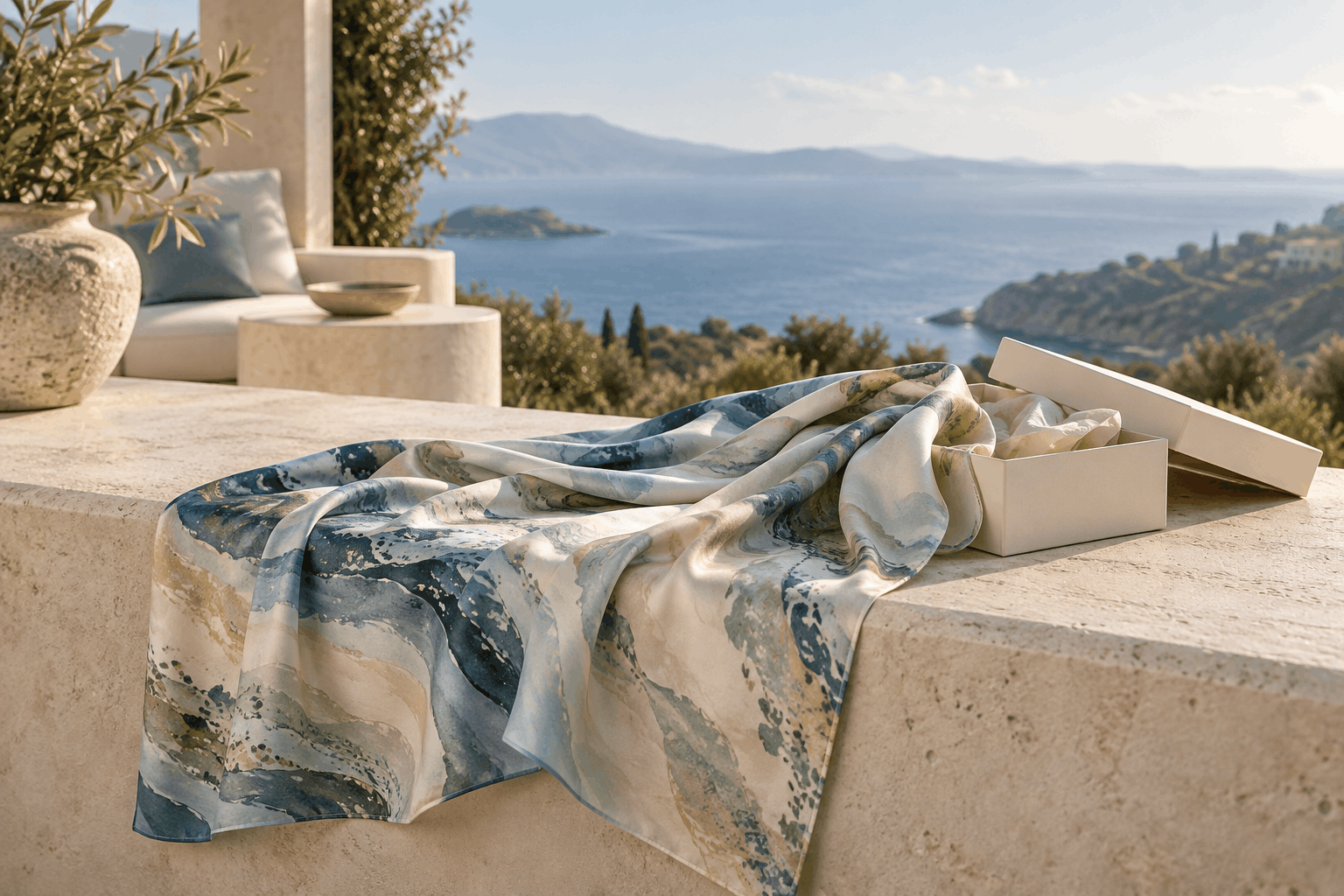
The most memorable destination gifts capture something particular about a place: the movement of water, the planting of a garden, the rhythm of its architecture or a story encountered during a visit.
A successful keepsake also works as an object in everyday life. It might be a scarf someone enjoys wearing, a ceramic piece they use at home or a gift they choose for a friend who never made the journey.
For hotels, museums, visitor destinations and travel companies, the challenge is to connect that everyday appeal with a clear sense of place. This guide explains how to develop destination gifts that feel considered, distinctive and worth keeping.
What Makes a Destination Gift Feel Meaningful?
Souvenirs can carry powerful memories, regardless of their price or format. A familiar postcard or small ornament may mean a great deal to the person who chose it.
When developing a more design-led keepsake, the opportunity is to give the object appeal beyond its role as a record of the visit.
Three qualities matter:
- A specific connection: the design has a genuine relationship with the destination.
- Independent appeal: the recipient would enjoy the object even without a prominent place name.
- An understandable story: the connection can be explained clearly and accurately.
A useful test is to imagine the gift without its logo or packaging. Does it still feel desirable? Then put the story back: does knowing its origin make it more interesting?
1. Start with a Particular Detail of the Place
A destination may have dozens of recognisable features. Trying to include all of them in one product can make the result feel crowded and generic.
Start with one detail that supports a coherent design.
Possible sources include:
- The changing colours of a coastline.
- Water reflections in a courtyard or garden.
- The geometry of a building’s windows.
- A locally significant plant, accurately identified.
- An approved archive drawing or collection object.
- A contemporary artist’s interpretation of the destination.
Ask the people who know the place well what visitors tend to notice and remember. Hotel teams, guides, curators and local collaborators may identify details that are absent from standard promotional imagery.
For a hotel, the strongest starting point may be a feature guests encounter during their stay. Lanting Loom’s hotel and hospitality gifting options provide a route for exploring property- and destination-inspired silk projects.
2. Translate the Source into Design
Once the source is chosen, consider how it can become colour, line, rhythm and composition.
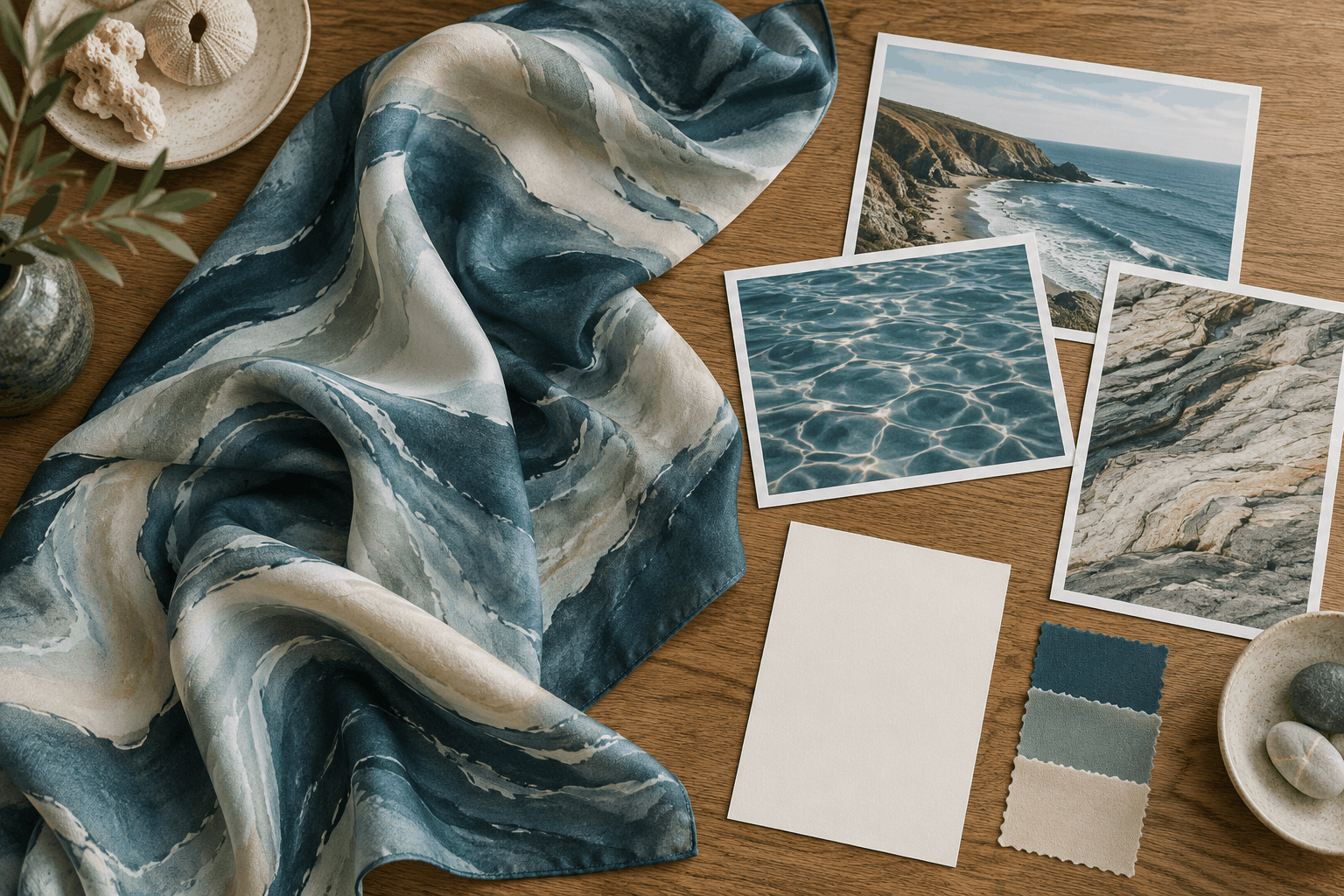
A coastal photograph does not have to be printed directly onto a scarf. Its shifting tones could become an abstract pattern. A building’s window grid might become a border. The movement of branches could guide a flowing composition.
The design should suit the product rather than simply fill its surface.
For a silk scarf, review:
- How the composition looks fully open.
- Which colours remain visible when folded.
- Where key details appear when tied.
- Whether the border helps frame the design.
- How the pattern relates to the scale and movement of the fabric.
Abstraction alone does not make a gift distinctive. Keep a record of the original source and the design decisions that connect the finished piece to it. Otherwise, an attractive pattern may become so general that it could represent anywhere.
For an original textile commission, explore Lanting Loom’s bespoke silk scarf projects.
3. Choose a Product People Will Want to Use
The destination story can add meaning, but the product still needs to succeed in its intended role.
Silk Scarves
A scarf offers room for colour and composition while folding into a compact format. It can suit visitors who appreciate fashion, textiles, museums and design.
Check fabric composition, dimensions, print quality, edge finish and care information. A design that looks beautiful in a digital mockup should also feel comfortable and look balanced when worn.
For mixed audiences, consider an alternative for people who would not use a scarf or prefer to avoid silk.
Small Ceramics and Design Objects
A cup, keepsake dish or small sculptural piece can connect with a destination through material, form or a collaboration with a maker.
Assess the practical details: stability, intended use, protective packaging and whether the object is comfortable to carry home.
Useful Textile Accessories
A well-made pouch or other small textile accessory may offer a more accessible entry into a destination collection.
Choose the format around a real use. Check closures, lining, dimensions and cleaning instructions rather than relying only on the printed artwork.
Curated Gift Sets
A set can work when the pieces share a clear relationship. A scarf with a story card and an appropriate accessory may be enough. A scarf and teacup could suit a destination where tea forms a meaningful part of the visitor experience.
These are product-development directions, not a promise that every combination is available. Confirm components, quantities and feasibility with the supplier.

4. Be Precise About Inspiration and Production
A gift inspired by a destination is not necessarily made there. Both can be legitimate approaches, but the description should make the distinction clear.
Separate these questions:
- Inspiration: what place, story or object informed the design?
- Design: who developed the artwork or product?
- Production: where and how was it made?
- Collaboration: which people or organisations contributed?
A scarf inspired by a coastal hotel should not be described as locally made unless it is. A printed interpretation of a textile pattern should not be presented as woven or embroidered.
For Lanting Loom products, the wording “Designed by Lanting Loom; made in China” identifies design and production origin clearly. A destination-specific story can sit alongside that information without implying a different origin.
Likewise, use “handmade,” “artisan-made” and “heritage technique” only when the actual process supports the claim.
5. Treat Cultural Sources as More Than Decoration
Some destination stories involve living traditions, community knowledge or imagery with particular cultural significance.
UNESCO describes intangible cultural heritage as practices, knowledge and expressions recognised by communities as part of their cultural identity. This is broader than a collection of visual motifs.
Where a project draws on such sources, involve appropriate people in the interpretation. Establish who should review the concept, how contributors will be credited and what permissions or agreements are needed.
Do not assume that an image available online is suitable for commercial adaptation. For artwork, photographs, archive material and logos, confirm the rights required for the proposed use.
A museum or cultural institution may already have a review process. Build that process into the schedule rather than treating it as a final packaging check.
Lanting Loom’s museum and cultural institution projects offer a relevant starting point for these discussions.
6. Give the Story a Clear Place in the Presentation
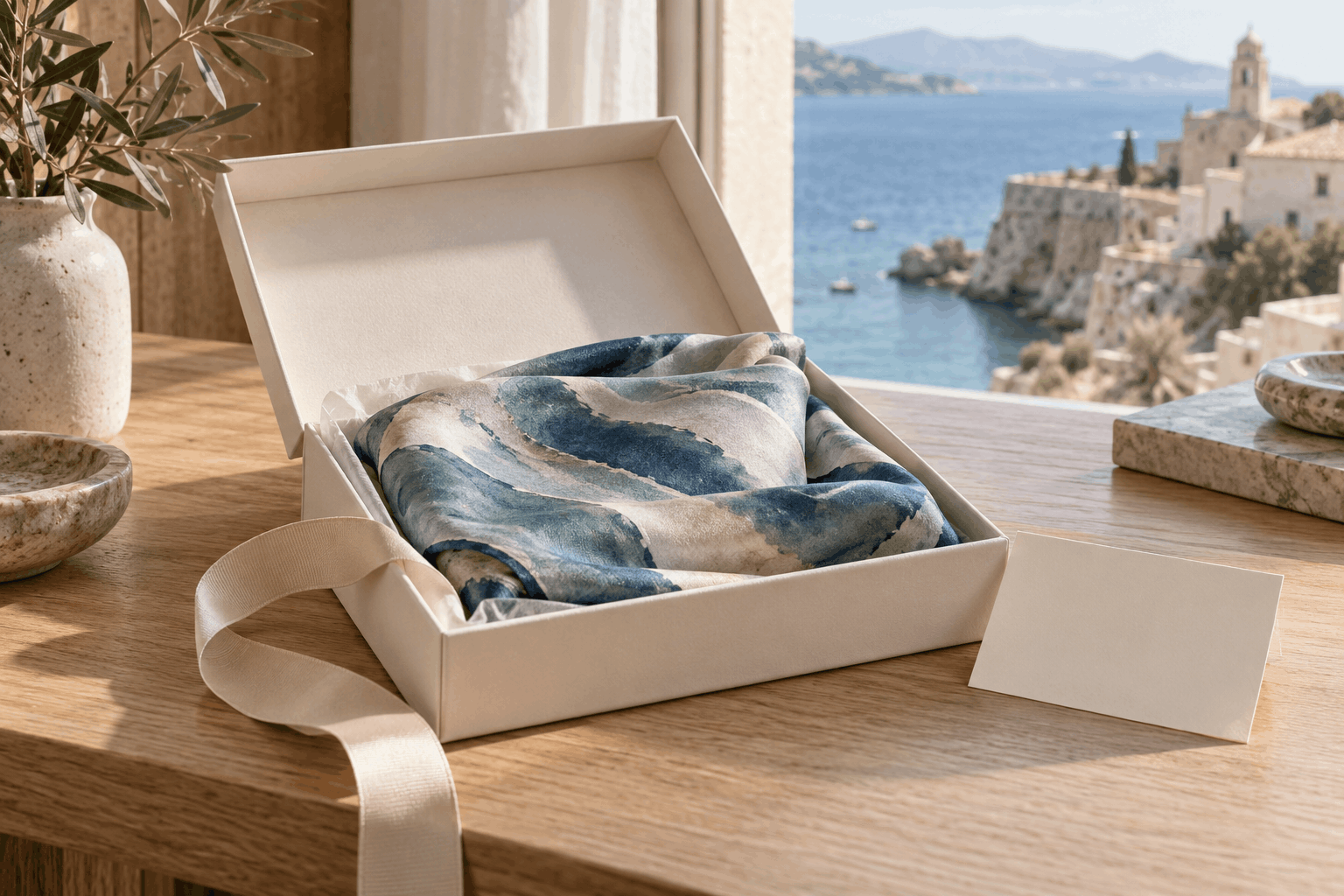
The product does not need to carry every piece of information about the destination. A concise card or presentation sleeve can explain the connection while allowing the design to remain wearable or useful.
A helpful story card answers:
- What inspired the design?
- Why does that source matter to this destination?
- How has it been interpreted in the product?
- Who designed and made the finished piece?
Write for a visitor who may know little about the place. Introduce unfamiliar names and avoid vague claims such as “an ancient symbol of harmony” without an identified source.
For a fictional coastal project, a short opening might read:
“Inspired by the shifting water and pale stone of the bay, this design translates reflections and shoreline contours into flowing bands of blue, sage and ivory.”
That explains a design decision without inventing a historical or symbolic claim.
A QR code can link to a longer story, but the essential explanation should remain available on the card. Keep the linked page accessible after the event or exhibition ends.
7. Keep Branding Proportionate
A destination’s identity can be visible without occupying the centre of the product.
Consider placing the strongest branding on:
- A removable presentation sleeve.
- The story card.
- A discreet mark on the box.
- A small, approved detail within the design.
For a scarf, the destination connection may already be present through its palette and composition. Additional wording should help the design rather than compete with it.
If the gift marks an opening or anniversary, consider keeping the date on an insert. This can allow the main product to remain relevant beyond the occasion, provided that approach fits the project.
Three Destination Gift Concepts
The following fictional examples show how different sources can lead to distinct products. They are concept directions rather than completed collaborations.
A Coastal Retreat: Water, Stone and Light
Source: the changing reflections visible from the property’s terrace.
Design direction: flowing bands and broken colour in sea blue, sage, ivory and sand.
Possible product: a silk scarf with a compact presentation box and a card explaining the landscape connection.
What makes it specific: original reference photography and a composition developed from the particular shoreline, rather than a generic nautical pattern.
A Garden Destination: Planting and Paths
Source: a documented planting scheme and the way paths move through the garden.
Design direction: botanical forms balanced with lines that suggest the visitor’s route.
Possible product: a square scarf or a coordinated textile accessory.
What makes it specific: accurately identified plants and a story connected to the garden’s design, season or history.
An Urban Cultural Venue: Architectural Rhythm
Source: a distinctive façade, interior detail or approved architectural drawing.
Design direction: a repeated geometry, restrained border or interplay of solid colour and open space.
Possible product: a scarf or small design object developed with suitable permissions.
What makes it specific: a recognisable relationship to the building’s proportions and materials, supported by a clear explanation.
Plan for Retail, Hospitality or Event Gifting
The same destination concept may need different treatment depending on how the gift reaches the recipient.
Retail Collections
Visitors need to understand the product, its price and its connection to the place quickly. Show the item clearly, provide material and care information, and explain the story in a few sentences.
Start with a manageable selection and review sales before expanding colours or formats. Our art museum gift shop guide discusses related considerations for cultural retail.
Hotel Guest Gifts
Consider whether the item is presented at arrival, placed in the room or given at departure. Match the format to the guest experience and confirm that staff can explain why it was selected.
Delegation and Event Gifts
Account for recipient preferences, acceptance policies and the journey home. A consistent presentation can connect the gifts to the occasion while allowing alternative products where needed.
See our guide to gifts for international delegates for practical planning considerations.
Make the Gift Easy to Take Home
A keepsake should not become a packing problem.
Review the finished package, including the box and any accessories. Consider weight, fragility, opening and closing, and how much space it takes in luggage.
Keep care and material information with the product. For items such as food, plants or untreated natural materials, check relevant destination requirements before including them in an international gifting programme.
For a scarf-led gift, restrained packaging can protect the fabric and provide a meaningful opening experience without adding unnecessary bulk.
What to Include in a Destination Gift Brief
Before requesting proposals, gather the information that will shape the design and production choices:
- The destination, property or institution.
- The intended audience and how the gift will be distributed.
- The source story and available reference material.
- The preferred product format.
- The approximate quantity and budget.
- The required arrival date and delivery destination.
- Any artwork permissions or cultural review requirements.
- The proposed branding and presentation.
- Whether the collection may be reordered.
Mark what is essential and what is open to recommendation. Our corporate gifting brief template can help organise the practical details.
Frequently Asked Questions
What is a destination gift?
A destination gift is an object connected to a place, property or visitor experience. It may be sold in a shop, presented to guests or given at an event. Its connection can come through design, materials, a collaboration or an accompanying story.
How do you make a destination gift feel less generic?
Start with a specific source, develop a design that suits the product and explain the connection accurately. Give the object appeal beyond a printed place name or logo.
Does a destination gift have to be made locally?
Not necessarily, but its production origin should be clear. Distinguish a locally made product from one designed elsewhere or inspired by the destination. If local production is part of the project’s purpose, make it an explicit sourcing requirement.
Are silk scarves suitable destination gifts?
They can suit visitors who appreciate wearable design. Scarves provide room for a landscape, architectural or botanical interpretation while folding compactly. Assess the actual fabric, finish and appearance when worn.
Do you need a completely bespoke product?
No. An existing product may complement the destination, with the relationship explained through adapted presentation. Describe it as selected for the occasion rather than exclusively designed for it.
How many products should a destination collection launch with?
There is no fixed number. Begin with a selection that fits the audience, budget and display space, then use feedback and sales to decide what to reorder or develop further.
Create Something People Will Keep Using
A considered destination gift brings a place into everyday life through an object that is enjoyable to own. The story gives it context; the design and quality give it lasting appeal.
Lanting Loom welcomes enquiries for curated silk gifts, adapted presentation and bespoke scarves inspired by places, properties and cultural stories. Feasibility, quantities, pricing and timing depend on the proposed project.
Explore our corporate gifting options and share your destination, audience, source story, quantity and required delivery date to begin a conversation.
