

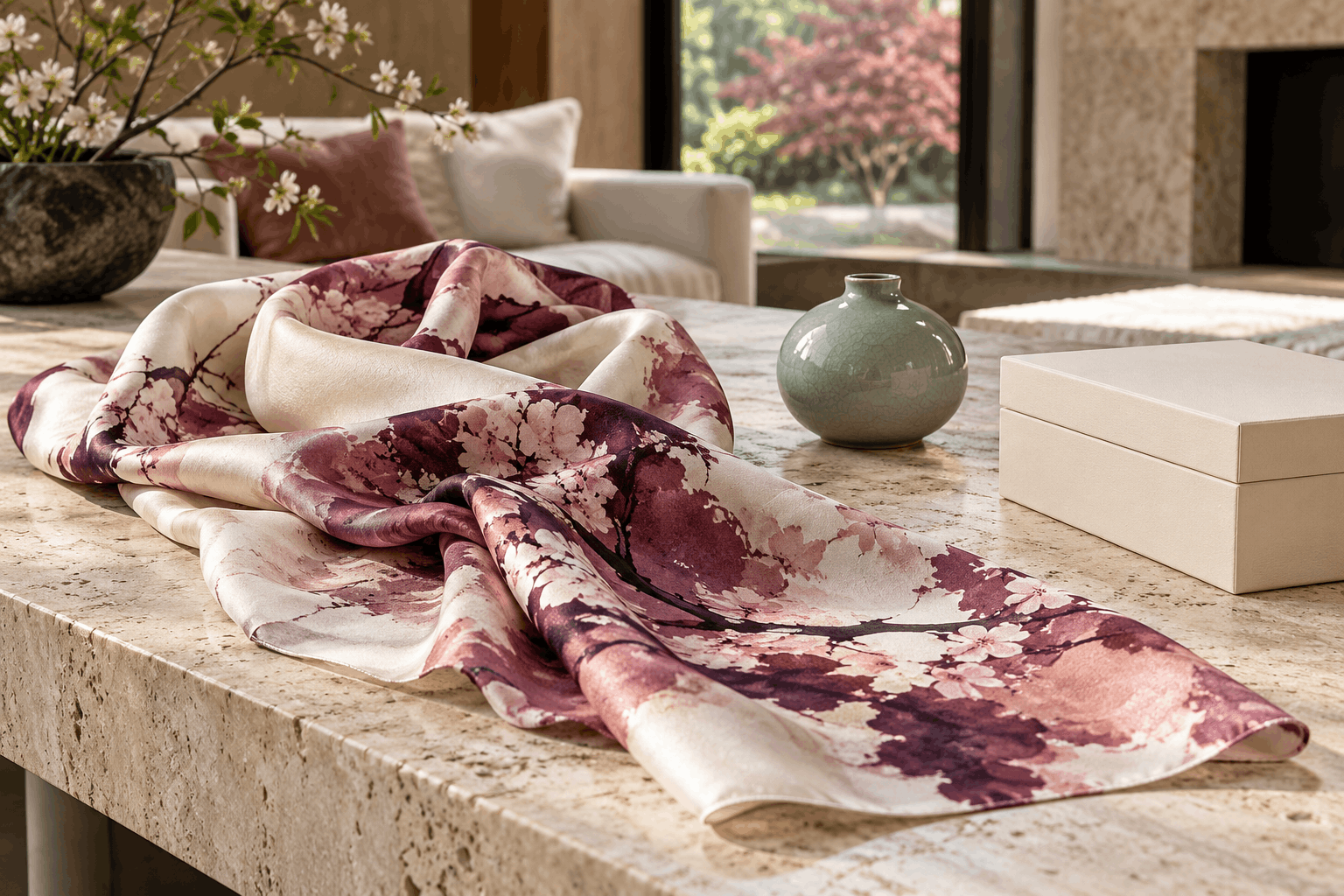
The most memorable gift often reveals how closely someone has paid attention. It reflects a favourite colour, an interest in art, a shared journey or a small ritual that makes daily life more pleasurable.
Luxury Chinese gifts bring that personal attention together with considered design, fine materials and a meaningful connection to Chinese art or culture. They can include silk scarves, ceramics, artworks, tea-related objects and curated sets. The best choice is the one whose quality you can understand and whose place in the recipient’s life you can picture.
This guide offers a starting point for contemporary cultural gifting: what to choose, what makes it feel luxurious and how to make the final gift personal.
What Makes a Chinese Gift Luxurious?
Luxury is easier to recognise when you look beyond the label. A pleasing material, a well-resolved design, careful finishing and a story with substance each contribute to the experience. Together, they give the recipient reasons to enjoy the object long after opening it.
For cultural gifting, four qualities are particularly useful:
- Material: the object feels appropriate to its purpose, with clear information about what it is made from.
- Craft and design: the finish and composition reward closer attention.
- Cultural connection: the inspiration or making tradition is explained accurately and specifically.
- Personal meaning: the choice reflects something about the recipient or your relationship.
A high price cannot supply the last quality on its own. A carefully selected scarf may feel more meaningful than a larger set chosen without reference to the person. Equally, a beautifully made decorative object can be an exceptional present for someone who loves living with art.
For a closer examination of these qualities, read what makes a Chinese gift feel luxurious.
What does “Chinese” describe?
It may describe the designer’s identity, the place of production, an artistic reference or a particular craft tradition. These connections can overlap, but they are not interchangeable. A gift inspired by Chinese painting does not automatically use a traditional production technique; a contemporary object made in China may have a very individual design language.
Look for a clear explanation of the connection that matters to you. This helps you understand the piece and share its story naturally.
Contemporary Cultural Gifting Leaves Room for Different Styles
A gift can carry cultural depth through an expressive pattern, a quiet ceramic form, a reference to a garden or the rhythm of a landscape composition. It need not use the same visual language as another object with a similar source of inspiration.
The V&A’s Dimensions: Contemporary Chinese Studio Crafts explores how innovation grows from longstanding craft traditions. That relationship offers a useful way to approach contemporary gifts: consider both what a piece draws from and what its designer brings to it.
Traditional and contemporary approaches can each produce a compelling luxury present. Let the recipient’s interests guide you. Our comparison of traditional and contemporary Chinese gifts explores when each direction may be the stronger choice.
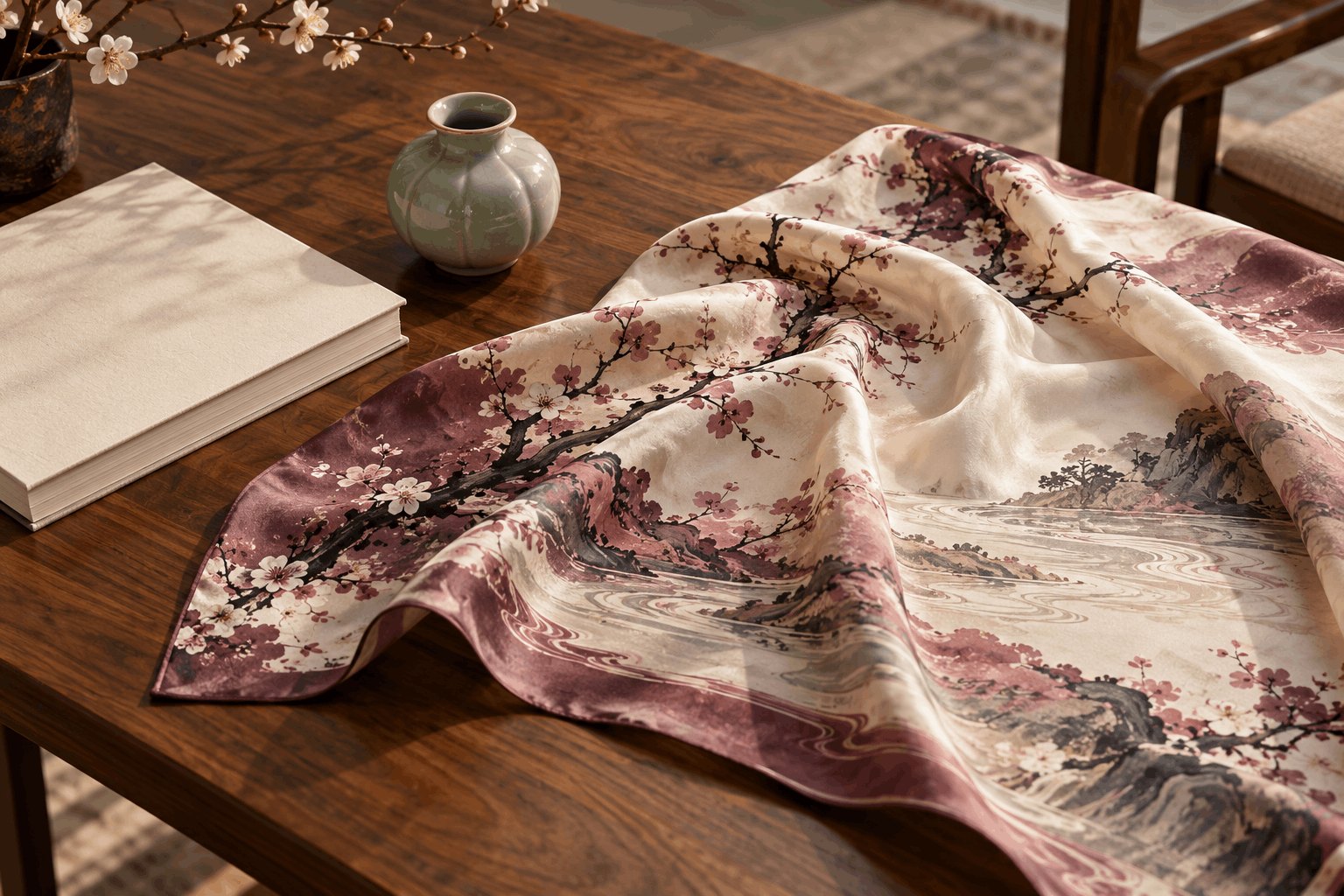
Luxury Chinese Gift Types to Consider
| Gift type | Who may enjoy it | What to check |
|---|---|---|
| Artistic silk scarf | Someone who enjoys colour, accessories, travel or wearable design. | Fibre composition, dimensions, edge finish, styling photographs and care. |
| Ceramic vessel or tea ware | Someone drawn to interiors, tactile objects or a tea ritual. | Maker, material, size, intended use and care requirements. |
| Original artwork or edition | A recipient whose artistic preferences you know well. | Artist, medium, dimensions, documentation and framing needs. |
| Art or design book | A curious reader, museum visitor or collector. | Subject, language, edition, image quality and whether they already own it. |
| Curated gift set | Someone who will appreciate the relationship between its components. | Exact contents, quality of each item and the purpose of the pairing. |
Silk scarves: cultural design to wear and enjoy
A silk scarf gives an artistic composition movement. Colours meet differently when it is folded, a border becomes a visible accent when tied, and a larger design may reveal only a small detail when worn.
Choose the format with the recipient in mind. A compact square may suit someone who likes a neat neck accent, while a longer scarf offers a different drape. Neither format is universally better; look at what they already wear and the styling possibilities shown for the actual piece.
Check fibre composition rather than relying on the word “silky,” and read the dimensions before judging scale from a photograph. For more detail, explore Chinese silk gifts and their cultural meaning.
Ceramics and tea-related objects: beauty in daily rituals
A cup, vase or small sculptural vessel can appeal through proportion, surface and the pleasure of handling it. Think about whether the recipient will use the piece, display it or enjoy both.
For tea ware, their existing routine matters. Someone who prepares tea in a particular way may have strong preferences about capacity and shape. A decorative vessel should be chosen for display unless the seller clearly confirms its suitability for the use you intend.
If you are considering tea itself, establish the recipient’s taste and read the product’s origin, quantity and storage information. A prestigious description is less useful than knowing whether they will enjoy drinking it.
Artworks, editions and books: gifts for a focused interest
Art can be deeply personal. Notice the subjects, artists and media that attract the recipient. For a significant purchase, choosing together can be a thoughtful part of the experience.
Distinguish an original artwork from an edition or reproduction, and confirm what documentation comes with it. Include framing in your planning where necessary. A carefully chosen book can also be a satisfying gift when it relates closely to an exhibition, collection or subject they love.
Our guide to Chinese art gifts for collectors and design lovers helps you approach these choices.
Gift sets: a complete experience with a clear purpose
A set works well when each component belongs. A silk accessory and a useful styling addition can form a coherent pairing. Tea ware and a suitable tea can invite a shared ritual. The connection might be practical, visual or rooted in a story.
Read the contents item by item. Ask whether you would still choose the main object on its own and whether the additional pieces improve the gift. For a more detailed checklist, see how to choose personal luxury Chinese gift sets.
Choose for the Person Before Choosing the Category
For someone who loves fashion
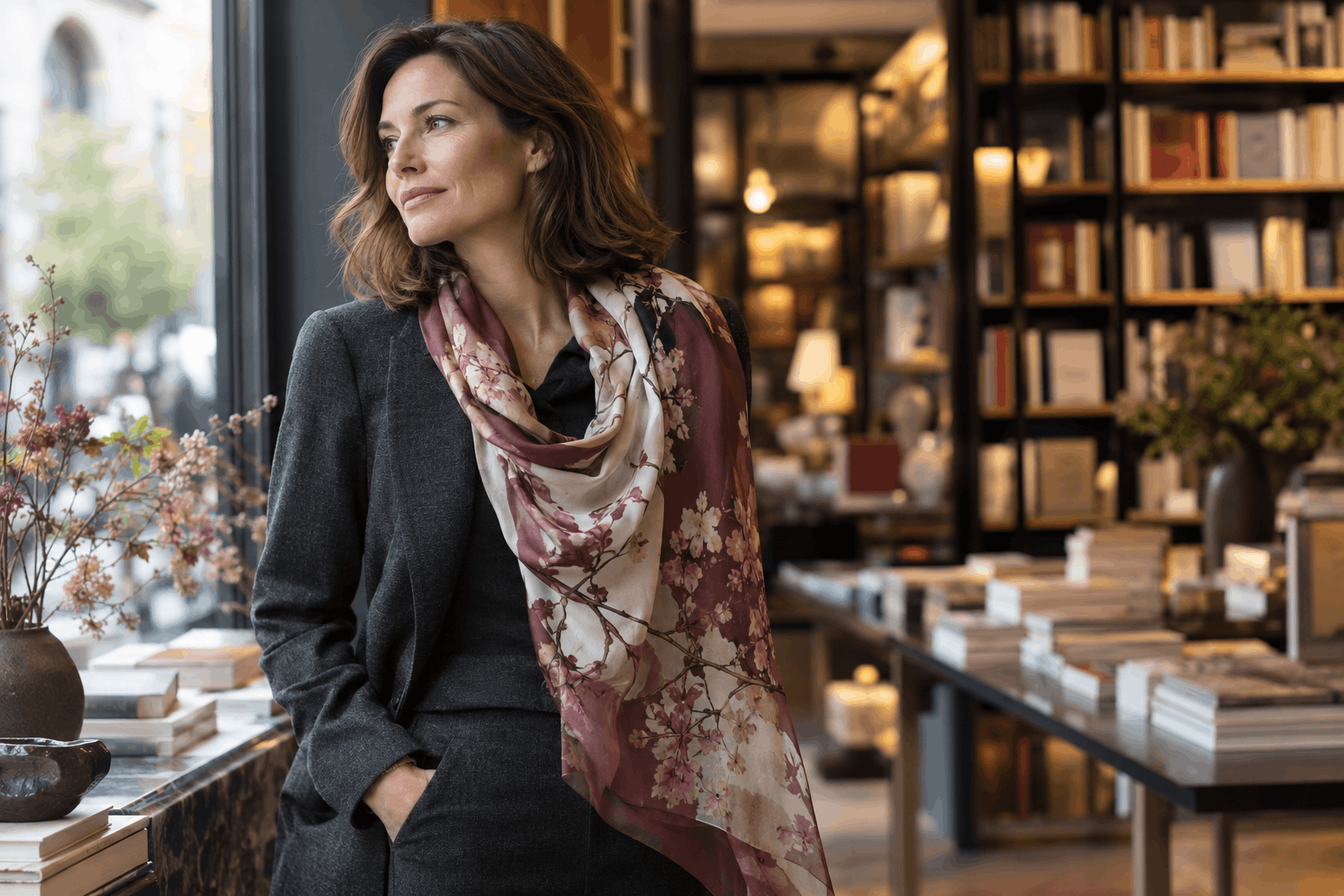
Start with their wardrobe. Notice colours they repeat, whether they prefer large or delicate patterns and how often they wear accessories. An artistic scarf in a familiar palette can introduce something new while feeling easy to use.
For more ideas centred on personal style, explore luxury Chinese gifts for women. Use the recipient’s individual preferences to narrow the choice.
For an art or design enthusiast
Look for a clear creative point of view. They may appreciate how a reference has been interpreted as much as the reference itself. A compelling composition, unusual material treatment or carefully considered form gives them something to discover.
Check whether they enjoy owning art, reading about it or wearing it. Those interests can lead to very different gifts.
For someone who enjoys hosting
Consider objects that fit the way they welcome people: a pair of cups, a modest serving piece or a vessel for flowers. Pay attention to their table, storage space and care preferences.
A host who likes an effortless routine may appreciate an object that is straightforward to use. Someone who enjoys looking after delicate pieces may welcome a more demanding material.
For someone who seems to have everything
Look for specificity. A design recalling a shared trip or a book connected to a recent conversation gives you a reason to choose that particular gift. Think of something they would be glad you remembered.
If you cannot identify a clear preference, a conversation or a shared selection may be more rewarding than increasing the budget.
Match the Gift to the Occasion
The occasion shapes the tone of a gift, while the recipient’s taste determines its form.
- Birthdays: centre the person’s interests, favourite colours or a new enthusiasm.
- Anniversaries: choose a piece connected to a shared place, experience or memory.
- Thank-you gifts: keep the gesture proportionate to the relationship and make your message specific.
- Housewarmings: consider both the household’s taste and the space the object will occupy.
- Lunar New Year: combine personal preference with the recipient’s own festive customs.
A cultural gift can be enjoyed throughout the year. If you are choosing specifically for the festival, our Chinese New Year gift guide covers seasonal considerations in more detail.
For professional relationships, the recipient’s organisation may have rules about gifts. Check those before selecting a high-value present. For coordinated orders or a company project, use the corporate gifting route to discuss the brief and practical requirements.
How to Assess Quality and Cultural Meaning
Read the specifications before the adjectives
Useful details include composition, measurements, finish, maker information and care instructions. Photographs should help you judge scale and surface as well as create atmosphere.
For silk, compare the full design with images showing it worn. For ceramics, look for different views. For a print, confirm both the image size and the overall sheet or framed size.
Look for a specific, understandable story
A description should help you answer: what inspired this piece, and how is that inspiration expressed? A garden, a literary reference or a painting tradition becomes more meaningful when the connection to the object is clear.
Avoid assuming that every motif has one universal meaning. Read the explanation for the particular design, and distinguish that cultural context from the personal meaning you bring to the gift.
Our guide to gifts inspired by Chinese art and culture explores how to evaluate artistic references.
Understand what the making claims describe
If a seller mentions handwork, a named technique or a specialist craft tradition, look for details about how it applies to the piece. A printed design, an embroidered textile and a hand-painted surface involve different work and should be described accordingly.
Contemporary production and traditional techniques can each produce beautiful results. What matters is that the explanation is accurate and the finished object meets your expectations.
Picture the gift in ordinary life
Imagine the recipient reaching for the scarf, placing the vase or using the cup. Does the size make sense? Will the care feel manageable? Is there an obvious place for it?
For ideas that focus on everyday appeal, read contemporary Chinese luxury gifts that feel at home in modern life.
Set a Budget Around the Complete Gift
Choose an amount that feels comfortable for the relationship and occasion. Within that budget, give priority to the main object’s quality and relevance.
Compare like with like. A larger scarf is not automatically a better choice than a smaller one; a larger set is not automatically more considered. Size, material, production and presentation all affect what you receive.
Include any practical extras in your planning: framing for a print, suitable packaging for a fragile object or delivery costs shown for the destination. Check the expected arrival window and return terms before ordering for a fixed date.
If the budget feels stretched, simplify the gift. One well-chosen piece with a thoughtful message can feel complete.
Presentation Gives the Gift Its Personal Context
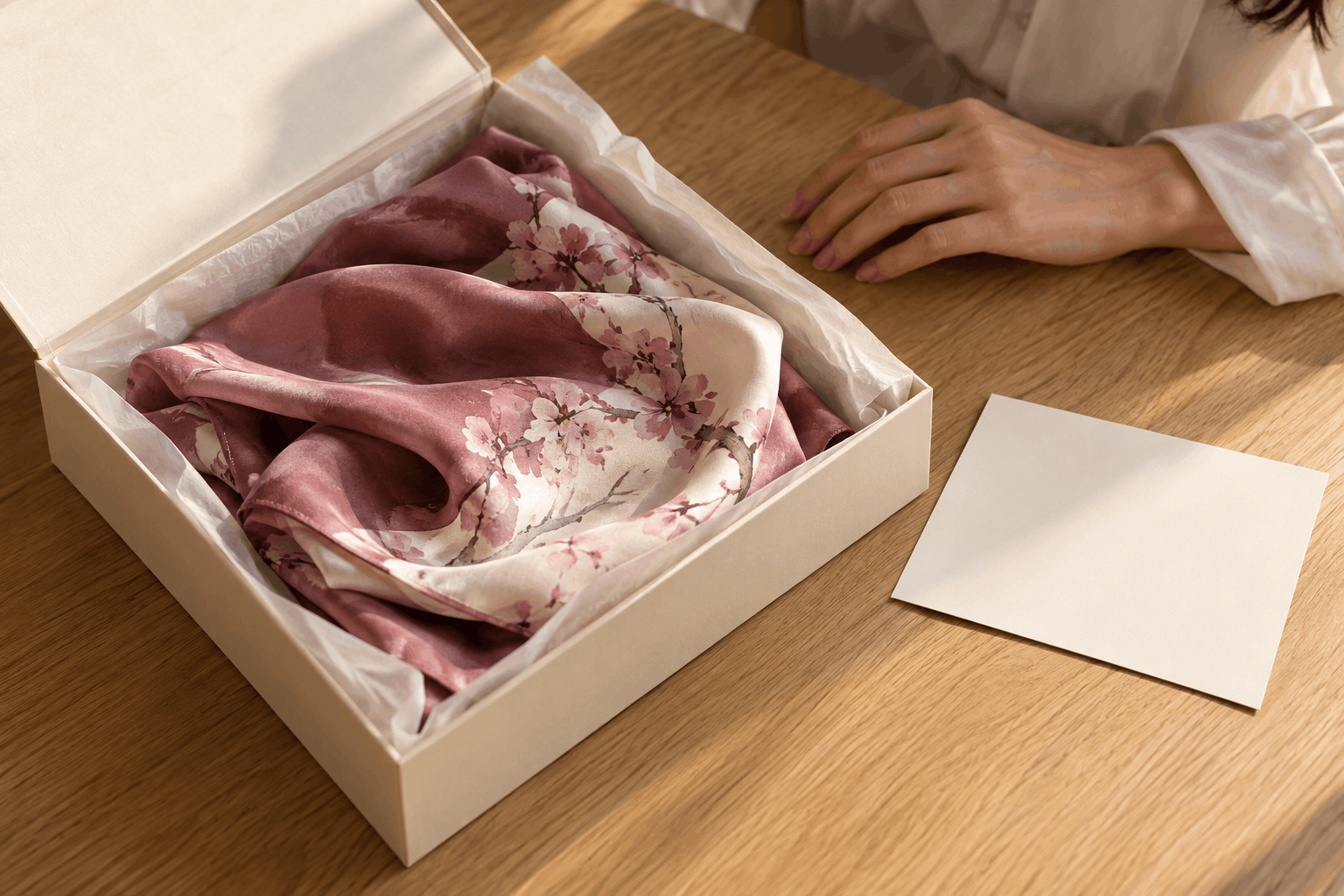
Good presentation protects the object and makes it easy to understand. The recipient should be able to find the design story, identify what they have received and see how to care for it.
A personal message supplies the connection only you can make. Keep it warm and specific:
“The garden colours reminded me of our afternoon together. I thought this would bring a little of that memory into your everyday wardrobe.”
Or, for a gift chosen around an interest:
“You always notice the smallest details in beautiful objects. I thought you would enjoy discovering this one.”
When ordering from Lanting Loom, consult the product page and gift services information for the exact presentation, inclusions and message options available with your chosen piece.
Your Final Luxury Gift Checklist
- Recipient: I can name the preference or interest that guided my choice.
- Design: the colour, scale and form suit the way they live.
- Quality: I have checked the materials, finish and relevant product details.
- Meaning: I understand the cultural connection and can explain why I chose it.
- Practicalities: I know the contents, care needs, delivery expectations and return terms.
- Message: I have added a few words that make the gift personal.
Frequently Asked Questions
What are good luxury Chinese gifts?
Artistic silk scarves, well-made ceramics, original artworks, editions, specialist books and coherent gift sets can all be good choices. Start with the recipient’s interests, then compare the quality and cultural story of the individual pieces.
Do luxury Chinese gifts have to look traditional?
No. A contemporary gift can express a cultural connection through composition, colour, materials or a design story. Traditional and contemporary styles both offer meaningful possibilities.
Is silk a good luxury gift?
A silk accessory can be a rewarding gift for someone who enjoys wearing it. Check composition, size, finish and care, and choose a design that fits their wardrobe. The material’s appeal and the personal relevance of the design work together.
Can I give a Chinese cultural gift to someone who is not Chinese?
Yes. Choose according to their taste and include a clear, accessible explanation of the piece. An interest in art, travel, design or beautiful objects can provide a natural connection.
How much should I spend on a luxury Chinese gift?
There is no universal minimum. Set a comfortable budget for the relationship and occasion, then assess the actual object. A focused choice with strong personal relevance can be more satisfying than a more expensive gift selected only for its price.
Is a gift set better than a single item?
A set is a good choice when its components belong together and will be enjoyed. A single piece can feel equally complete with appropriate presentation and a personal message. Let the recipient’s likely use guide the decision.
Find a Gift with a Place in Their Life
Contemporary cultural gifting begins with curiosity about the person receiving the gift. Their colours, rituals, interests and memories give you the clues. Material quality and a considered design turn those clues into an object they can enjoy.
Explore Lanting Loom’s design stories to discover the ideas behind its approach, then browse the silk scarves and gift sets with your recipient in mind.
