

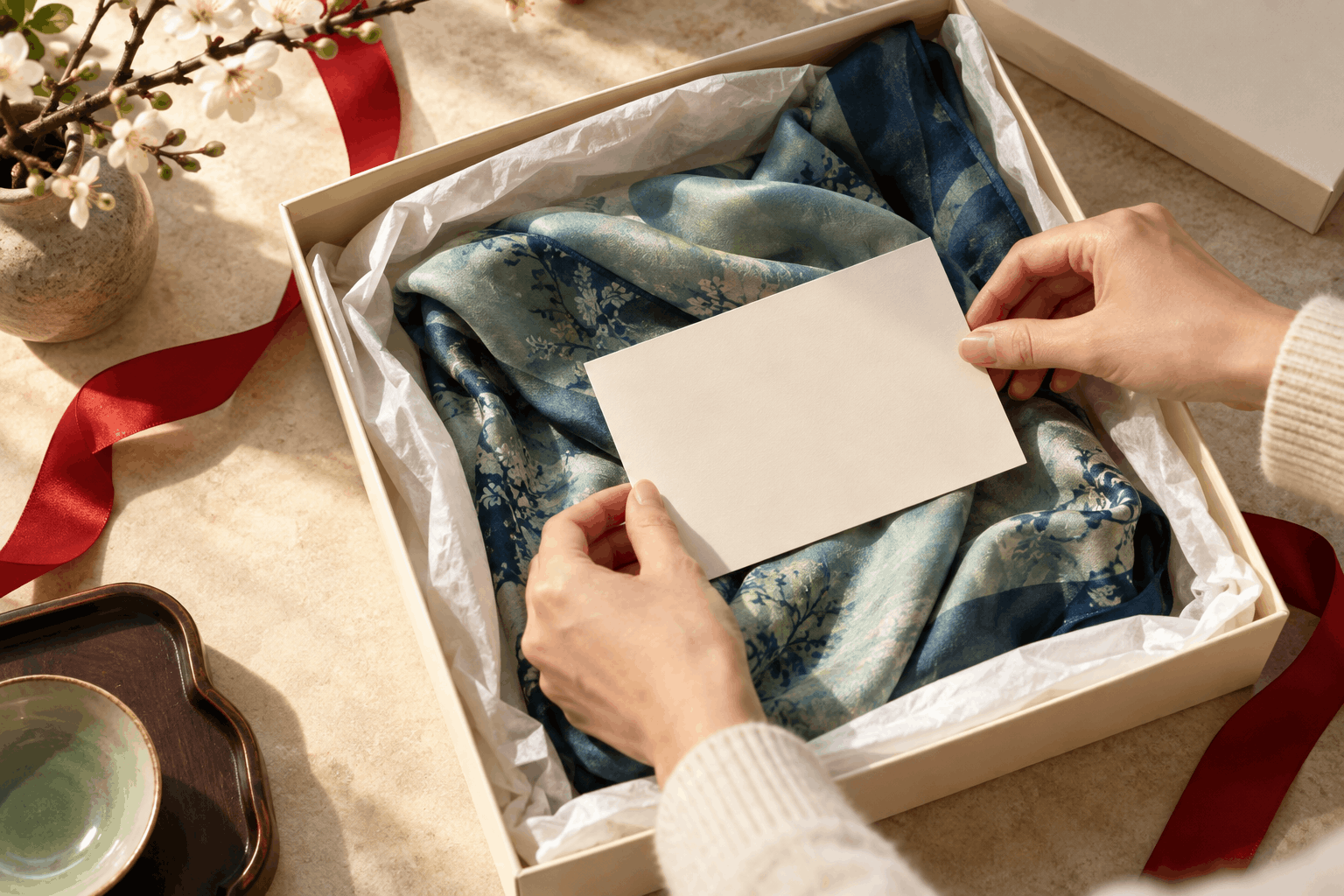
A Chinese New Year gift carries a wish into the year ahead. It might thank someone for welcoming you, express affection for a parent, celebrate a friendship or simply say that you have been thinking of them. The most meaningful choice begins with the person who will receive it.
Good Chinese New Year gifts combine personal usefulness, a thoughtful message and respect for the recipient’s customs. Tea, fruit, treats, silk scarves, ceramics, art and carefully composed gift sets can all suit different relationships. Red envelopes belong to particular family and community traditions; they are not a replacement for every kind of present.
This guide brings together gift ideas, cultural meaning and practical advice for modern giving. It focuses on Chinese New Year, also known as the Spring Festival, while recognising that Lunar New Year is celebrated by several cultures with distinct customs. Follow the household you are visiting rather than assuming one set of rules applies everywhere.
How to choose a meaningful Chinese New Year gift
Begin with three questions: who is it for, what would they enjoy, and how will you give it? These usually narrow the choice more effectively than searching for the most elaborate seasonal object.
Let the relationship set the level of personal detail
A scarf chosen around a favourite colour can feel intimate and thoughtful for a close friend or parent. For a colleague you know less well, a modest, easy-to-share gift may be more comfortable. For hosts, think about something they can receive without interrupting the gathering.
Choose for real use
Imagine the gift after the holiday. Will they wear it, drink it, read it or find a place for it? An object that suits everyday life can carry the memory of the celebration long after the wrapping is put away.
Make the meaning specific
A documented cultural motif can add depth. So can a shared memory or an affectionate note. Be clear about the difference: “Bamboo has associations with resilience” is a cultural statement; “These colours remind me of our trip” is personal meaning. Neither needs to become a grand claim to make the gift worthwhile.
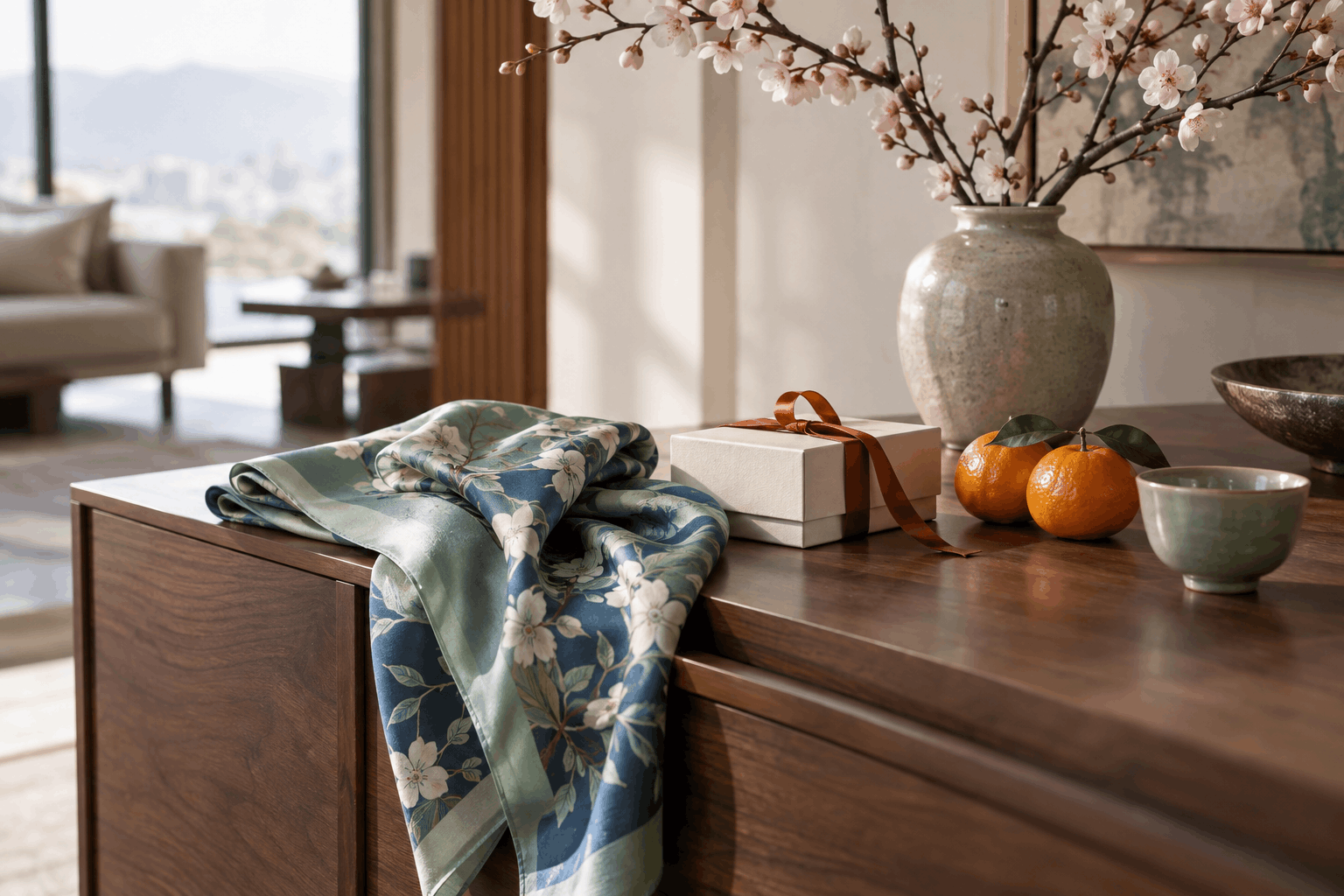
Chinese New Year gift ideas at a glance
Use this comparison to identify a direction, then refine it around the recipient’s tastes. These are suggestions, not compulsory gift categories.
| Gift | Can suit | Why choose it? | Check before buying |
|---|---|---|---|
| Silk scarf | A partner, parent or friend who enjoys accessories | Wearable colour and design with room for a personal story | Dimensions, fibre, finish, care and preferred style |
| Tea | A tea drinker, host or colleague | A useful pleasure for quiet moments or sharing | Type, brewing method, freshness and preferences |
| Fruit or treats | A household or gathering | An approachable gift that can be enjoyed together | Dietary needs, storage, ingredients and quantity |
| Ceramics or teaware | A design enthusiast or someone who will use it | A lasting object with tactile and visual appeal | Maker, capacity, intended use and care |
| Art book or print | A reader, collector or art lover | A connection with an artist or subject they value | Language, attribution, edition and available space |
| Curated gift set | Someone who will enjoy every component | A complete presentation built around one idea | Exact contents and quality of each item |
| Shared experience | A close friend or person who prefers fewer possessions | Time together and a memory for the new year | Dates, availability, access and flexibility |
For gifts beyond this season, our modern guide to Chinese gifts covers a wider range of occasions and relationships.
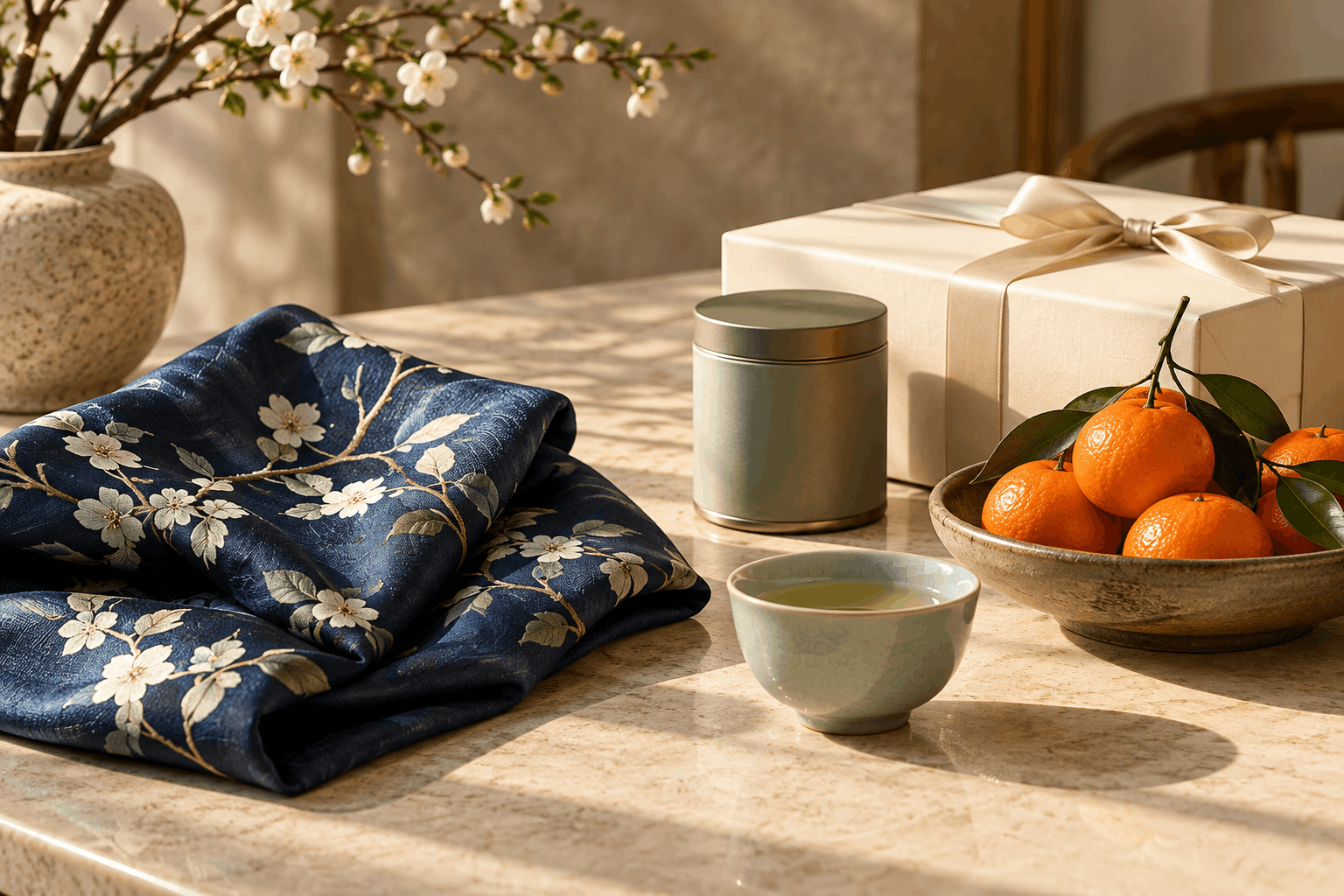
Choose Chinese New Year gifts by recipient
For women whose style you know
Start with her interests and wardrobe rather than a generic idea of a gift “for women.” A silk scarf may suit someone who enjoys colour and accessories; a book, ceramic object or shared outing may be better for someone with different habits.
When choosing a scarf, consider both the design and how it looks folded. A small square, long scarf and larger shawl create different effects and ask different things of the wearer. Check measurements and styling photographs before deciding.
Explore Chinese New Year gifts for women for ideas by relationship and personal style.
For parents and elders
Familiar preferences are often your best guide: the tea they enjoy, the colours they wear, the objects they actually use. Respect does not require choosing something that treats age as their defining quality.
Consider ease of use, care and storage. A beautiful gift can become inconvenient if it is heavy, delicate or difficult to maintain. Add a note of appreciation and make time for the visit or call that accompanies it.
Read Chinese New Year gifts for parents and elders for more thoughtful ways to choose.
For hosts
A host gift should be easy to accept. Ask if anything would be welcome for the gathering, but distinguish a contribution to the meal from a present for the household. Unless arranged beforehand, do not expect the host to serve your gift that evening.
Tea, suitable treats or fruit may work when you know the household’s preferences. A personal keepsake can suit a host you know well. Avoid bringing an object that requires immediate arranging, preparation or explanation while guests are arriving.
Our Chinese New Year host gift guide helps you decide what to bring.
For friends and colleagues
Close friendships allow more personal choices: a scarf that recalls a shared place, a book connected to a conversation or an outing to enjoy together. At work, keep the exchange proportionate and optional.
Check workplace gift policies where relevant, and avoid putting someone under pressure to reciprocate. A public exchange is not always the most comfortable way to give a personal present.
See Chinese New Year gifts for friends and colleagues for ideas suited to each relationship.
For fashion and art lovers
Notice how they enjoy visual culture. Some people want to wear expressive design; others prefer studying it in a book, collecting it or visiting exhibitions. Choose from that specific interest.
A scarf with an interesting composition can connect fashion and art. A print or book can suit a focused interest, while a shared museum visit may be welcome when they already own many objects. Give the recipient a say before buying a significant artwork for their home.
Explore Chinese New Year gifts for someone who loves fashion and art.
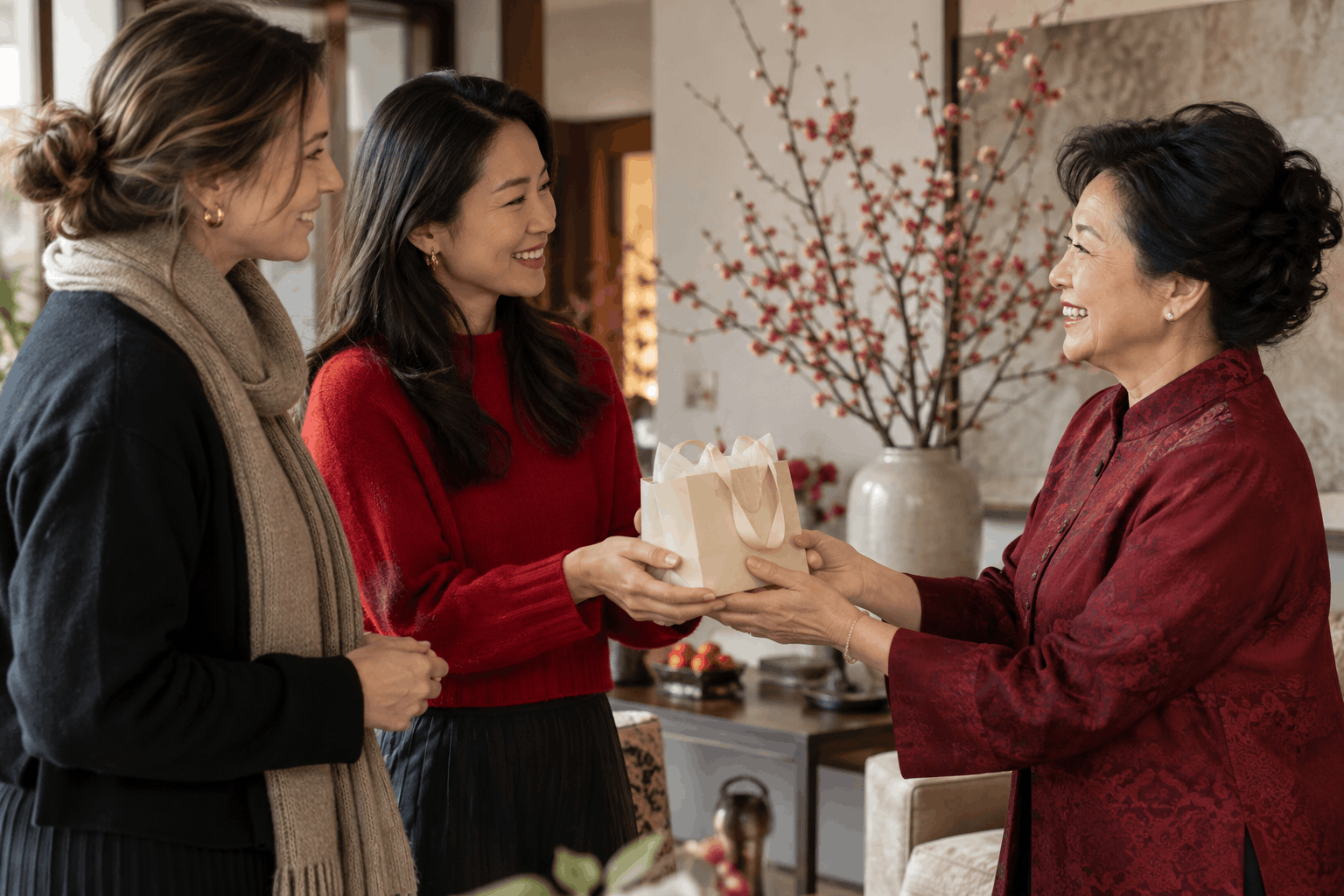
Colours and symbols: add meaning without forcing it
Chinese visual culture contains many layers of meaning, but an object’s significance depends on context. Identify the motif and its source before attaching a particular blessing to it.
The Metropolitan Museum of Art’s Noble Virtues: Nature as Symbol in Chinese Art explains how plants and animals can carry associations drawn from history, poetry and cultural memory. It discusses bamboo as an image of character enduring difficulty and plum blossom as an emblem of bravery. These offer thoughtful connections for a documented design, not a fixed interpretation for every leaf or flower.
Red is strongly associated with Chinese New Year celebration. A Smithsonian account of Chinese American family celebrations describes red decorations expressing wishes for prosperity and good luck, alongside family exchanges of mandarins and red envelopes. It is a useful example of lived tradition, rather than a rulebook for every household.
A recipient who loves blue or green may still appreciate a gift in those colours, framed by a warm greeting or a festive detail in the presentation. A gold-coloured accent is a design choice; it does not establish the material or value of the object.
For a closer look at individual references, read Chinese New Year gift colours and symbols. If a design’s story is uncertain, describe what you can see and what it means to you personally.
Traditional meaning can suit contemporary taste
A gift can feel contemporary through its palette, composition, scale or use. An open botanical print, a restrained ceramic form or work by a living Chinese designer can connect with culture while fitting easily into a modern wardrobe or home.
Traditional-looking objects can be equally beautiful. Choose the visual style the recipient enjoys, then look for clear information about the piece. Minimal decoration does not automatically make something premium, and elaborate decoration does not make it less sophisticated.
Our guide to modern Chinese New Year gifts shows how to preserve a meaningful connection through contemporary design.
When is a silk scarf a good Chinese New Year gift?
A scarf is a strong option when the recipient already enjoys wearing accessories or has expressed interest in one. It offers colour, movement and a design they can experience in different ways, from a small neck tie to a loose shoulder drape.
Use their wardrobe as a starting point. Look for a colour they wear often, a pattern scale they enjoy and a size they will find manageable. If you cannot picture how they would use it, a different type of present may be more appropriate.
Read the material and construction details. Silk is a fibre; satin and twill refer to weaves. A printed design, a woven pattern and embroidery involve different processes. Look for accurate descriptions of printing and finishing rather than assuming a cultural motif means the scarf is handmade.
Explore Lanting Loom’s silk scarves and signature designs, checking each product’s dimensions, care and presentation. A short message explaining why the design reminded you of the recipient can make the gift more personal.
What makes a Chinese New Year gift set feel premium?
A well-composed set has a clear idea behind it. Tea with suitable teaware offers a shared ritual. A scarf with a design-story card and personal message can feel complete without adding unrelated accessories. A larger set should justify each additional item.
Check the contents individually. Would the recipient want the scarf? Would they use the cup? Is the box protective and easy to handle? A luxurious photograph can include styling props that are not part of the purchase, so read the itemised description.
Quality is visible in specific details: materials, finishing, clear instructions and thoughtful protection. The cultural story should also be transparent. “Inspired by” a historic artistic tradition is different from a claim that an object is an antique, a museum collaboration or an officially recognised heritage product.
Read how to choose a premium and meaningful Chinese New Year gift set, or browse Lanting Loom’s gift sets to compare their contents.
How much should you spend?
Choose an amount you can comfortably afford and that fits the relationship. There is no single budget that makes a New Year gift respectful. An expensive present may be awkward in a casual exchange, while a modest gift with a precise personal connection can feel deeply considered.
For a wearable gift, prioritise suitability and construction over size or branding. For a set, assess the whole contents rather than the volume of the box. For an experience, include the practical costs that make it enjoyable, such as travel or a relaxed meal, only where they fit your plan.
If several family members are contributing to one gift, agree the budget and the recipient’s wishes first. Avoid turning the gift into a comparison of what different people spent.
Chinese New Year gift etiquette: start with the household
Customs vary by region, generation and family. If you are joining a celebration for the first time, a private question to the host is often more helpful than memorising a long list of supposed universal rules.
- Ask what would be welcome. Check whether gifts are expected and whether the household has preferences you should know.
- Greet the person first. Offer the gift at a comfortable moment, with care and a clear wish for the year ahead.
- Allow the recipient to choose when to open it. They may prefer to wait until the gathering is quieter.
- Respect a genuine refusal. If someone cannot accept gifts, your good wishes are enough.
- Consider practical needs. Check dietary preferences for food and the recipient’s comfort with personal or costly items.
Some households observe cautions around particular objects, colours or numbers. Do not assume that every person observes them in the same way, or dismiss a custom that matters to your host. Our detailed Chinese New Year gift etiquette guide explains common concerns and how to approach them respectfully.
Do you need to give a red envelope?
Ask before assuming. Red-envelope exchanges have conventions about relationships and participation that vary between families and communities. A host gift, a personal present and a red envelope are separate decisions.
The Smithsonian’s personal reflection Lunar New Year: Then and Now describes receiving red envelopes from older relatives and family friends while growing up in Taipei. Experiences like this show how a custom sits within a particular family history. If you are unfamiliar with the household’s practice, ask the host privately rather than guessing an amount or recipient list.
When should you give Chinese New Year gifts?
An agreed festive visit is a natural time for an in-person gift. If sending a parcel, arrange a convenient arrival window, often before the celebration. A present intended for use during the holiday may be particularly welcome in advance.
There is no need to force every exchange onto the first day. Choose a date that respects the recipient’s plans. If attending a meal, greet your hosts and give them a moment to receive the present rather than interrupting preparations.
For overseas delivery, work backwards from the required arrival date using the seller’s current preparation and destination-specific delivery information. Confirm stock, seasonal closures and whether the recipient will be at the delivery address. Allow flexibility for delays; an estimate is not a guarantee.
If the parcel is delayed, send your greeting separately and explain the situation briefly. Our guide to Chinese New Year gift timing and presentation covers early gifts, family visits and later exchanges.
Make the presentation personal and easy to receive
Good presentation protects the object, makes its purpose clear and allows the recipient to enjoy opening it. It need not be complicated. Suitable tissue, a well-sized box and a readable personal card can do more than layers of decorative packaging.
Keep useful information with the gift: a scarf’s care instructions, a designer’s story, a tea’s brewing guidance or an artwork’s details. Separate the factual description from your own message, so the recipient can appreciate both.
What to write in a Chinese New Year gift card
Combine a greeting, one personal thought and a wish for the year ahead. Use words that sound natural for your relationship.
- For parents: “With love and gratitude for everything you do. Wishing you a year of comfort, happy days and more time together.”
- For a friend: “These colours reminded me of you. Wishing you a New Year filled with inspiration and things to look forward to.”
- For hosts: “Thank you for welcoming us into your celebrations. With warm wishes for you and your family in the year ahead.”
- For a colleague: “Wishing you a happy New Year and an enjoyable celebration with the people who matter to you.”
These are personal message suggestions, not translations of traditional blessings. A simple greeting in a language you both understand is enough. If you use Chinese wording, check its meaning and suitability rather than copying decorative characters you cannot identify.
A final check before you buy
- Recipient: Does this fit their taste, habits and the relationship?
- Meaning: Can you explain the cultural or personal connection honestly?
- Contents: Do you know exactly what is included?
- Quality: Are materials, dimensions, production details and care clear?
- Customs: Have you checked any household or workplace expectations that matter?
- Timing: Can it arrive or be given at a convenient moment?
- Message: Have you added a few words that make it recognisably from you?
Frequently asked questions about Chinese New Year gifts
What is a good Chinese New Year gift?
Choose something the recipient will enjoy and can comfortably receive. Tea, suitable treats, fruit, silk scarves, ceramics, books and shared experiences can all work. The right choice depends on your relationship and the household’s preferences.
Are Chinese New Year and Lunar New Year the same thing?
Chinese New Year is the Chinese celebration within the broader group of Lunar New Year traditions. Other cultures have their own celebrations and customs. This guide focuses on Chinese giving contexts and encourages you to follow the specific household you are joining.
Can I give a gift if I do not celebrate Chinese New Year myself?
Yes, a thoughtful gift can accompany an invitation or a warm relationship. Ask what would be welcome, learn about the particular gathering and keep your message sincere. You do not need to perform customs you have not been asked to follow.
Does the gift need to be red or feature the zodiac animal?
No single design suits everyone. Red or a zodiac reference can be meaningful for someone who enjoys it, while another recipient may prefer an object in their usual colours. Consider family preferences and let your note explain the occasion.
Are silk scarves suitable Chinese New Year gifts?
They can be a thoughtful choice for someone who enjoys wearing them. Check dimensions, material, care and personal style, then choose a design with a story or colour connection that feels right for the recipient.
What should I bring to a Chinese New Year dinner?
Ask the host whether anything would be welcome. A modest gift of suitable tea, fruit or treats may work, but a present does not have to become part of the meal. Let the host decide when to use it.
Is an expensive gift more respectful?
Not necessarily. A proportionate gift that suits the person can feel more comfortable than an extravagant one. Spend within your means and avoid creating an obligation to reciprocate.
Can I give a present after the first day?
An agreed later visit can be a suitable occasion. If you miss the festive period, acknowledge the timing briefly and focus on the good wishes behind the gift.
A meaningful beginning to the year
Chinese New Year giving is an opportunity to show attention: to a person’s taste, to the relationship you share and to the way their household celebrates. Choose something they can enjoy, tell its story accurately and leave space for your own warm wishes.
Explore Lanting Loom’s silk scarves and curated gift sets for pieces shaped by art, cultural stories and contemporary design. Begin with something beautiful to them, then make the message your own.
