

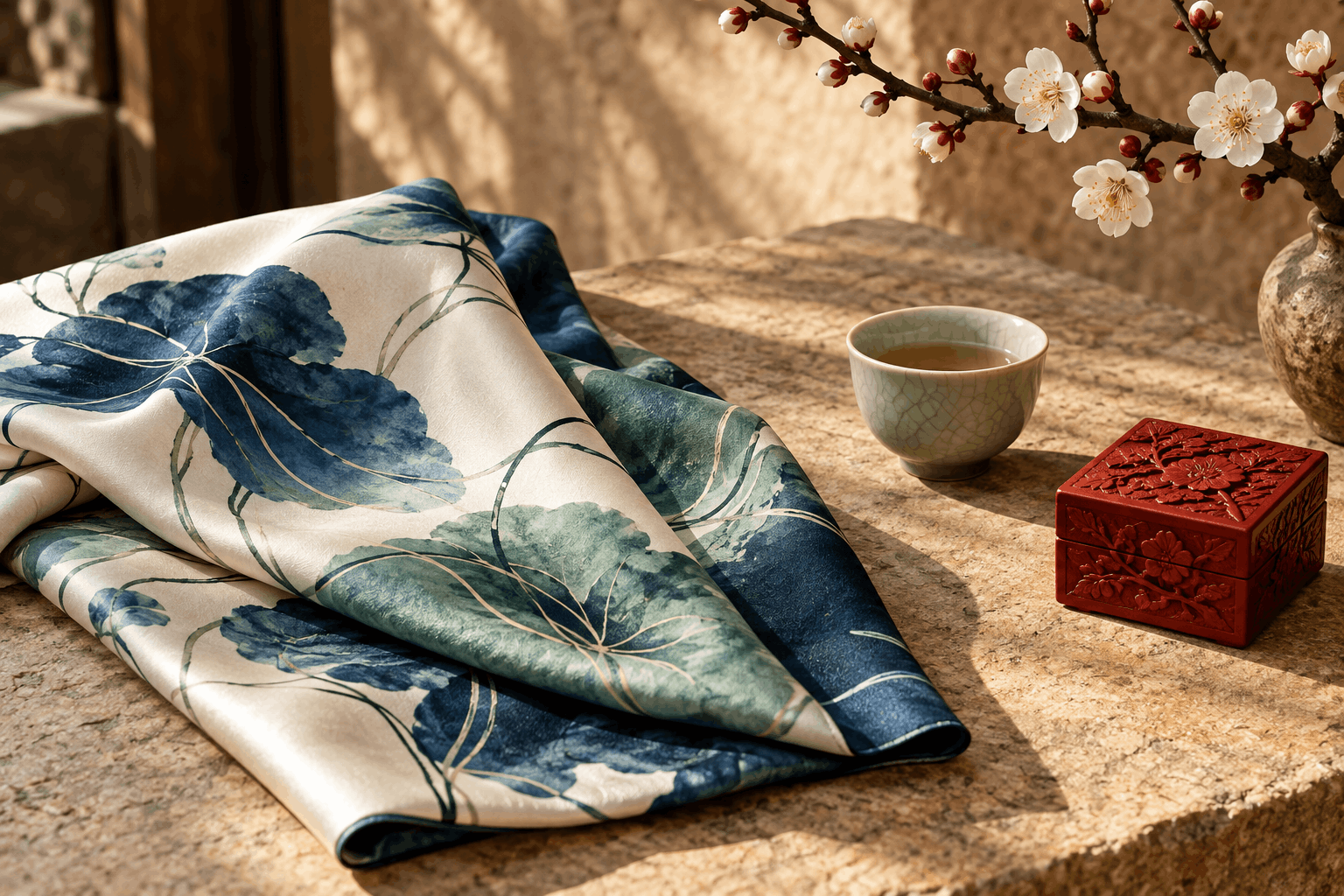
You know the person well: they wear clean lines, choose their home accessories carefully and rarely buy anything covered in seasonal decoration. You want a Chinese New Year gift that feels thoughtful and culturally meaningful, but also belongs in their everyday life.
Modern Chinese New Year gifts can carry traditional meaning through a considered motif, a cultural connection or the way they are given. A silk scarf with a quiet botanical composition, beautifully chosen tea or a contemporary ceramic piece can express warm wishes without relying on an elaborate festive appearance. Start with the recipient’s taste, then look for a story you can explain honestly.
Traditional designs can be beautiful, and many people love their richness. This guide is for the recipient who prefers a contemporary aesthetic. The goal is a gift they will enjoy after the celebration, with a connection that gives it personal depth.
For a broader overview of occasions and recipients, explore our guide to meaningful Chinese gifts.
What makes a Chinese New Year gift feel modern?
Modern design is not limited to plain surfaces or neutral colours. It may be expressive, colourful or richly patterned. What matters is how the design relates to the recipient’s wardrobe, home and interests.
On a scarf, that might mean an enlarged botanical detail, an unexpected blue palette or an open composition that changes as the silk folds. In ceramics, it could be a familiar material explored through a new silhouette. For an art lover, it might be work by a living artist whose practice connects with Chinese cultural experience.
Look for three things together: an object the recipient will use, a clear account of what inspired it, and quality you can assess. A cultural label alone does not make a gift meaningful; a restrained appearance alone does not make it premium.
How traditional meaning can appear in contemporary design
The Metropolitan Museum of Art’s Noble Virtues: Nature as Symbol in Chinese Art explains how images of plants can hold meanings drawn from poetry, history and cultural memory. Bamboo, for example, can suggest moral strength through difficult circumstances. Such associations offer a starting point for a gift, while the exact meaning still depends on the work and its context.
The ideas below show possible modern interpretations. They are design suggestions, not claims that every object with the same shape or colour has the same symbolism.
| Cultural reference or personal intention | A contemporary expression | How to explain it accurately |
|---|---|---|
| Bamboo and strength of character | Fine linear stems on a blue silk scarf | Refer to the documented bamboo inspiration, then add your own wish for the recipient |
| Plum blossom and perseverance | A few branches against an open field of colour | Describe the motif as plum only when the designer identifies it that way |
| Red and celebration | A small red accent in a pattern or on the wrapping | Let the festive detail frame an object chosen for everyday use |
| Connection through tea | Two well-chosen cups and a tea the recipient likes | Present shared time as your intention, without assigning every cup a fixed symbolic meaning |
| A personal wish for a fresh chapter | A contemporary artwork or useful keepsake | Say that it represents a new beginning to you; do not invent an ancient origin |
For plum blossom specifically, The Met’s discussion of Li Fangying’s Bamboo, plum, and rock connects its winter flowering with perseverance. That makes a thoughtful basis for a note of encouragement. It does not make every pink floral pattern a traditional blessing.
1. A silk scarf that belongs in their everyday wardrobe
A scarf is a strong choice when the recipient already enjoys wearing accessories. Its design can carry a cultural reference while its colour, scale and proportions determine how easily it fits into daily life.
Begin with what they actually wear. A person who favours navy, denim and cream may enjoy blue botanical silk more than a bright festive print. Someone who loves expressive dressing may prefer large shapes and a vivid border. Neither approach is more culturally meaningful by default.
Consider how the design looks when folded. A scarf shown flat may tell an elaborate visual story, but around the neck only a few areas remain visible. Look for photographs that show both the full composition and the worn result. A well-positioned border or shift in colour can make the piece easy to style.
As a concrete example, Lanting Loom’s Bamboo in Blue Mist uses bamboo in mist blue, slate blue and pale celadon on a pearl-ivory ground. The product page describes a 180 × 65 cm mulberry-silk shawl with a bamboo-inspired story of resilience. Its palette offers a way to give that sentiment to someone who prefers cool colours.
Choose that format only if a shawl suits the person. A smaller square may be easier for someone who enjoys a compact neck tie; a longer piece may suit someone who likes a loose drape. For more recipient-focused ideas, see Chinese New Year gifts for women.

2. Contemporary ceramics with a clear maker’s story
A small ceramic piece can suit a person who notices shape, glaze and texture. Consider a cup, a shallow dish or a vase that fits the way they live. The most useful question is often where they would put it or how they would use it.
Look for a named maker, clear dimensions and an explanation of the material and process. A green glaze does not automatically make an object jade, and a historic-looking surface does not prove it was made using a traditional technique. Let the maker’s actual information carry the story.
For someone with a carefully edited home, a single piece may be easier to enjoy than a large matching set. If buying drinkware, check the maker’s intended use and care instructions. If buying a decorative vessel, describe it as such rather than assuming it is suitable for food or hot drinks.
The New Year connection can be simple: “I thought this would be lovely for your morning tea in the year ahead.” That is a personal wish, and it does not need a borrowed legend.
3. Tea chosen around taste and time together
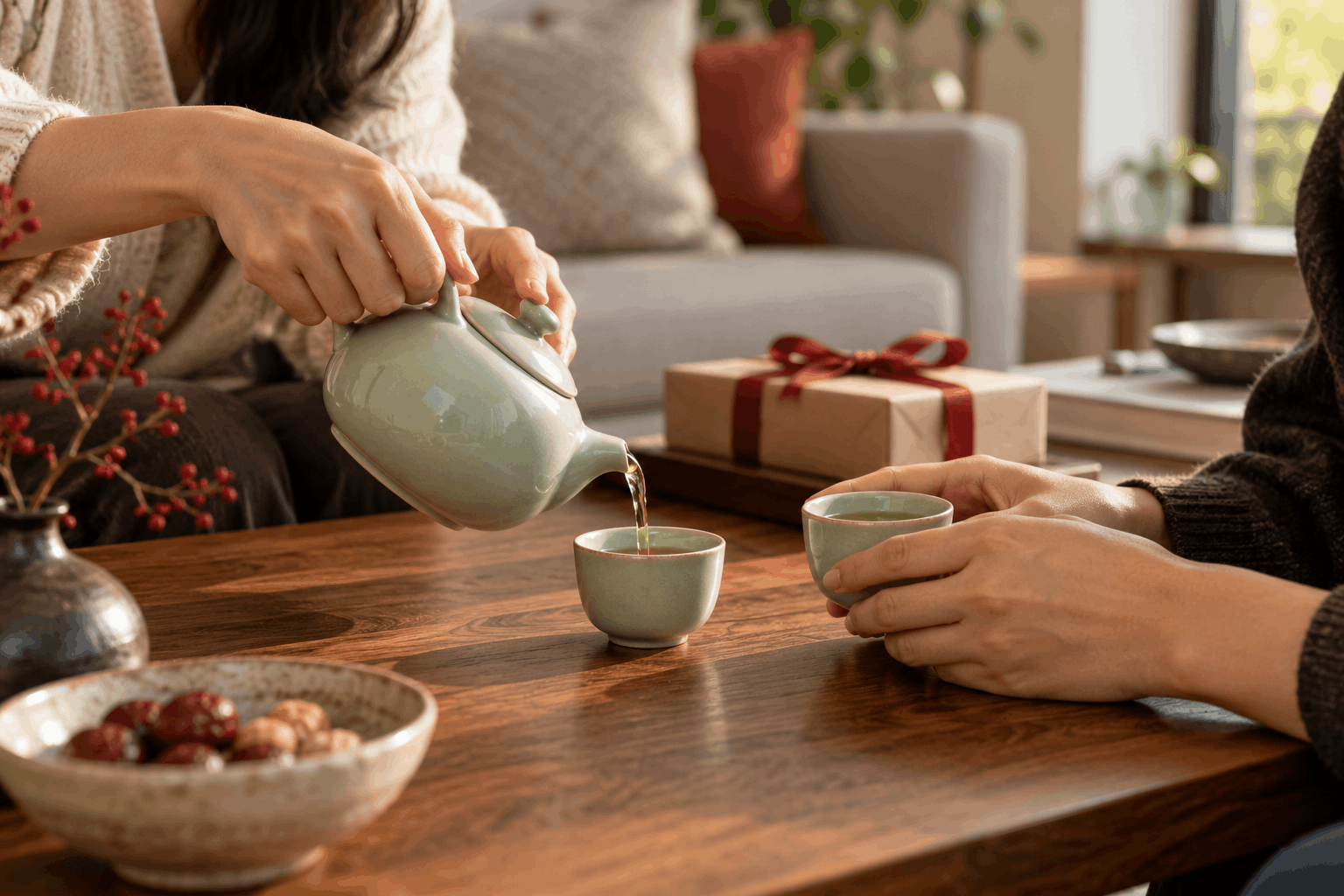
Tea can be a thoughtful gift for someone who values everyday rituals. Focus on what they like to drink, how they prepare it and whether they enjoy trying something new. A beautiful tin will not compensate for a tea they will never open.
Choose clearly labelled tea with useful brewing instructions. A small selection can be better than an oversized assortment, especially if the recipient has limited storage. If you add teaware, make sure it suits their preparation method and is comfortable to use.
The cultural connection can come from the tea’s documented origin or the maker’s practice. The emotional connection can come from an invitation to share it. Those are different kinds of meaning, and both can be valuable.
For a host, make it easy to receive: say that the tea is for them to enjoy whenever they wish. It does not need to be brewed during the gathering. Our Chinese New Year host gift guide covers choices that fit naturally into a visit.
4. Art or a book that opens a conversation
A contemporary print, artist’s book or thoughtfully chosen exhibition catalogue can be a good fit for someone who enjoys cultural discovery. Choose around an actual interest: landscape, photography, calligraphy, architecture, fashion or a particular artist.
For an artwork, identify the artist and medium. If the seller calls it a limited edition, check what that means and what documentation is included. Avoid treating a generic brushstroke image as Chinese calligraphy when it contains no identifiable writing or documented connection to the practice.
A book can be easier to choose than something intended for permanent display. If considering a framed print, check the recipient’s available space and preferred colours, or choose it together. The invitation to look and discuss can become part of the gift.
Our guide to Chinese gifts for art lovers explores how to match these gifts to an individual taste.
5. A compact gift set with one clear idea
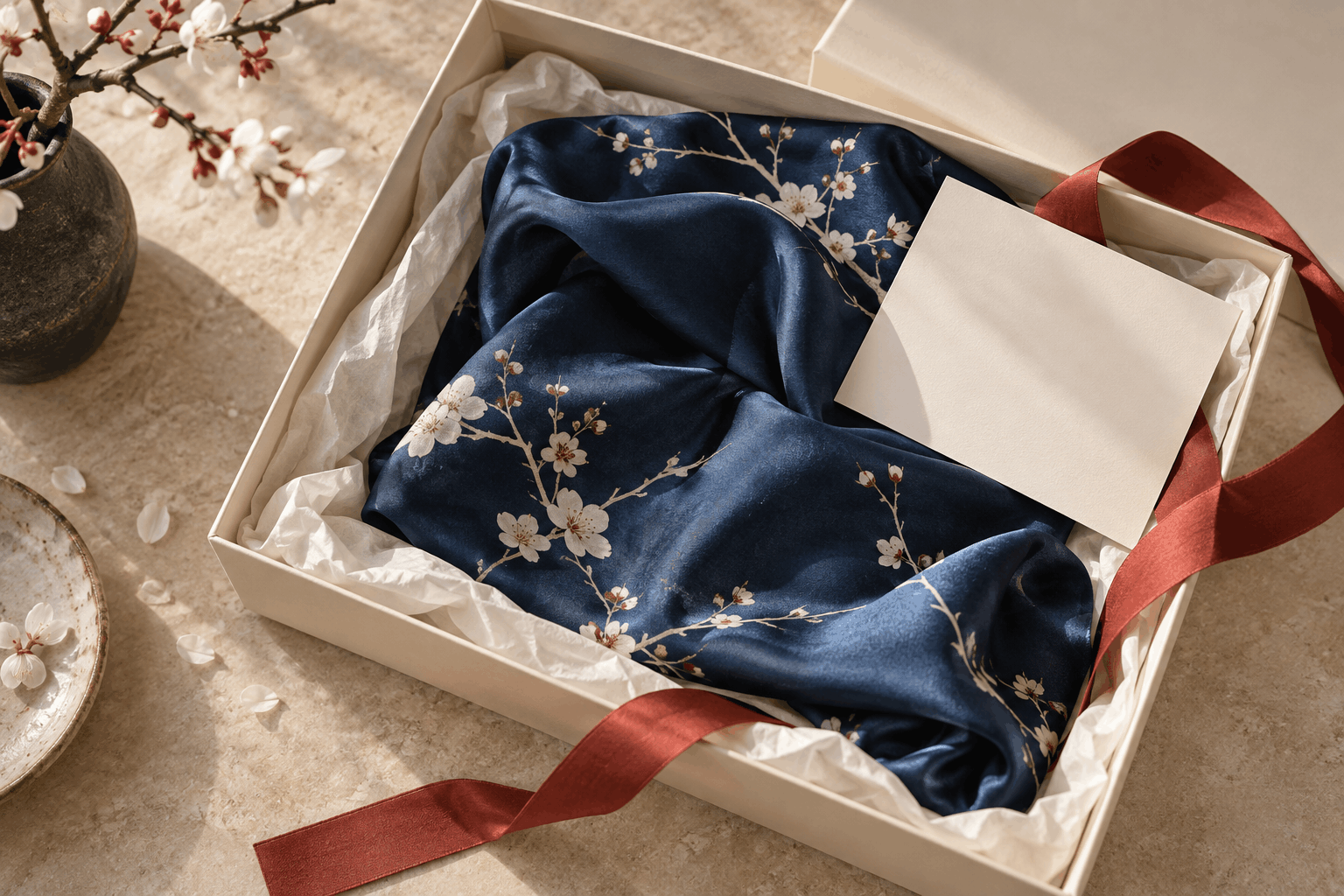
A premium set works best when its elements have a reason to be together. A scarf with a design-story card and personal message may already feel complete. Tea and a suitable cup offer a different, equally coherent idea. More components are not automatically more thoughtful.
If combining a scarf and teaware, think about the recipient’s habits as well as the colour pairing. They should want to wear the scarf and use the cup. The association can be personal—perhaps a shared afternoon, favourite garden or memory of travel—without claiming that the combination itself is a historic custom.
Read the itemised contents before buying. Check dimensions, materials, care and what the presentation includes. A photographed prop may not be part of the set. A decorative box should protect its contents and be manageable to store or reuse.
For Lanting Loom options, explore the silk scarf and gift collection and gift services, then confirm the details on the individual product page.
Does a modern Chinese New Year gift need to be red or gold?
Red has a strong festive association. The Smithsonian’s discussion of red in Asian art describes its connection with celebration and prosperity in China. That gives a red accent a clear cultural context, but it does not mean every part of every gift must use it.
Choose the object’s palette for its owner. If they love blue, green or quiet neutrals, the festive connection might sit in a ribbon, greeting card or brief explanation of the design. Someone who enjoys red can receive a striking red piece that works equally well beyond the season.
Ask about family preferences if you are unsure about presentation. Avoid assuming that one modern household’s taste stands for every Chinese family. Our guide to Chinese New Year gift colours and symbols offers more detail.
How to recognise real quality behind a beautiful story
Keep the story and the product evidence side by side. A thoughtful cultural reference adds interest, while materials, construction and usefulness determine what the recipient receives.
- For silk: check fibre composition, dimensions, weave, printing information, edge finish and care requirements. “Silk” describes a fibre; it does not establish how a pattern was made.
- For ceramics: check the maker, material, intended use, measurements and care instructions.
- For art: check attribution, medium, edition details where relevant and the seller’s description of what is supplied.
- For gift sets: check every included item and whether the photograph contains styling accessories that are excluded.
A printed design can be beautiful and carefully produced. Describe it as printed when that is how it was made. Do not infer embroidery, hand painting or artisan production from a textured photograph or a cultural motif. Similarly, a design inspired by heritage does not automatically have recognised heritage status.
Make the personal note carry the connection
A short note can link a contemporary object to the occasion without making the design explain everything. Use three elements: what caught your eye, why it reminded you of the person, and what you wish for them.
For a documented bamboo design: “The bamboo reminded me of your steady strength. Wishing you a year with room to grow and plenty of moments to enjoy.”
For a documented plum blossom design: “I loved the idea of flowers appearing through the cold. May the year ahead bring you encouragement and things to look forward to.”
For tea: “Something for our next long conversation. Wishing you a happy New Year and many unhurried afternoons.”
For a gift chosen mainly for its colour: “These colours felt like you. I hope this brings a little pleasure to ordinary days throughout the year.”
These messages are personal interpretations. They add warmth without presenting new wording as a traditional blessing. Keep the note readable and the wrapping easy to open; the recipient should be able to enjoy the object without decoding a long explanation.
A quick way to choose between two gifts
Imagine both objects three months after the celebration. Which would the person be wearing, using or enjoying? Then ask whether you can explain its cultural or personal connection in one clear sentence.
If a gift passes both tests, check the practical details: size, care, presentation and arrival date. If the meaning feels forced, simplify the message. If the object does not suit the recipient, keep looking, however appealing the story may be.
For advice on arranging the exchange, see when to give Chinese New Year gifts. For broader household customs, consult our gift etiquette guide.
Frequently asked questions
What are modern Chinese New Year gifts?
They are gifts suited to contemporary tastes that connect with the celebration through design, cultural context or personal intention. Examples include silk scarves with a documented botanical inspiration, contemporary ceramics, carefully selected tea and art books.
Can a blue silk scarf be appropriate for Chinese New Year?
It can suit someone who loves blue and enjoys wearing scarves. Choose for their taste and explain the connection in your message. If the household has particular gifting preferences, take those into account.
Does an abstract design still have cultural meaning?
It can, when there is a clear connection between the design and its stated inspiration. Read the designer’s explanation. An abstract mark should not be assigned a traditional meaning simply because it resembles a brushstroke.
Do I need to choose the year’s zodiac animal?
A zodiac design is one possible choice, particularly for someone who enjoys collecting it. It is not the only route to a meaningful gift. A botanical reference, shared interest or personal note may fit the recipient better.
Are traditional-looking gifts less sophisticated?
No. Sophistication can appear in many styles, including richly detailed traditional work. Choose the visual language the recipient enjoys and assess the quality and accuracy of the particular object.
How much symbolism should I explain?
A sentence or two is often enough. Name the documented reference, then add your own wish. Include a story card when available so the recipient can explore further at their own pace.
A gift to enjoy throughout the year
A contemporary Chinese New Year gift can be visually fresh and culturally thoughtful at the same time. Choose beauty that fits the person, a connection you can explain clearly and a useful form they will welcome into their life.
Explore Lanting Loom’s silk scarves and considered gifts for designs shaped by art, nature and cultural stories. Let the gift begin with something they love to look at, and let your message explain why you chose it for them.
