

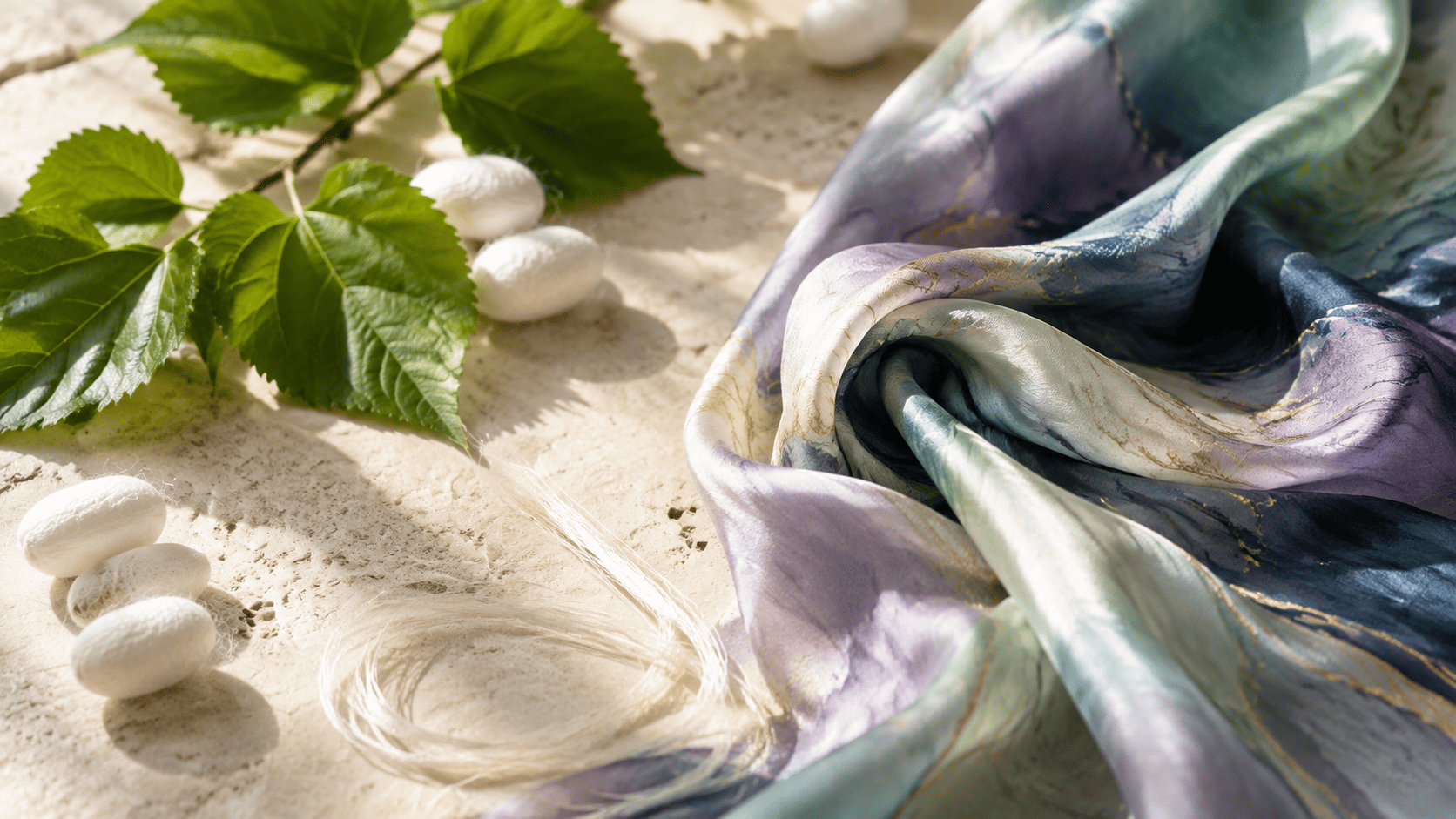
Mulberry silk is silk produced by the domesticated silkworm Bombyx mori, whose principal food is the leaf of the mulberry tree. It is the silk most people encounter in fine scarves, clothing and bedding. Its long, fine filaments can be reeled into smooth, consistent yarns, but the words “mulberry silk” describe the fibre’s source—not its weave, weight, grade or finished quality.
Where does mulberry silk come from?
Mulberry silk begins with sericulture: the cultivation of silkworms and the production of their silk. Bombyx mori larvae eat mulberry leaves, grow through several stages and spin protective cocoons. The Central Silk Board’s overview of mulberry silk identifies the species as fully domesticated and fed on mulberry leaves.
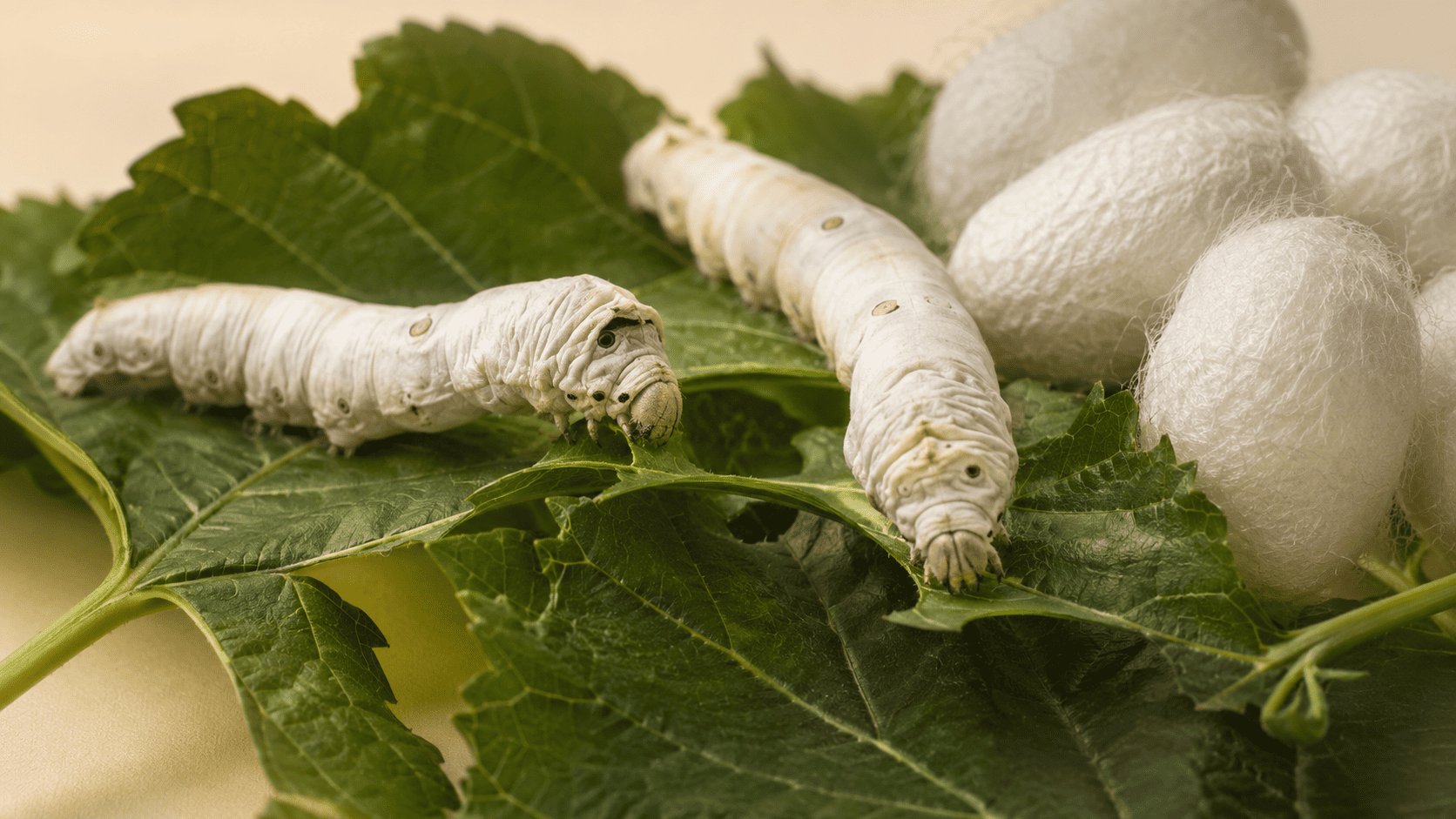
Inside each cocoon is a very long filament. Unprocessed silk consists of two fibroin filaments held together by a natural gum called sericin. The Canadian Conservation Institute’s guide to natural fibres notes that silk filaments can exceed two kilometres and that sericin accounts for roughly 10–20% of unprocessed silk’s weight.
That length is one reason reeled mulberry silk can form even, lustrous yarn. It does not mean a finished scarf consists of one untouched thread: multiple fine filaments are combined, twisted, woven, dyed or printed and finished to achieve the desired fabric.
How is mulberry silk made?
- Silkworms are reared. The larvae are fed clean mulberry leaves under controlled conditions.
- Cocoons are spun. Each mature larva secretes silk around itself to form a protective shell.
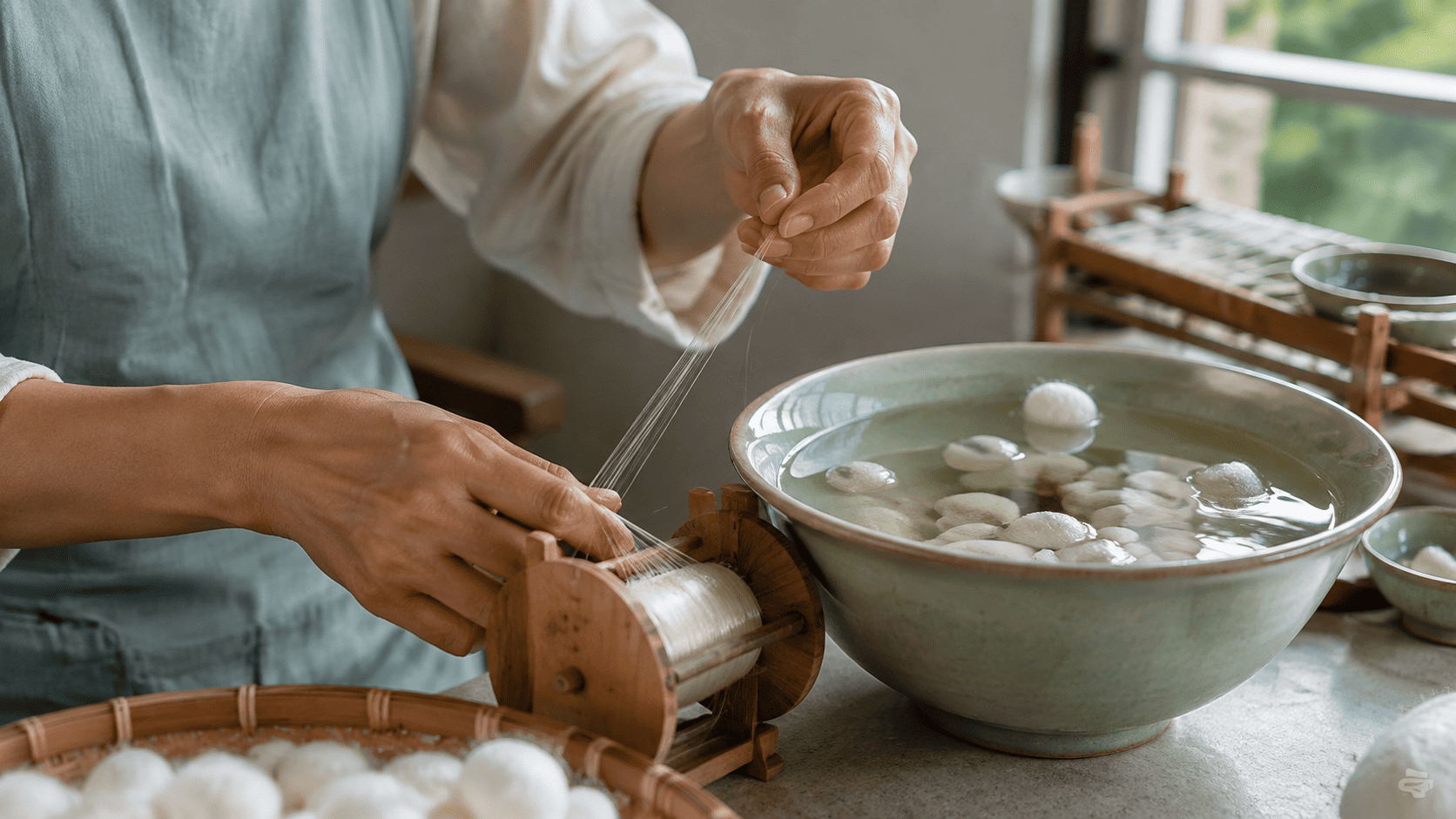
- Cocoons are prepared. In conventional reeled-silk production, cocoons are treated before the moth emerges so the filament remains largely unbroken.
- Filaments are reeled. Warm water softens the sericin, allowing fine filaments from several cocoons to be gathered into a usable strand.
- Yarn becomes fabric. The silk is twisted as needed, woven, degummed to a chosen degree, coloured, printed and finished.
Silk production has a particularly deep history in China, where the material shaped dress, artistry, trade and cultural exchange. For that wider story, read why silk has an important place in Chinese culture.
Is mulberry silk the same as silk, satin or charmeuse?
Mulberry silk is a type of silk, but it is not a fabric construction. This vocabulary is easier to understand when separated into layers:
| Term | What it describes | Example |
|---|---|---|
| Mulberry silk | The silk’s biological source | Bombyx mori fed on mulberry leaves |
| Twill, satin, plain weave | How warp and weft interlace | Diagonal twill ribs or a smooth satin face |
| Habotai, charmeuse, chiffon | Named fabrics with characteristic constructions | Light habotai or fluid charmeuse |
| Momme | A traditional measure of silk fabric weight | Useful only alongside size and construction |
A satin scarf can be mulberry silk, polyester or another fibre. A mulberry-silk scarf can be woven as satin, twill or habotai. Our comparison of silk twill, satin and habotai explains how these constructions change shine, drape and styling behaviour.
How does mulberry silk compare with other silks?
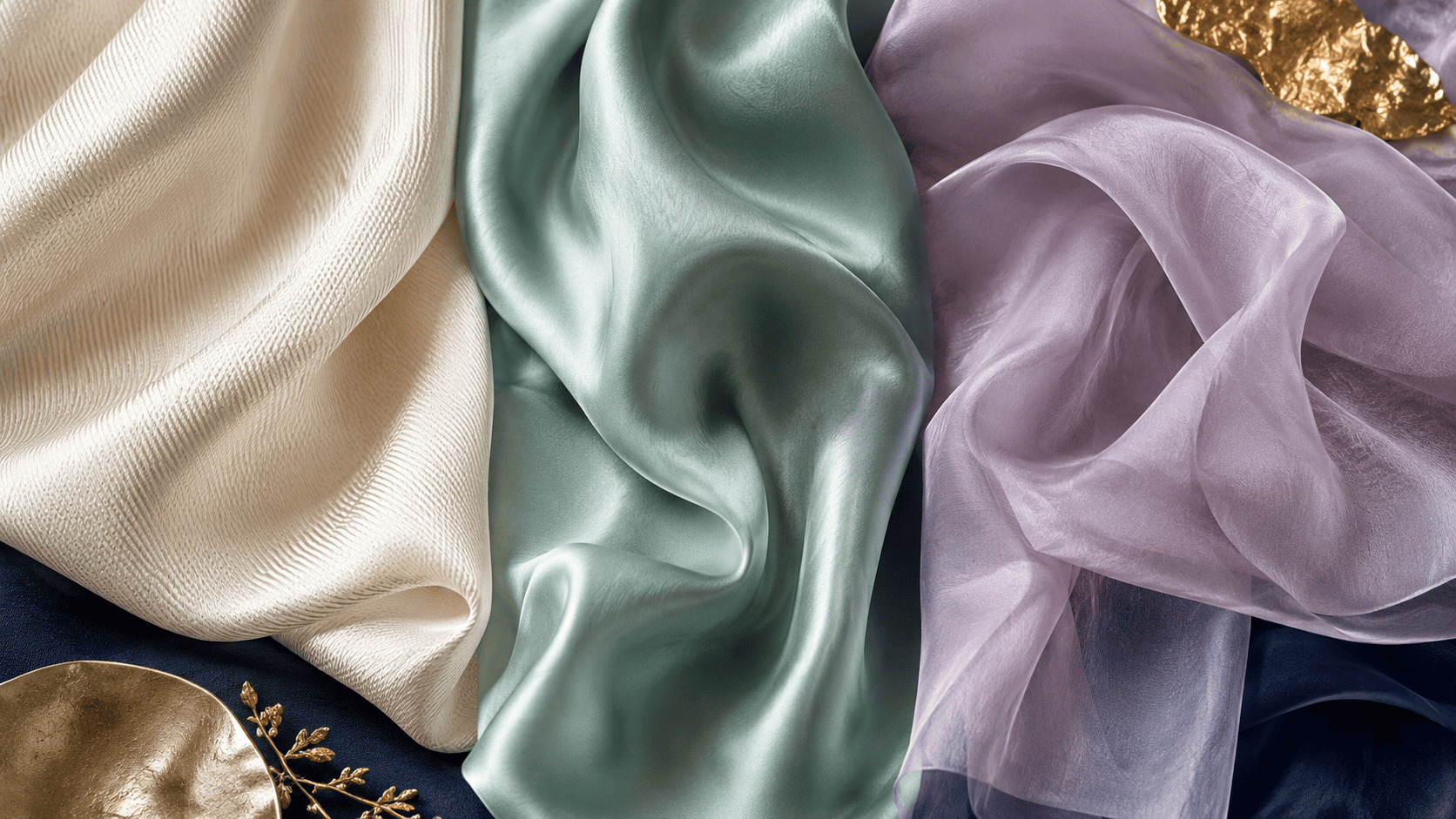
Silk is produced by several moth species, not only Bombyx mori. Commercial traditions also include tasar or tussar, eri and muga silks. They come from different silkworms and food plants, and often show distinctive natural colour, texture and yarn character. The Central Silk Board’s broader guide to commercial silk types lists mulberry, tasar, muga and eri separately.
Mulberry silk is prized when fineness, uniformity and a smooth surface are wanted. Other silks may be chosen precisely for a more textured handle, warm natural colour or a regional craft tradition. “Better” therefore depends on the design and use; it is not a universal ranking.
Does “mulberry silk” guarantee high quality?
No. It tells you something meaningful about the fibre, but not everything about the finished scarf. Quality also depends on:
- the consistency and preparation of the yarn;
- the weave, density and appropriate fabric weight;
- the quality and colourfastness of dyes or printing;
- the clarity of the design and its appearance on the reverse;
- the cutting, hems, corners and final inspection; and
- whether the scarf’s scale and construction suit its intended use.
“Grade 6A,” “22 momme” or “100% mulberry silk” may sound conclusive, but a single number or phrase cannot evaluate design, printing and finishing. Use specific, verifiable information. If the material itself is uncertain, follow the nondestructive checks in how to tell if a scarf is real silk.
What should you check before buying?
- Fibre content: look for a percentage such as “100% silk,” not merely “silky” or “satin.”
- Construction: check whether the fabric is twill, satin, habotai or another weave.
- Dimensions and weight: these affect drape and styling more directly than the word “mulberry.”
- Finishing: examine print definition, edges, corners and reverse-side appearance.
- Transparency: seek clear care, origin, seller and return information.
- Claim evidence: ask what supports ethical, organic or environmental statements.
For products sold in the United States, the Federal Trade Commission’s Textile Fiber Rule generally requires covered products to disclose fibre names and percentages by weight, along with marketer or manufacturer identity and country of origin. A label is a better starting point than a shine, touch or burn test.
When selecting a wearable format, compare Lanting Loom’s silk twillies and square silk scarves, or begin with the complete guide to silk scarves.
Is mulberry silk ethical and sustainable?
Mulberry silk is animal-derived and is not vegan. Conventional reeled silk normally preserves the cocoon filament by stopping the moth from emerging before reeling. Alternatives marketed as “peace silk” or “Ahimsa silk” use different approaches, but terminology and verification vary; buyers should ask for traceability rather than assume the name guarantees one method.
Nor does “natural” automatically mean environmentally preferable. Mulberry cultivation, rearing conditions, energy, water, dyes, finishing, transport and product longevity all influence impact. A credible claim should define what was measured and provide evidence. Durability and thoughtful care matter too: a scarf worn for years makes better use of the work and resources embodied in it.
How should a mulberry-silk scarf be cared for?
Follow the scarf’s care label first. Protect silk from prolonged sunlight, perfume, cosmetics, abrasion and high heat. Do not assume all mulberry silk is washable: dyes, printing, weave and edge construction may require professional cleaning. Store the scarf clean, dry and loosely folded, and consult Lanting Loom’s silk-scarf care guide before cleaning or pressing it.
Frequently asked questions
Is mulberry silk real silk?
Yes. Mulberry silk is genuine silk produced by Bombyx mori. Check the product’s fibre percentage to determine whether a particular scarf is pure silk or a blend.
Is mulberry silk better than regular silk?
“Regular silk” has no precise meaning. Mulberry silk is often selected for fine, uniform filament, but other silks offer different textures, colours and traditions. Finished quality still depends on weaving, printing and construction.
Is mulberry silk the same as satin?
No. Mulberry silk describes a fibre source; satin describes a weave. Satin can be made from silk or manufactured fibres, and mulberry silk can be woven into satin or many other fabrics.
Is mulberry silk vegan?
No. It is an animal-derived fibre made by silkworms. Conventional filament reeling also normally prevents the moth from breaking through the cocoon.
What makes a good mulberry-silk scarf?
Look beyond the fibre name to an appropriate weave and weight, precise colour and printing, well-finished edges, useful dimensions, clear care information and a design you will genuinely wear.